LAHORE: In June, during the peak of the coronavirus pandemic in Pakistan, Dr. Iqbal Afridi was working 12 hours a day at the state’s Directorate of Health Services in Islamabad. During his grueling shift, the doctor would pace through phone calls, tracking down people who had tested positive for COVID-19 in the city.
On each call, he would work through a script: confirm the patient’s name and address and list down all the places he or she had visited in the last two weeks.
“In those days, my team and I were making 300 calls a day,” he told Arab News, “These 300 patients would lead to a further 1,500 people who had come in close contact with them. We would have to then trace them.”
Today, infections in Pakistan have dropped to the lowest in four months. The pressure on Afridi and his team of around 50 doctors, public health care workers and call-center operators in the city, has eased.
“Now we make maybe five to 10 calls in a day,” he said.
Yet, for Dr. Afridi the fight against the deadly virus has to continue. Even with a reduction in workload, the procedure of tracing out the sick must remain stringent.
“We are still in the middle of an epidemic,” Dr. Hassan Orooj, the director general of health services in Islamabad and Dr. Afridi’s boss, said. “The epidemic is not over. In fact, in some countries it is now reemerging.”
As per official protocols, once an individual tests positive, he or she is contacted by a call operator. Then medical professionals visit the person’s home to test all those who live with the patient. Next, the person is asked to list down the people he or she met in the last 14 days. If a patient came in close contact — within two meters — with someone for more than 15 minutes, without wearing a face mask, then that person needs to be traced.
There are 10,664 contact tracers who help track down and isolate potential virus carriers across Pakistan, a country of 220 million, according to data provided by Planning Minister Asad Umar during a press briefing on Aug. 11.
Pakistan is right now the 17th most impacted country in terms of coronavirus caseload.
The World Health Organization (WHO) has repeatedly stressed that contact tracing is a key tool of suppressing the deadly virus in countries battling it.
In Pakistan, the job of a tracer is not easy. There is little room for mistakes.
Once contacts of a coronavirus patient are identified, they need to be monitored for signs of infection or be tested. There are patients who hesitate to share their contacts’ information. In such cases, the tracers are instructed to ask indirect questions: Which shop did you visit in the last two weeks? Which mosque do you regularly pray at?
“In certain instances, private laboratories have taken minimal contact details,” Capt. (Retd.) Muhammad Usman Younis, secretary at the primary and secondary health care department in Punjab, told Arab News. “This requires additional tracing protocols to be initiated.” On-ground contact tracing units then reach out to telecommunication companies and other departments to help track such cases, he said.
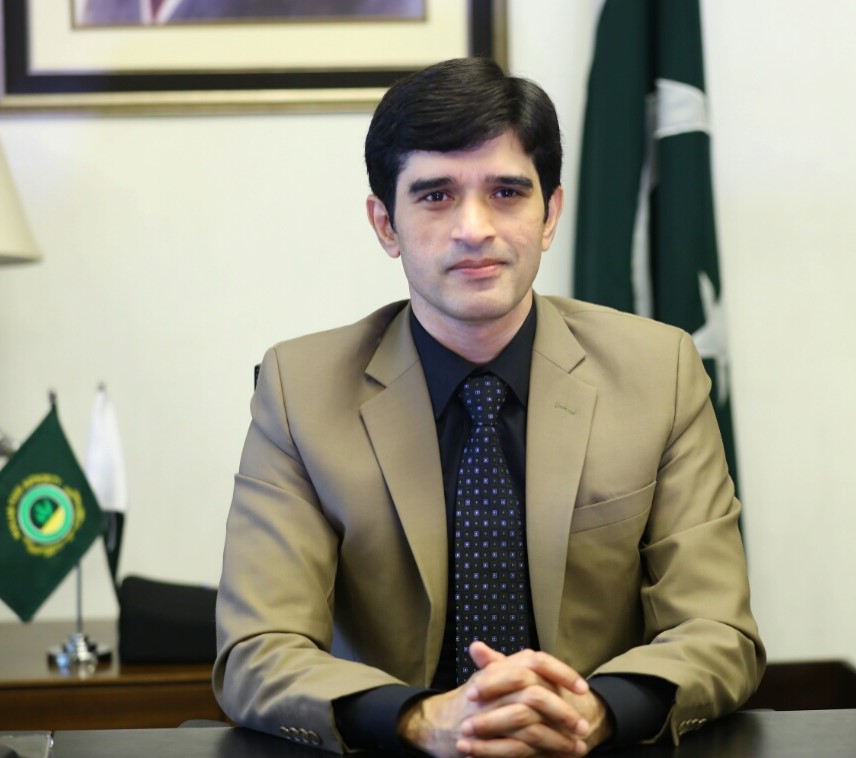
Capt. (Retd.) Muhammad Usman Younis, secretary at the primary and secondary healthcare department in Punjab, is photographed at his office on Sept. 1, 2020. (Photo courtesy: Punjab Primary and Secondary Healthcare Department)
Chasing each and every coronavirus patient is essential. Each infected person has a minimum of six contacts. “As many as 100 plus contacts of a single patient have also been identified,” Younis said.
According to him, the implementation of health guidelines, awareness campaigns, efficient contact tracing and earlier lockdowns helped reduce the spread of the disease. But since almost all restrictions have been lifted, health officials remain vigilant and are planning in case there will be a sudden spike, although the infection rate has slowed in the past two months.
“It is still too early to predict or account for changes. Further studies need to be conducted to ascertain the causes (of the decline),” Younis said.
Dr. Hassan Orooj says there have been discussions among government officials regarding what should be done if coronavirus cases surge in the coming weeks.
Most of the public health care workers, who were hired as tracers, were picked up from other health programs such as dengue and poliovirus.
As COVID-19 infections slowed, most of the workers have returned to their old roles, he explained. “But at least now there is a system in place and a structure tailored to respond to the epidemic.”