
With songs and sedation, experts aim to rescue Kaavan the Islamabad elephant

Amir Khalil, head of project development at FOUR PAWS International, sedates Kaavan, an elephant at the Marghazar Zoo in Islamabad on Sept. 4, 2020. (REUTERS)
Short Url
Updated 05 September 2020
Follow

With songs and sedation, experts aim to rescue Kaavan the Islamabad elephant

  • Dozens of animals including six lion cubs have died in Islamabad’s zoo in the past four years
  • A Pakistan court ruled in May that all animals at the animal sanctuary must be set free or transferred to a better environment

ISLAMABAD: The trick to calming an unhappy elephant? Sing him Frank Sinatra songs, according to one of the vets tasked with assessing whether Kaavan can be moved from poor conditions in a zoo in Pakistan’s capital to a sanctuary in Cambodia.
Amir Khalil, a vet who has worked in war zones to rescue animals, is now in Islamabad with welfare organization Four Paws to determine whether Kaavan is safe to travel after a Pakistan court ruled in May that all animals at Islamabad’s zoo must be set free or transferred to a better environment.
“When we arrived 10 days ago ... I started to train him and to sing to him and he accommodated me so we have a relationship,” he said, adding he chose Sinatra’s hit “My Way.”
Animal rights advocates have long raised concerns about conditions at Islamabad’s zoo, where dozens of animals including six lion cubs have died in the past four years.
The court decision came after a four-year global campaign, backed by American singer Cher. Plans are underway to move Kaavan, to Cambodia if possible. The 36-year-old elephant has spent most of his life in a small enclosure with meagre shelter, and the last eight years alone after his companion elephant died.
But even with Sinatra, it is no easy feat moving an elephant thousands of miles.

Four Paws experts fired darts with a sedative so they could give the sleepy animal a comprehensive checkup.
As Kaavan woke up to eat some apples, Four Paws elephant specialist Frank Goeritz analyzed his blood samples. Though it will be a few days before he files a formal report, Goeritz said despite Kaavan being obese, unhappy and having malformed nails that put him at risk of serious infection, the outlook was hopeful.
“Let’s wait until we have all the results, but so far I don’t see a big problem with him traveling ... he is facing a good life.”
Pakistan reviews austerity measures amid Middle East crisis, urges strict nationwide implementation

Updated 11 March 2026
Follow

Pakistan reviews austerity measures amid Middle East crisis, urges strict nationwide implementation

  • Deputy Prime Minister Ishaq Dar chairs review meeting of austerity steps
  • Officials briefed on salary cuts, school closures, four‑day week, petrol conservation

ISLAMABAD: Pakistan’s government on Wednesday assessed progress on a sweeping set of austerity measures introduced to mitigate the country’s economic strain from sharply rising global oil prices and supply disruptions linked to the ongoing war in the Middle East.

Prime Minister Shehbaz Sharif this week announced a series of austerity steps, including a four‑day work week for government offices, requiring 50  percent of staff to work from home, cutting fuel allowances for official vehicles by half, grounding up to 60  percent of the government fleet and closing all schools for two weeks to conserve fuel amid the global oil crisis.

The measures were unveiled in response to global oil market volatility triggered by the conflict involving the United States, Israel and Iran, which has disrupted supply routes such as the Strait of Hormuz and pushed crude prices sharply higher, straining Pakistan’s heavily import‑dependent energy sector.

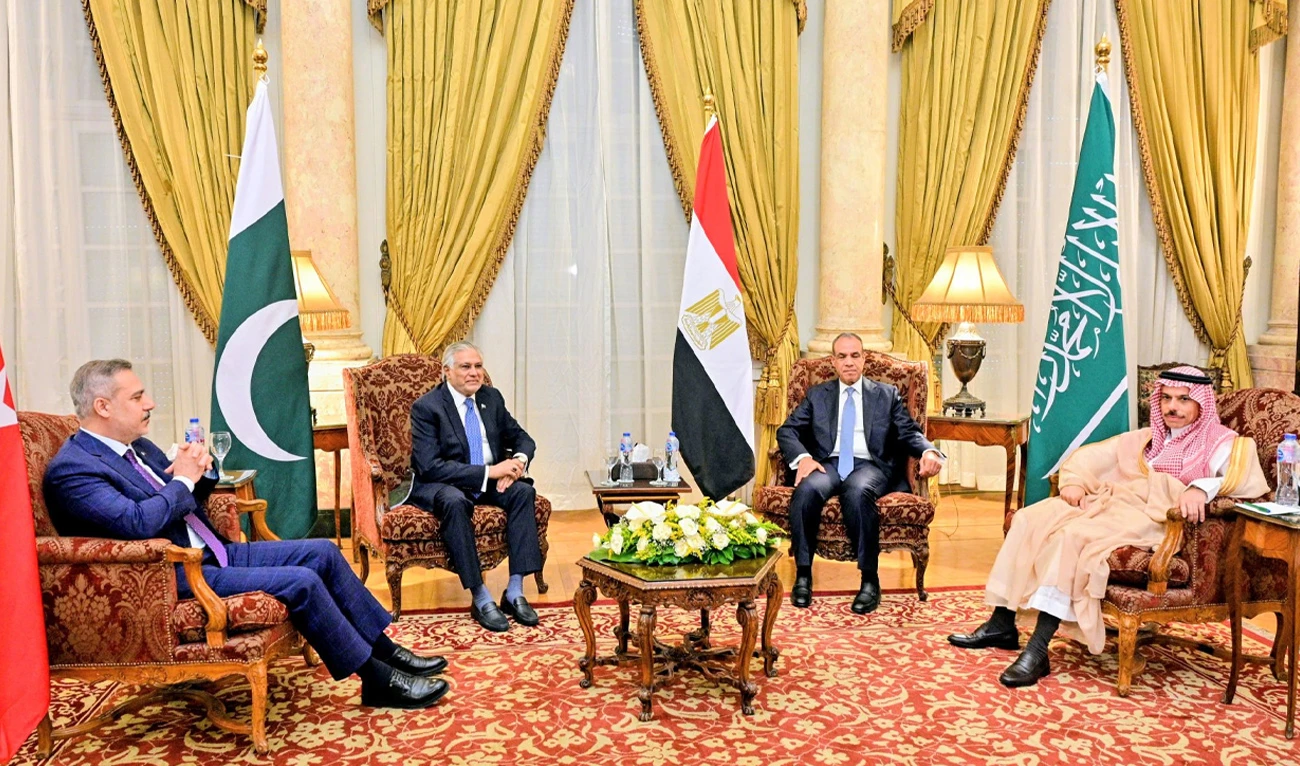
“The meeting stressed the importance of strict and transparent adherence to the austerity measures, promoting fiscal responsibility and prudent use of public resources,” Deputy Prime Minister and Foreign Minister Senator Mohammad Ishaq Dar said in a statement.

He was chairing a meeting of the Committee for Monitoring and Implementation of Conservation and Additional Austerity Measures, constituted under the directions of the PM, bringing together federal and provincial officials to review execution of the broad cost‑cutting plan. 

Dar emphasized the government’s commitment to enforcing the PM’s austerity steps nationwide. The committee’s review also covered reductions in departmental expenditure, deductions from salaries of senior officials earning over Rs. 300,000 ($1,120), and coordination with provincial administrations to ensure uniform implementation of the plan.

Participants at the meeting reiterated that all ministries and divisions must continue strict monitoring and reporting, with transparent oversight mechanisms, as Pakistan navigates the economic pressures from the prolonged Middle East crisis and its fallout on global energy and trade markets.