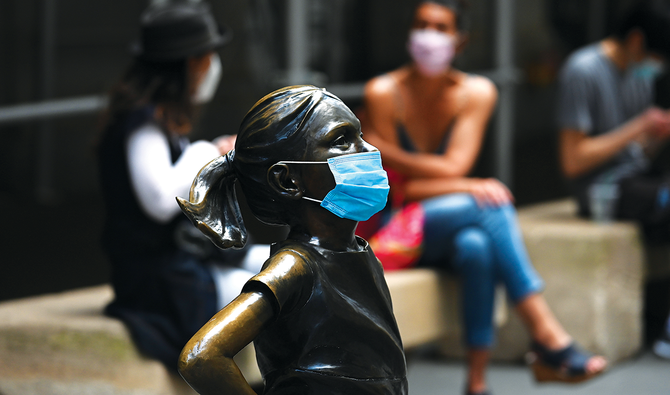

DUBAI: Remember “Fearless Girl”? A 4-foot high statue of a girl installed in New York City in 2017 to symbolize female empowerment that took the world by storm. The agency behind it? McCann.
In a time plagued by fear and panic, it seems only appropriate to check in with the minds behind the fearless girl.
Rob Reilly, global creative chairman of McCann Worldgroup, talked to Arab News about the pandemic, creativity and everything in between.
Q. Do brands really need to address the pandemic in their advertising or communications?
A. I think brands need to be strong. Our belief that the government, especially in America, is going to solve our problems is pretty low. So more and more brands are stepping up and doing the right things. We’re not front-liners but we’re second-liners; our job is to keep brands in business, and it’s an important job.
People are more scared about the economy than they are about COVID! So if brands start faltering and going out of business, it’s going to be scary for a lot of people. When you work at a network like McCann that has all these large corporations around the world and brands that are meaningful in people’s lives, you have a duty to try to keep those brands in business and keep the economy strong.
People are still eating and drinking and enjoying entertainment … It’s just that we have a new reality. I don’t know if brands staying silent is the right move; I think brands need to be out there telling their story, whether it’s about their products or their beliefs. To back that up, we have a lot of brands doing the right thing … General Motors is making ventilators, and Verizon donated a lot of money in the technology sector. But we’re also selling their cars and their phone plans, so I think it’s important that brands are strong.
Q. You said two interesting things here — one is that you have to help brands sell for the economy, and the other is that you do not think it is a good time for brands to stay silent. Are those two necessarily the same thing?
A. I’m not sure they mean the same thing but you know, brands can decide whether they want to make a statement about what’s happening in the world. However, the brands that people are really remembering are the brands that did something.
Early on, every brand was making commercials about these challenging times, and I think it has been made fun of a bit, but that’s advertising people talking to advertising people. The general public needed to hear messages from brands that understood that people are going through a tough time and how to stay together. At the very least, you (as a brand) go out and say something that’s supportive, then you move on to what you’re actually doing, and how to ensure the economy doesn’t falter.

Global Creative Chairman McCann Worldgroup Rob Reilly. (Supplied)
Q. Was there a correlation between brands that were sending out supportive messages and those that were performing well in terms of sales?
A. I don’t know; it depends on what kind of business they’re in. Obviously yes if they’re an essential business brand like Walmart or Verizon. Cars (automotive brands) were struggling for some time but now people might not be traveling by planes, so they might just want to get in a car and drive away for a vacation. Also, streaming services like Netflix are going crazy.
Some brands might not even have to come out and make statements; they just have to be there. If you’re a brand that sells toilet paper, for instance, you don’t have to say too much. One of the advice I give brands is make sure you do the thing people expect you to do first. For Verizon, it’s making sure people are connected. For Nestle, make sure there’s enough food.
Q. As everything has become more digital, people are spending more time on social media platforms, but brands have paused social advertising due to concerns over hate speech and fake news, especially on Facebook. What is your take on that?
A. We advise our clients privately. No one is a fan of hate speech, but as an ad agency, first and foremost I think of how to support our brands. I certainly don’t support hate speech, but I also know that it’s a very complicated thing they’re trying to navigate. I hope Facebook survives through this because I know how important it is to people. I’d hate for it to go away because I think it (social media) has changed our lives for the better and a lot of small businesses use it.
I don’t think it (pausing advertising) is an issue for large brands. It’s the small businesses that rely on these social platforms to stay in business and survive, and that’s a very important thing that no one’s really talking about.