

A coffee table book narrates history of Pakistan through fashion

A Bawany Violin Textile Mills advertisement in 1963, right, and a 1965 advertisement for Jamea Cloth Market, depicting bouffant hair and sarees that were fashionable in Pakistan in the 1960s. (Photo courtesy of Mehr F. Husain and Saad Sarfraz Sheikh via AN)
Short Url
Updated 29 August 2020
Follow

A coffee table book narrates history of Pakistan through fashion

  • Book by Mehr F. Husain and Saad Sarfraz Sheikh explores the evolution of fashion in Pakistan from its independence in 1947
  • Those behind the scenes — makeup artists, hair stylists, models — were the real movers and shakers of the fashion industry

RAWALPINDI: "Pakistan: A Fashionable History" by journalists Mehr F. Husain and Saad Sarfraz Sheikh is a chronological telling of the country's history through its sartorial past.
What started as an investigation into the fashion industry became a visual book, on the evolution of fashion in Pakistan from its independence in 1947.In 2017, bleary-eyed Husain was dropping her child off school when noticed a fellow mom dressed to the nines in a three-piece lawn outfit, but looking as miserable as Husain felt at 7 a.m.
“I stared at her, slouched in my car, thinking why is she dressed like that and who is telling us to dress this way?"
That day, she approached Sheikh, a photojournalist, to embark on a project to document Pakistan’s fashion industry, the first of its kind.
“We wanted to do something historical and anecdotal,” Sheikh said.
 

When they started to interview veteran designers, they realized that the stories they were looking for should also be told by makeup artists, models and decades-old magazine prints.
"We discovered there was an entirely different story, the people behind the scenes were the real movers and shakers of the industry," said Husain said.
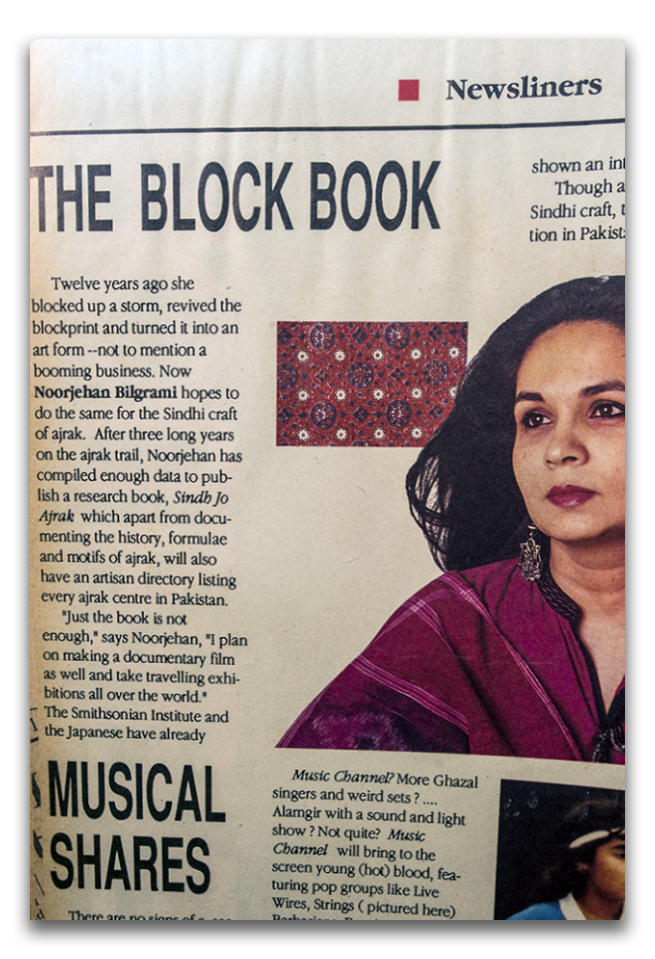
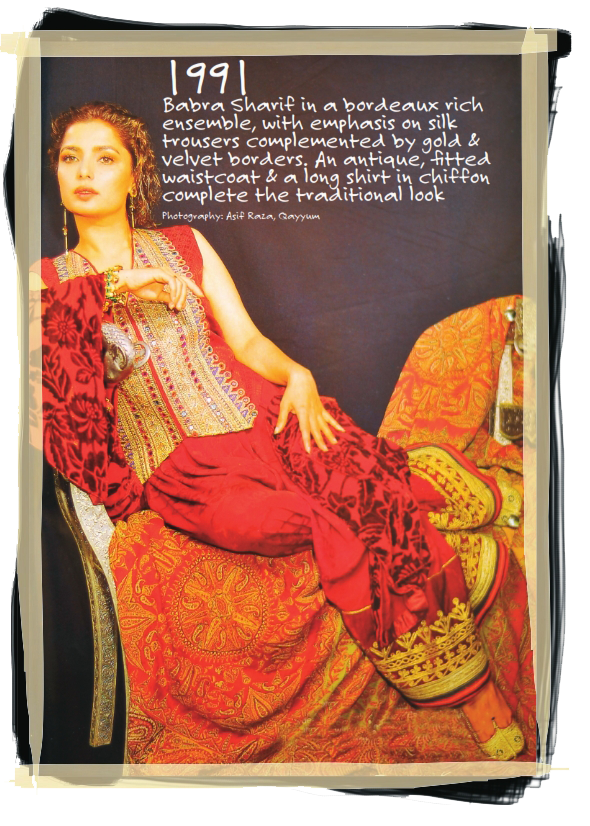
Sheikh’s task to build their image archive took him to Karachi, into old bazaars and bookstores, to find fashion magazines such the Herald and Newsline that helped propel the industry. Sheikh was able to access Newsline’s archive before the legendary journal shuttered last year.

"I spent seven hours in their basement photographing old photos one by one,” he said, “This allowed me to develop an amazing set of archives that is not just time capsules of fashion but culture as well."
The book was two years in the making and faced a number of setbacks. It was originally going to be printed by an Indian publishing house, but in August 2019, when India revoked Kashmir's autonomy, Pakistan stopped imports from the neighbor. The ban included books. The pair decided to publish the book on their own.
The coffee table book is packed with first-person accounts from photographers, models, hair and makeup artists, magazine editors and legendary Pakistani designers such as Maheen Khan and Rizwan Beyg, all of whom played key roles in building the industry as we know it today.
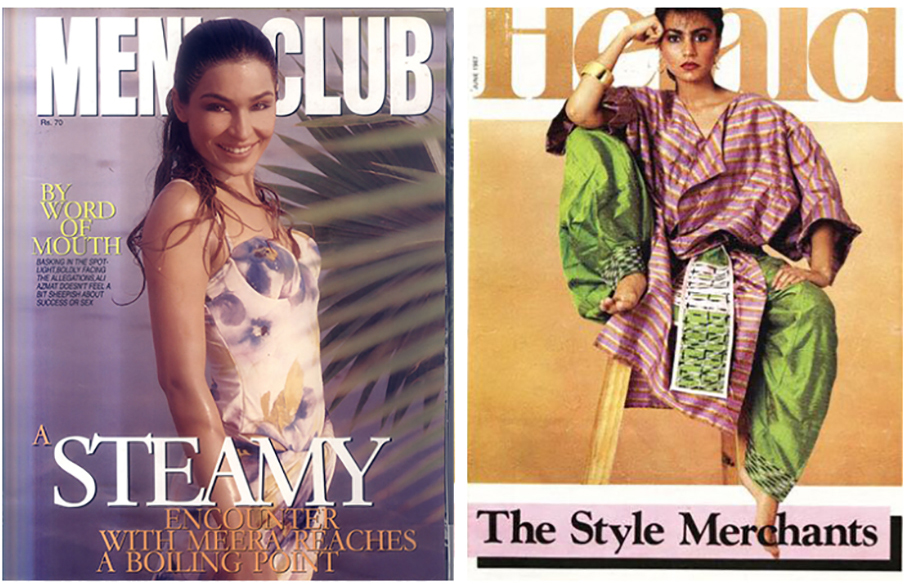


Atiya Khan wears Maheen Khan on Herald's first-ever fashion cover shot in Karachi in June 1987, left, and artist Meera featured on the cover of the revolutionary fashion magazine Men's Club in the 1990s. (Photo courtesy of Mehr F. Husain and Saad Sarfraz Sheikh via AN)

Although it started with a quest to learn more about the history of fashion, the book is also a narrative of the history of Pakistan. “The fashion industry of yesteryear has contributed a lot,” Husain said.
“If you look at what people were consuming back then and at the history this country has had, you would understand Pakistan’s impact on South Asia."


Pakistan police repel militant attack on Bannu checkpoint, five officers injured

Updated 9 sec ago
Follow

Pakistan police repel militant attack on Bannu checkpoint, five officers injured

  • Police say several attackers killed or wounded in overnight assault in northwest Pakistan
  • Incident comes amid surge in militant attacks Pakistan blames on Afghanistan-based groups

ISLAMABAD: Pakistani police said on Friday they repelled an overnight militant attack on a checkpoint in the northwestern district of Bannu, injuring five officers in an area that has seen a sharp rise in militant violence in recent years.

The attack took place late at night at the Sheikh Landak check post, located within the limits of Huweid police station in Bannu, a district of Khyber Pakhtunkhwa province near the Afghan border. Police said officers responded swiftly, preventing the attackers from overrunning the post.

Militant attacks in Pakistan have surged since 2021, particularly in Khyber Pakhtunkhwa and southwestern Balochistan, with security forces frequently targeted. Islamabad says the violence is largely driven by groups it refers to as Fitna Al-Khawarij, a term Pakistani authorities use for militants they say are linked primarily to the Pakistani Taliban and allied factions operating from across the border in Afghanistan. Pakistan has also accused India of backing militant networks involved in attacks, allegations New Delhi denies.

“Late at night, terrorists of Fitna Al-Khawarij carried out a cowardly attack on Sheikh Landak check post,” police said in a statement, adding that officers “displayed full courage, bravery and a timely response, successfully foiling the attack.” 

Police said effective retaliatory fire caused “heavy human and material losses” to the attackers, with reports of several militants killed or wounded.

Five police personnel sustained minor injuries during the exchange and were immediately shifted to hospital for treatment, where they are receiving medical care, the statement said.

Following the attack, additional police units were deployed to the area and a search operation was launched to locate any remaining attackers.

Pakistan has repeatedly accused Afghanistan’s Taliban-led government of failing to prevent militant groups from using Afghan territory to launch attacks inside Pakistan. Kabul denies the allegation, saying it does not allow its soil to be used against any country. 

The accusations have added to tensions between the two neighbors, who have also seen periodic border clashes over the past year.