

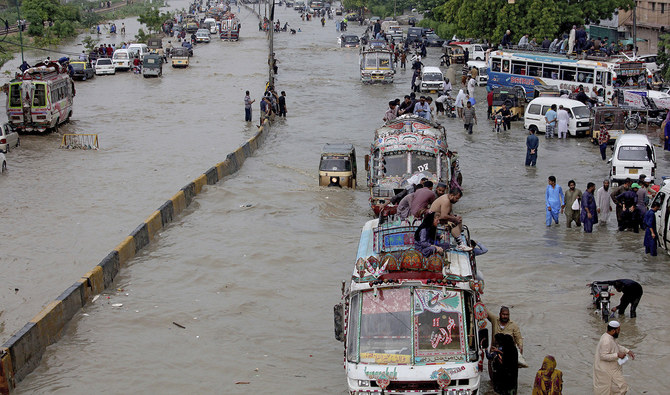

ISLAMABAD: Heavy rains lashed Pakistan’s southern port metropolis of Karachi on Thursday and continued on Friday morning, causing widespread flooding and killing at least 47 people as downpours shattered 89-year-old records for the city, officials told media.
Streets and homes were flooded with sewage water in Karachi, where the drainage and sewage systems are outdated. TV and social media footage showed buildings and bridges submerged in water, and furniture, cars and large NATO containers floating through the streets.
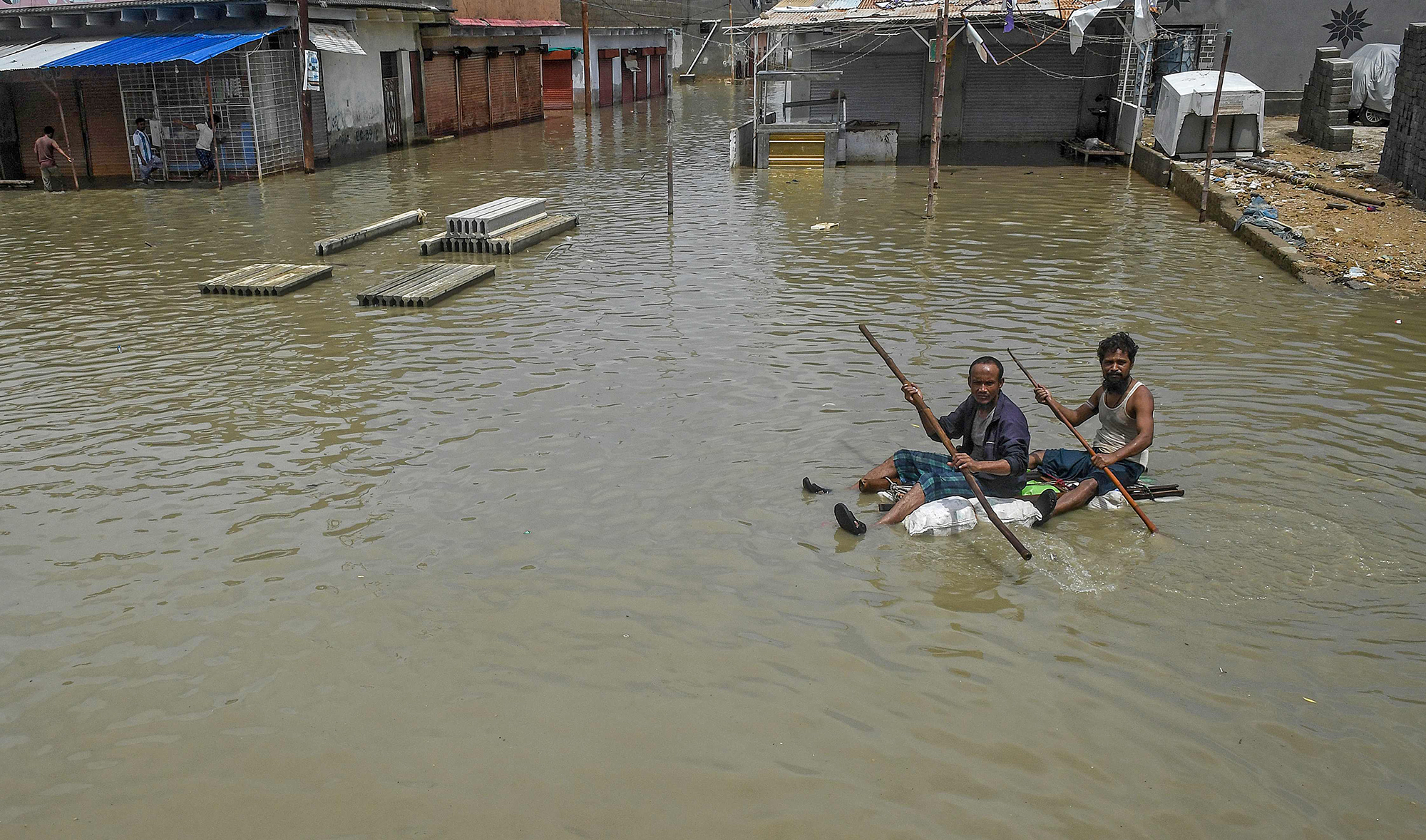
Men use a wooden makeshift boat at a flooded area after heavy monsoon rains triggered floods in Pakistan's port city of Karachi on Aug. 28, 2020. (AFP)
Sindh Chief Minister Murad Ali Shah told reporters on Friday afternoon that 80 people had died across the province, including 47 in Karachi, in rain-related incidents.
Twitter users reported power outages of up to 24 hours.
"Due to accumulation of water in most places, there are difficulties in restoring electricity," electric supply company K-Electric said in a Twitter post, adding that its staff could not reach some locations to address customer complaints.
Some 484 millimeters of rain have fallen in August so far, 130 mm on Thursday alone, city weatherman Sardar Sarfaraz told Reuters.
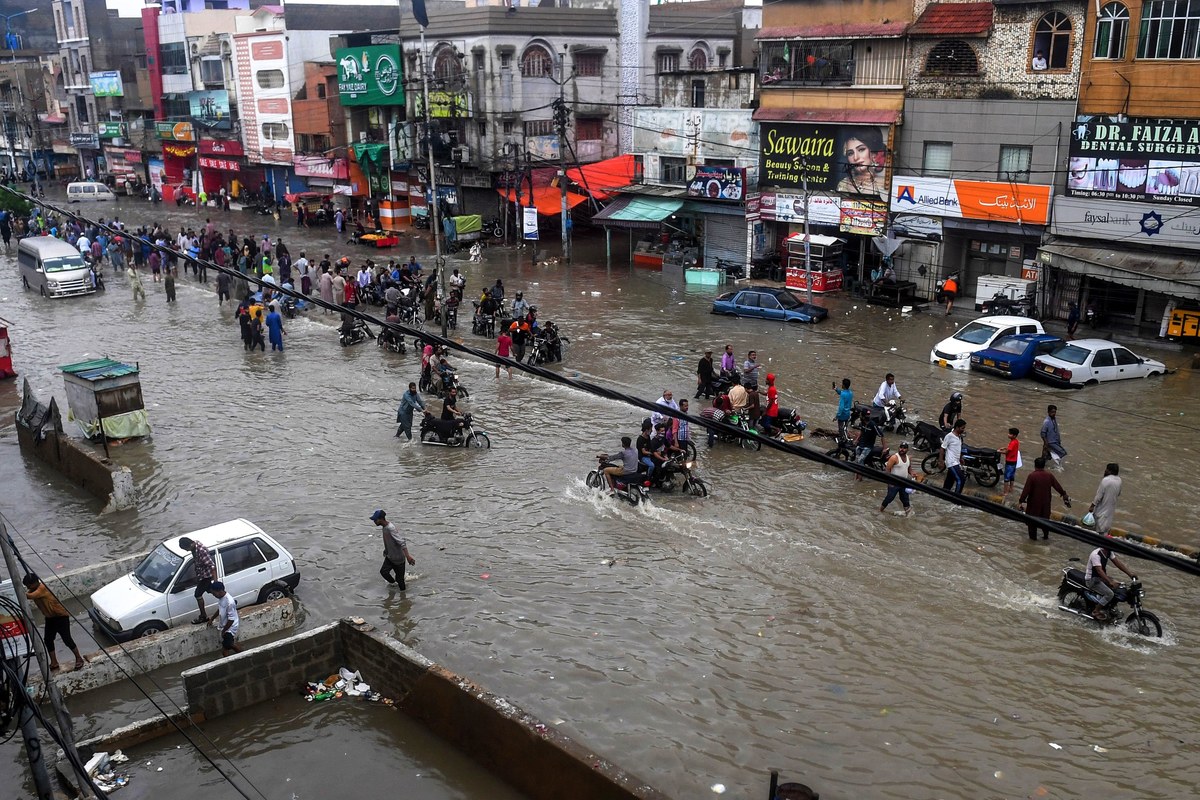
Motorists and pedestrians wade through a flooded street after heavy monsoon rains in Pakistan's port city of Karachi on August 27, 2020. (AFP)
“It has never rained so much in the month of August, according to our data,” Sarfaraz said, adding that the data went back to 1931.
The Met department said Karachi received 223.5 mm of rain in just 12 hours on Thursday alone, the highest amount of rain ever recorded in a single day in the city. The previous 24-hour record was on July 26, 1967, when 211.3 mm was recorded at Masroor base.

Motorists ride past an overturned truck on a damaged road after heavy monsoon rains triggered floods in Pakistan's port city of Karachi on Aug. 28, 2020. (AFP)
The province's chief minister announced a public holiday in Karachi for Friday in view of disruptions caused by the rain. A statement issued by his office said all government, semi-government and private institutions except essential services would remain closed.
Karachi has a network of 550 stormwater drains which zig-zag through the city and flow out into the Arabian Sea, but many are obstructed by illegal construction, waste and sludge. The management of infrastructure and services in the city has been hamstrung by disputes between different levels of government for decades.
After rain havoc this July — with main roads submerged, sewage spewing from manholes and into homes, and power cuts lasting for hours — Prime Minister Imran Khan tasked the National Disaster Management Authority (NDMA) with sorting out the city’s drains.


