

Australia to phase out waste exports, boost recycling

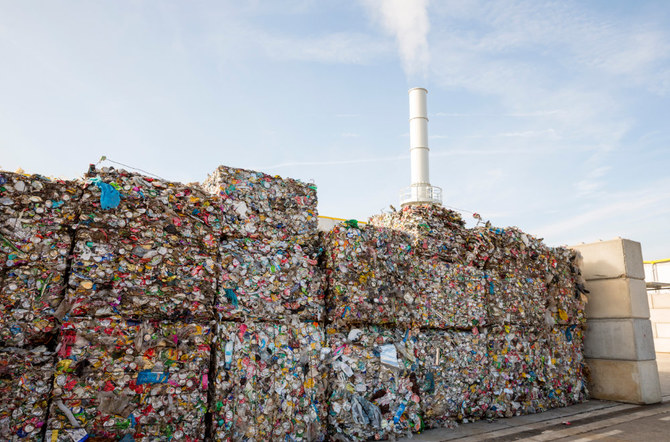
Australia has finally decided to convert its waste products into energy. (Shutterstock photo)
Short Url
Updated 27 August 2020
Follow

Australia to phase out waste exports, boost recycling

  • Australia had been shipping 645,000 metric tons of unprocessed rubbish that overseas each year

CANBERRA: The Australian government introduced legislation on Thursday that would phase out exports of waste plastic, paper, glass and tires beginning January next year.

The legislation introduced to Parliament aims to end the export of 645,000 metric tons (711,000 US tons) of unprocessed rubbish that Australia ships overseas each year, usually to Asian ports. Waste glass exports would be banned from Jan. 1, Prime Minister Scott Morrison said.

“It’s our waste. It’s our responsibility,” Morrison said. “We’ve got to deal with it and recycle it and repurpose it and reuse it here to both drive jobs in the recycling sector and also to improve the quality of our environment.” 

Morrison said waste plastic was a key issue that he had raised with Australia’s South Pacific neighbors and with the East Asian Summit and the Association of Southeast Asian Nations.

“Waste plastic in oceans is destroying communities, it’s destroying their livelihoods, it’s destroying their health,” Morrison said.

FASTFACT

32 %

Australia plans to create 10,000 new jobs in the waste and recycling sector, a 32 percent increase on current staffing levels.

Waste disposal has become an increasingly pressing problem around the world since 2017 when China, previously its main destination, barred imports of almost all foreign waste.

The Australian legislation would establish a national industry framework for recycling and create a 190 million Australian dollar ($138 million) recycling modernization fund.

The government also plans to create 10,000 new jobs in the waste and recycling sector, a 32 percent increase on current staffing levels.

More incentives would be offered to companies to take greater environmental responsibility for the products they make and for what happens with those products and packaging at the end of their lives.

“This is about tackling a national environmental issue that has been buried in landfill or shipped offshore for far too long,” Environment Minister Sussan Ley said in a statement.

The legislation was welcomed by the Australian Council of Recycling and the Australian Food and Grocery Council.


Free trade negotiations between GCC, India mark new phase of partnership, says sec-gen

Updated 24 February 2026
Follow

Free trade negotiations between GCC, India mark new phase of partnership, says sec-gen

RIYADH: The Gulf Cooperation Council’s secretary-general affirmed that the negotiations for a free trade agreement between the GCC and India, and the signing of the joint statement, represents a new phase of strategic partnership.

Jasem Mohamed Al-Budaiwi said that this contributes to enhancing close cooperation and strengthening economic and trade ties, according to the Saudi Press Agency.

This came during the signing ceremony of the joint statement on launching the free trade agreement negotiations between the Al-Budaiwi and India’s Minister of Commerce and Industry, Piyush Goyal, which took place in New Delhi, on Tuesday.

During the signing ceremony, Al-Budaiwi said that the Terms of Reference, signed on Feb. 5, provide a comprehensive and clear framework for these negotiations. The two nations agreed to discuss enhancing cooperation in vital strategic areas, including trade in goods, customs procedures, and services.

Additionally, the framework covers Sanitary and Phytosanitary measures, intellectual property rights, cooperation on Micro, Small, and Medium Enterprises, along with other topics of mutual interest. This reflects the comprehensive nature of the agreement and its ability to keep pace with the future economy.

Al-Budaiwi expressed hope that these negotiations would lead to a comprehensive and ambitious free trade agreement that works to remove customs and non-customs barriers, enhance the flow of quality investments in both directions, and achieve further liberalization in trade and investment cooperation between the GCC and India for mutual benefit. 

This would provide a stimulating economic environment and an investment climate that opens broad horizons for the business sector, supports supply chains, and accelerates the pace of economic growth in line with the ambitious developmental visions of the GCC states. 

The top official affirmed the full readiness of the General Secretariat to host the first round of negotiations at its headquarters in Riyadh during the second half of this year.

The two sides held a meeting during which they reviewed the existing cooperation relations between the GCC and India and discussed ways to develop and elevate them to broader horizons, serving mutual interests and enhancing opportunities for strategic partnership between the two sides, particularly in the economic, investment, and trade fields.

They praised the role undertaken by the negotiating teams from both sides, appreciating the efforts contributing to reaching a comprehensive agreement that enhances economic integration and supports the smooth flow of trade between the two nations.