In Pakistan’s Karachi, transgender Christians get a church of their own

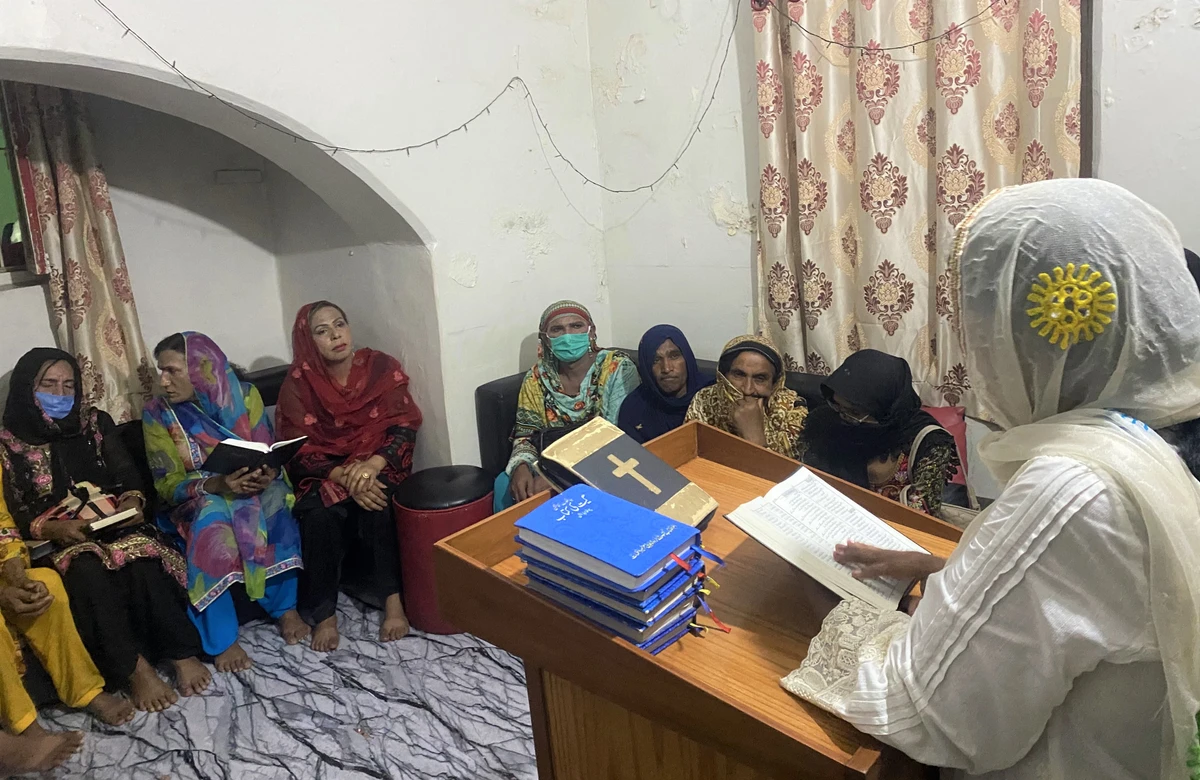
Pastor Ghazala Shafiq reads the Bible at a small church set up at her residence for transgender Christians, in Karachi, Pakistan, on August 21, 2020. (AN Photo)
Short Url
Updated 27 August 2020
Follow

In Pakistan’s Karachi, transgender Christians get a church of their own

  • Pastor Ghazala Shafiq sets up a small church at her residence for Karachi’s 2,000 transgender Christians 
  • Members of the community complain they are often not allowed to enter regular churches or touch the bible 

KARACHI: In a first for Pakistan, Christian members of Karachi city’s transgender community, who for years have complained of religious discrimination, got a church of their own after a pastor invited them to her home where she has dedicated a small corner for church services. 
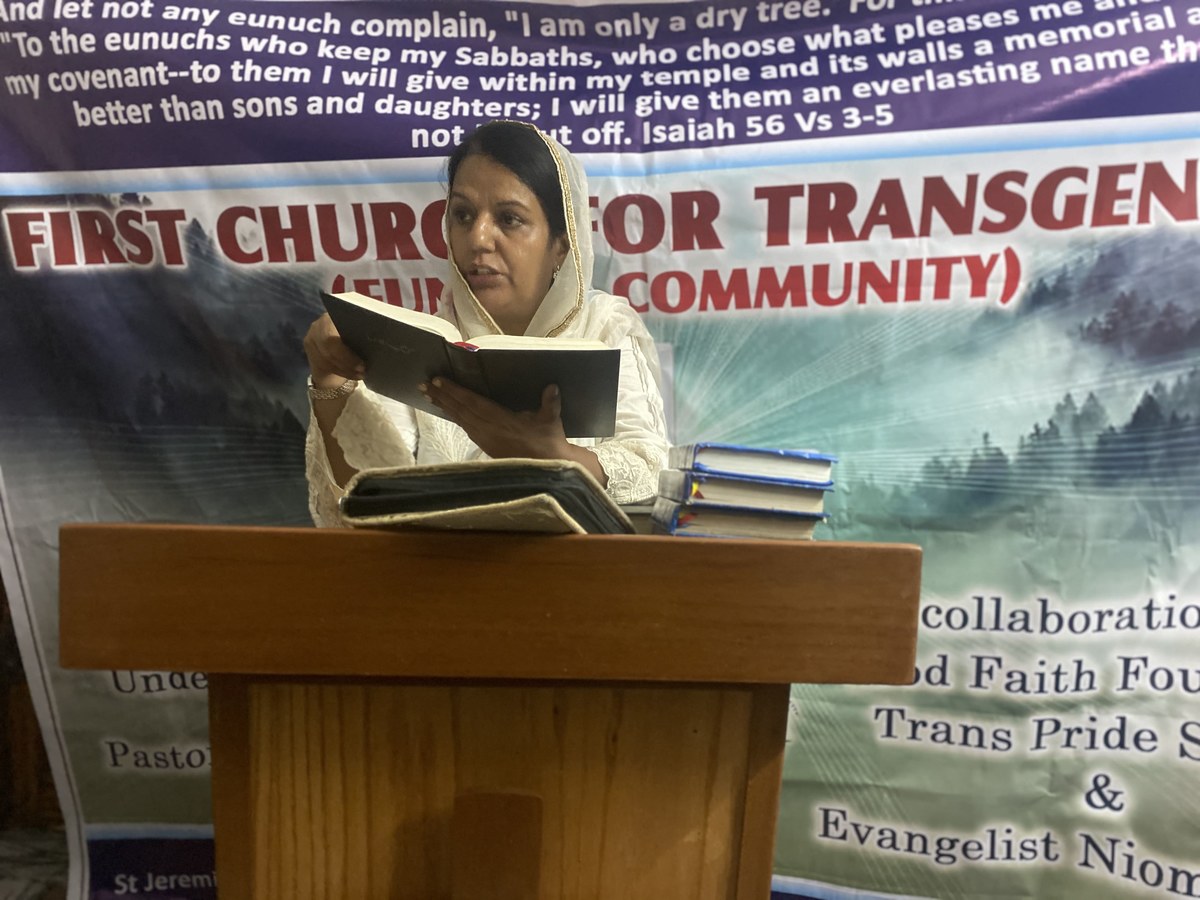


Pastor Ghazala Shafiq reads the Bible at a small church set up at her residence for transgender Christians, in Karachi, Pakistan, on August 21, 2020. (AN Photo) 

Pastor Ghazala Shafiq inaugurated the modest faith center on August 14, Pakistan’s Independence Day, hoping to provide some religious respite to members of the trans community, many of whom complain they are not allowed to enter regular churches or touch the bible. 

“No one was willing to pay heed to their problems, though they opened up to me and shared their stories,” the pastor said.
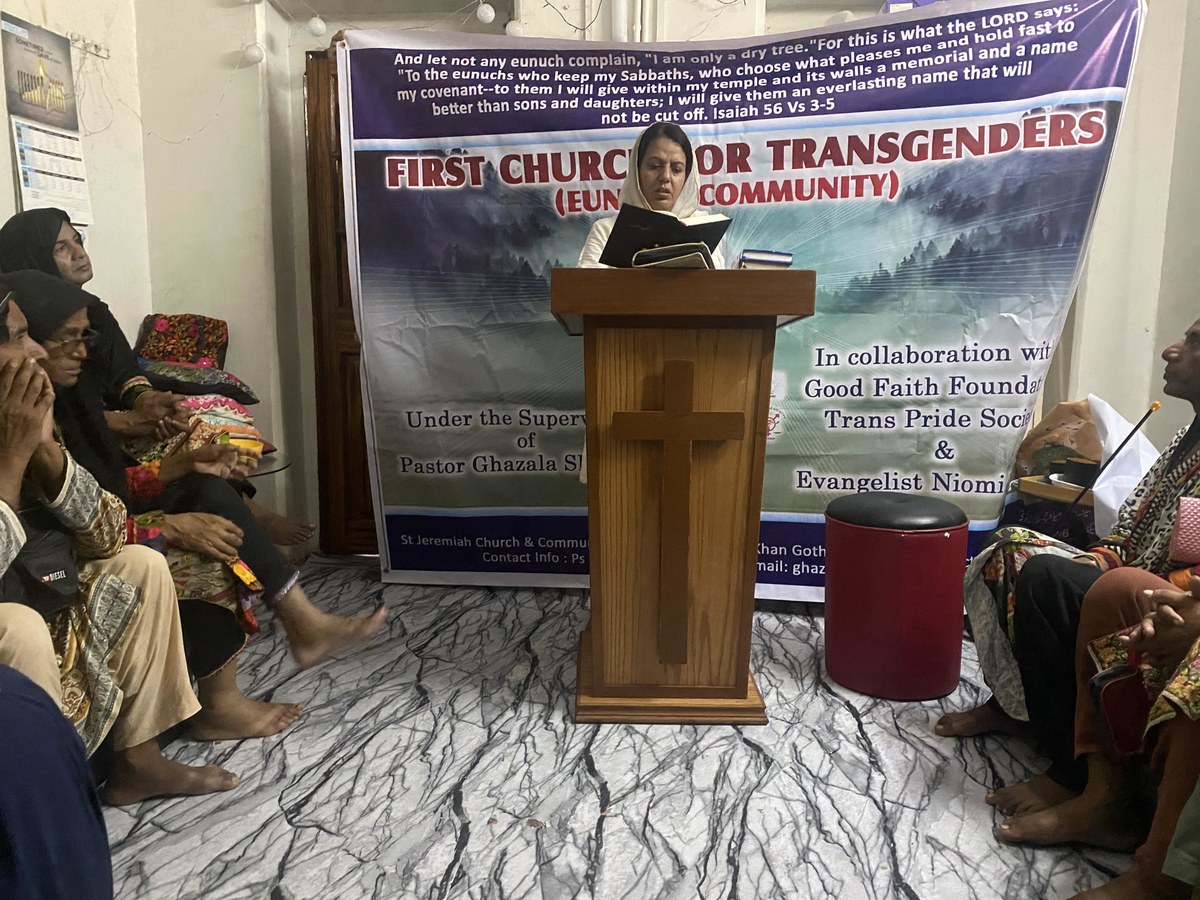


Pastor Ghazala Shafiq reads the Bible at a small church set up at her residence for transgender Christians, in Karachi, Pakistan, on August 21, 2020. (AN Photo) 

According to the 2017 census, the country has 10,418 transgender people out of which 24 percent— or 2,527— live in the southern province of Sindh. The number of them who are Christians is unknown though Shafiq said around 2,000 transgender Christians lived in Karachi. 

Last Friday, about 30 of them visited Shafiq’s makeshift church to perform their religious rituals. 
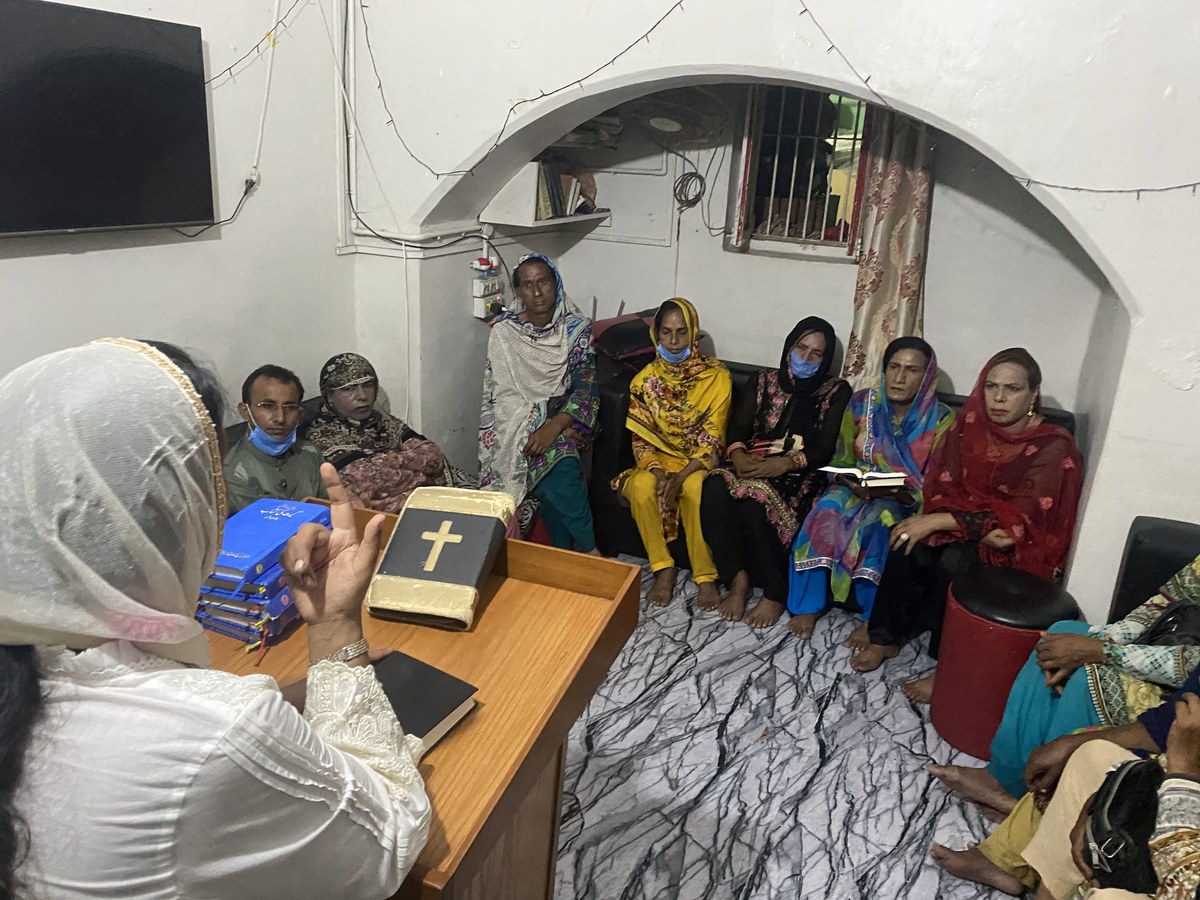


Pastor Ghazala Shafiq reads the Bible at a small church set up at her residence for transgender Christians, in Karachi, Pakistan, on August 21, 2020. (AN Photo) 

“It’s like a dream come true. I can actually hold the Bible,” 40-year-old Nasira Gill, who attended the service, told Arab News while holding the holy book in her hands. 

“No one ever came to our rescue before, neither our parents nor any church,” she complained, adding that she was always inclined toward religion but had to sit on the back benches whenever she visited a church to avoid harassment. 
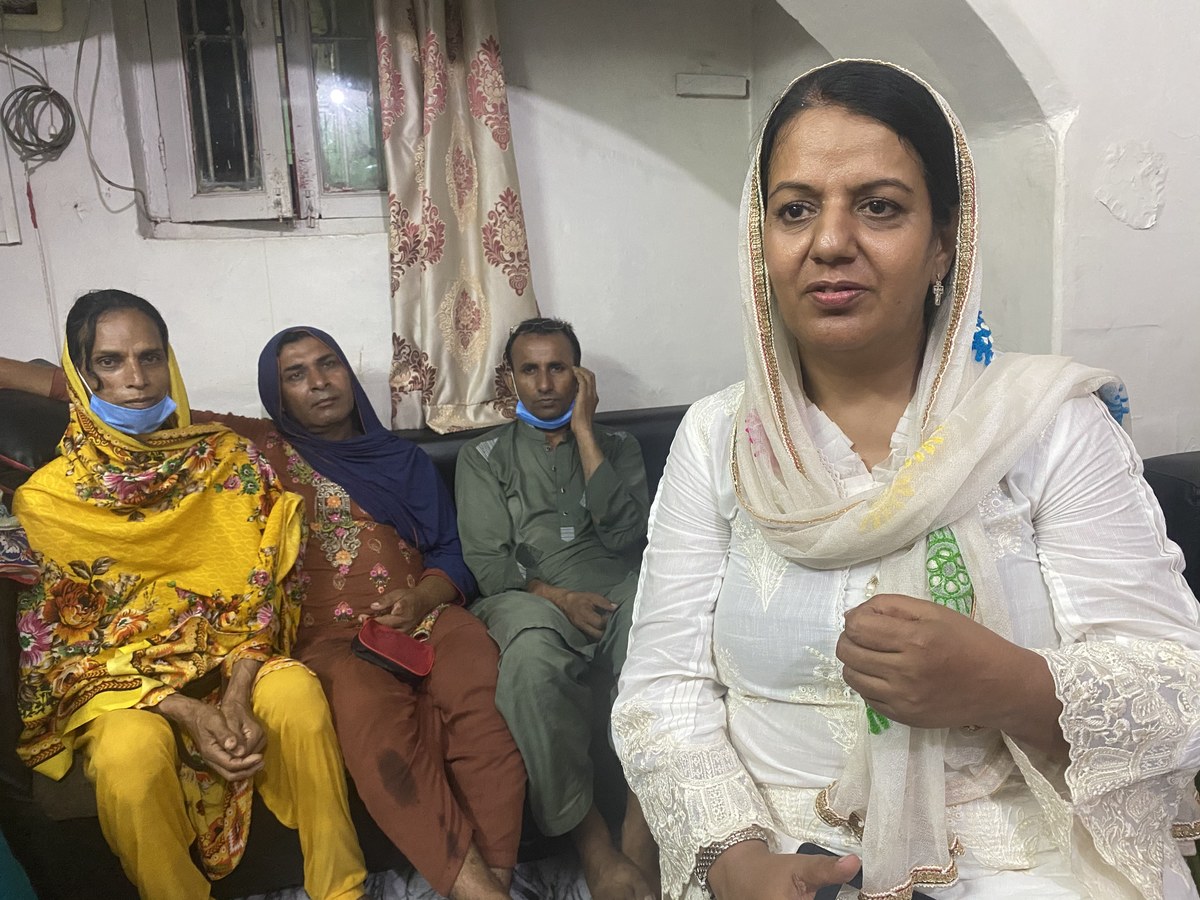


 Pastor Ghazala Shafiq speaks to Arab News in a church for transgender Christians in Karachi, pakistan, on August 21, 2020. (AN Photo) 

“People looked at us as if we had committed a crime,” she said. “Everyone tried to tell us the right way of following our faith. Some of them insisted that we were women and must cover our heads with a shawl while others believed that we were men and should pray bareheaded.”

Bushra, another transgender woman who only uses her first name, said people’s attitudes were pushing hundreds of her community members away from their places of worship. 
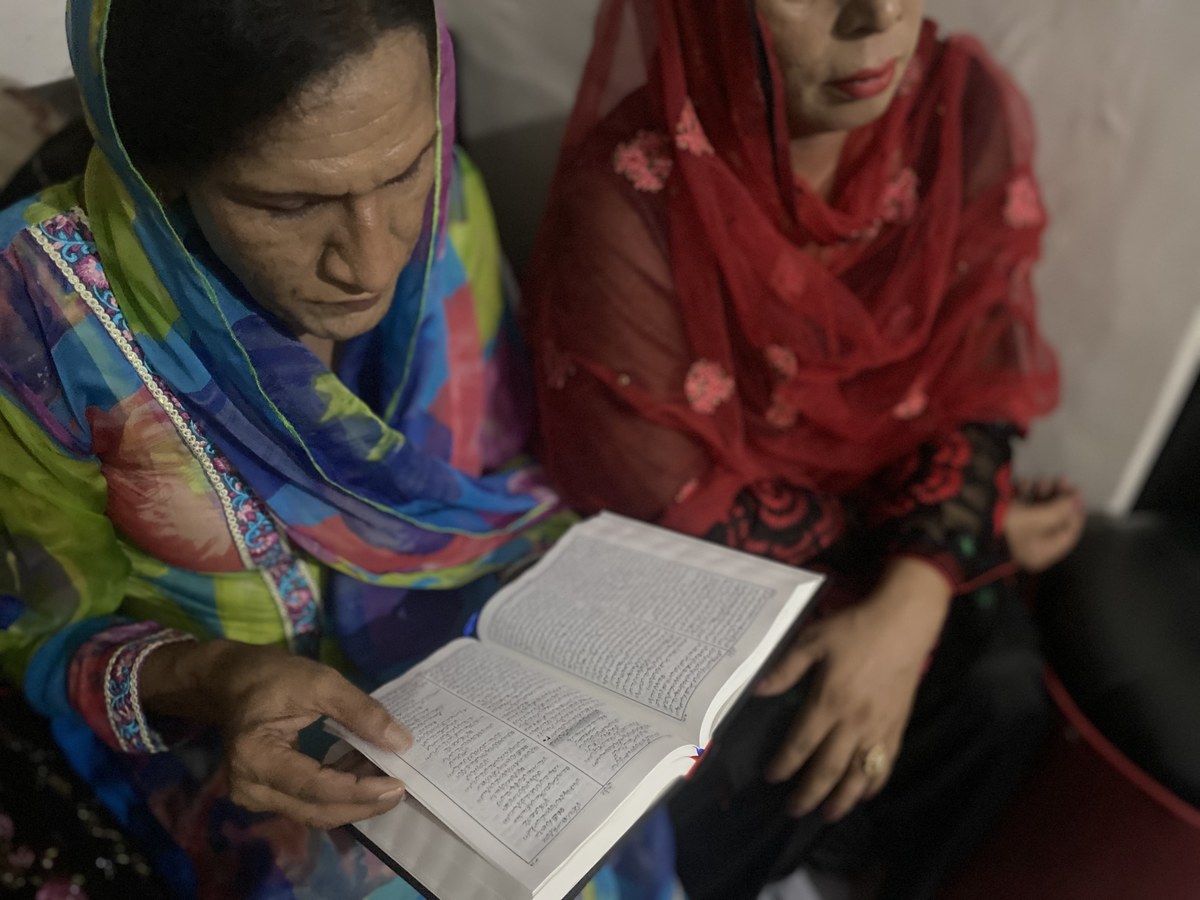


Nasira Gill, a transgender women, reads the Bible during a Friday prayer service at a church established for transgender Christians in Karachi, Pakistan, on August 21, 2020. (AN Photo) 

“People had problems with where we sat,” she told Arab News. “Traditionally, there are separate rows for men and women in Pakistani churches. That leaves us with no space of our own since people kept objecting on why we were occupying one row or another.” 

“Some people believed that transgender persons were dirty and should not touch the scripture,” Shafiq said. “This is despite the fact that Christianity gives them equal rights to pray in churches. God has made a special place for them and they are part of our society. We have to deal with them like our other children.” 

Shafiq said that all these issues made her realize that transgender Christians deserved a church of their own.

“Many people have applauded the initiative,” she said about the church she has opened in her home. “However, there were others, including Christians of Pakistani origin who live in the United States and Britain, who called my husband and asked him to stop me from taking this initiative. Some of them dismissively said that I was setting up a church for ‘hijras’ [a derogatory slur for transgender people].” 

Shafiq now says she is raising funds to construct a proper church building for the transgender community. 

“I love reciting the Bible,” said Arzo, who only uses her first name. “Unfortunately, I had to suppress the urge for many years. Things are different now and I can pray to God without being mocked or judged by anyone.” 

Pakistani court sentences TLP leader for 35 years over incitement against ex-chief justice

Updated 16 December 2025
Follow

Pakistani court sentences TLP leader for 35 years over incitement against ex-chief justice

  • The case stems from a 2024 speech targeting former Chief Justice of Pakistan Qazi Faez Isa over a blasphemy ruling
  • Conviction follows the government’s move to proscribe Tehreek-e-Labbaik Pakistan after clashes with police this year

ISLAMABAD: A Pakistani court this week sentenced a leader of the religio-political party Tehreek-i-Labbaik Pakistan (TLP) to 35 years’ imprisonment on multiple charges for inciting hate against former Chief Justice of Pakistan Qazi Faez Isa.

Peer Zaheer ul Hasan Bukhari made the remarks in a 2024 speech at the Lahore Press Club against the former chief justice for issuing a judgment in a case involving a man named Mubarak Sani under the blasphemy laws, a member of a minority religious community whose death sentence was overturned.

Authorities said Bukhari’s comments amounted to incitement to violence, after which police registered a case against him under various terrorism-related provisions as well as charges of inciting hatred.

The cleric was handed multiple jail terms on a range of charges, with the longest being 10 years of rigorous imprisonment, amounting to a total of 35 years.

“All the sections of imprisonment awarded to the convict shall run concurrently,” Anti-Terrorism Court Judge Arshad Javed said in a letter to the Kot Lakhpat Central Jail superintendent.

A collective fine of Rs600,000 ($,150) was also imposed on the TLP party leader under the provisions of the Anti-Terrorism Act.

The move follows Pakistan’s decision in October to ban the TLP and designate it a proscribed organization under the Anti-Terrorism Act after violent clashes between its supporters and law enforcement in Punjab.

The unrest erupted as demonstrators attempted to travel from Lahore to Islamabad, saying they wanted to stage a pro-Palestine rally outside the US Embassy.

However, officials said TLP supporters were armed with bricks and batons, arguing their intention was to stir violence similar to earlier marches toward the federal capital.

The clashes between TLP supporters and police resulted in the deaths of five people, including two policemen, and injured more than 100 officers and dozens of protesters.

Led by Saad Hussain Rizvi, the TLP is known for its confrontational street politics and mass mobilizations.

Since its emergence in 2017, the party has repeatedly organized sit-ins and marches toward Islamabad, often triggering violent confrontations and prolonged disruptions on major routes to the capital.