

REVIEW: ‘Project Power’ — intriguing, but ultimately weak

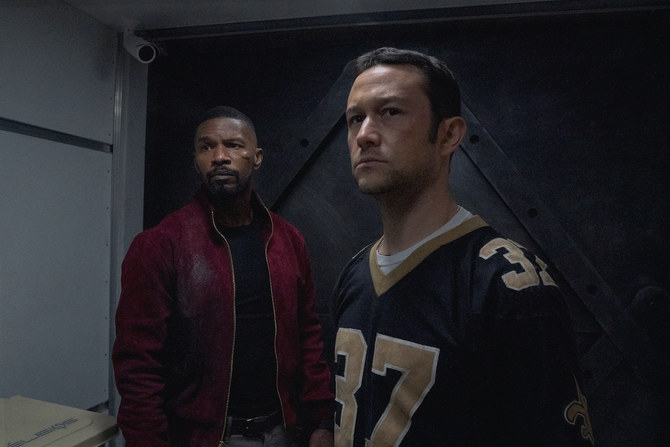
The crime triller is directed by Ariel Schulman and Henry Joost. (Supplied)
Short Url
Updated 27 August 2020
Follow

REVIEW: ‘Project Power’ — intriguing, but ultimately weak

  • New superhero universe has a solid premise, but shortchanges its own universe

LONDON: Love them or loathe them, superhero movies have become a mainstay of modern cinema, with studios desperate to either mine a previously untapped vein of comic-inspired material, or uncover that rarest of properties — an entirely original superhero story.

Netflix’s “Project Power” is the streaming giant’s latest attempt at the latter. Directors Ariel Schulman and Henry Joost (the duo behind “Catfish” and “Nerve”), working on a script by Mattson Tomlin (co-writer of “The Batman”), opt for a blend of gritty crime thriller and low-key superpower action, bringing together a trio of unlikely characters and dropping them in the middle of a hyper-violent New Orleans drugs war.
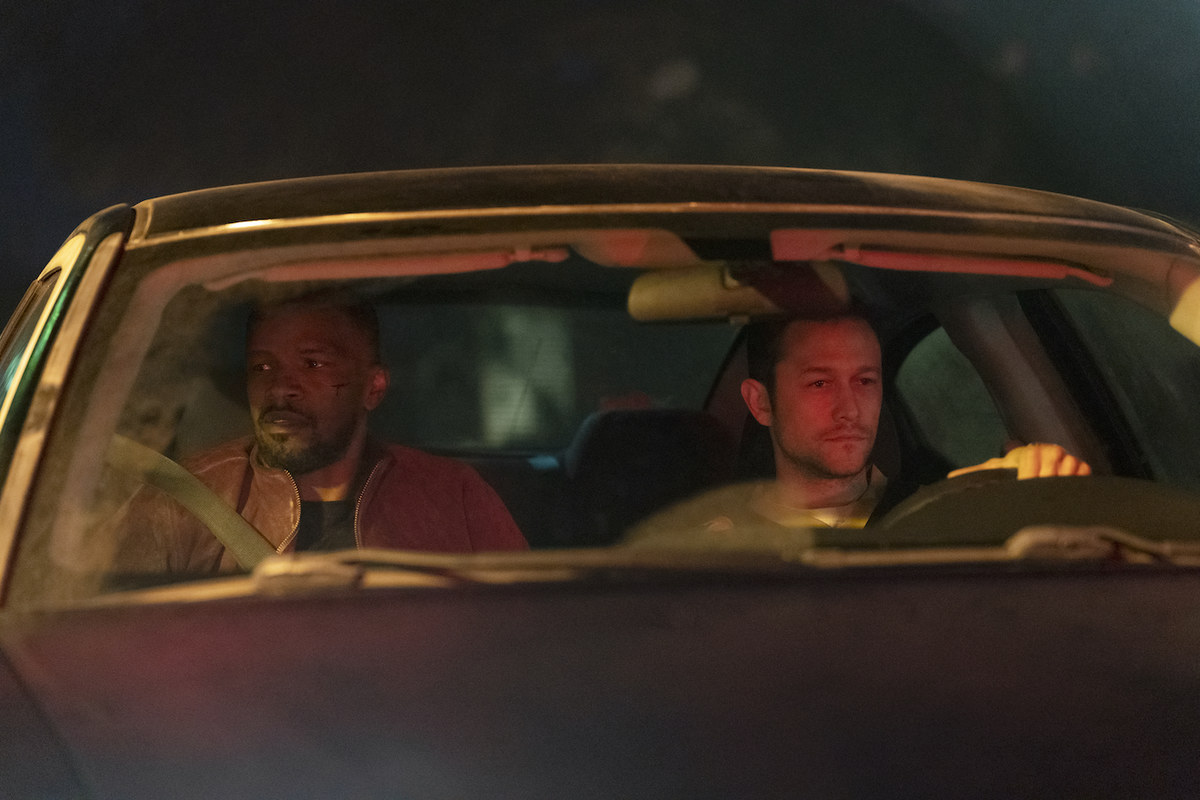


“Project Power” is on Netflix. (Supplied)

Teenage dealer Robin (Dominique Fishback) has an unorthodox business arrangement with New Orleans police officer Frank (Joseph Gordon-Levitt). Frank is desperate to rid the city of Power — a new drug that grants random superpowers for five minutes — but his methods raise one or two moral questions: he keeps an eye out for Robin, but also uses some of her stash to take down superpowered criminals.

The two cross paths with Art (Jamie Foxx) — a relentless former soldier with his own reasons for bringing down the people behind Power — and wind up knee-deep in a shady government plot to weaponize superpowers. It’s a great premise, and one that’s backed by three stellar performances from the movie’s leads.

But “Project Power” comes unstuck when Schulman and Joost try to cram too much into just a couple of hours. Superhero franchises tend to have multiple movies to build up ensemble casts, and character backstories that have been delicately honed over decades-long comic-book arcs. Here, there’s too much to take in in too short a time, and the movie’s final third feels rushed, with plot points glossed over, and the grand showdown lumbering into view with an air of inevitability. Which is a shame, because at times “Project Power” feels ideally placed to poke intelligent fun at a genre which can be a little cumbersome.

Perhaps there will be a sequel — the film is certainly set up for one — and the “Project Power” universe will have a little more room to flex.


Review: ‘Sorry, Baby’ by Eva Victor

Eva Victor appears in Sorry, Baby by Eva Victor, an official selection of the 2025 Sundance Film Festival. (Supplied)
Updated 27 December 2025
Follow

Review: ‘Sorry, Baby’ by Eva Victor

  • Victor makes a deliberate narrative choice; we never witness the violence of what happens to her character

There is a bravery in “Sorry, Baby” that comes not from what the film shows, but from what it withholds. 

Written, directed by, and starring Eva Victor, it is one of the most talked-about indie films of the year, winning the Waldo Salt Screenwriting Award at Sundance and gathering momentum with nominations, including nods at the Golden Globes and Gotham Awards. 

The film is both incisive and tender in its exploration of trauma, friendship, and the long, winding road toward healing. It follows Agnes, a young professor of literature trying to pick up the pieces after a disturbing incident in grad school. 

Victor makes a deliberate narrative choice; we never witness the violence of what happens to her character. The story centers on Agnes’ perspective in her own words, even as she struggles to name it at various points in the film. 

There is a generosity to Victor’s storytelling and a refusal to reduce the narrative to trauma alone. Instead we witness the breadth of human experience, from heartbreak and loneliness to joy and the sustaining power of friendship. These themes are supported by dialogue and camerawork that incorporates silences and stillness as much as the power of words and movement. 

The film captures the messy, beautiful ways people care for one another. Supporting performances — particularly by “Mickey 17” actor Naomi Ackie who plays the best friend Lydia — and encounters with strangers and a kitten, reinforce the story’s celebration of solidarity and community. 

“Sorry, Baby” reminds us that human resilience is rarely entirely solitary; it is nurtured through acts of care, intimacy and tenderness.

A pivotal scene between Agnes and her friend’s newborn inspires the film’s title. A single, reassuring line gently speaks a pure and simple truth: “I know you’re scared … but you’re OK.” 

It is a reminder that in the end, no matter how dark life gets, it goes on, and so does the human capacity to love.