

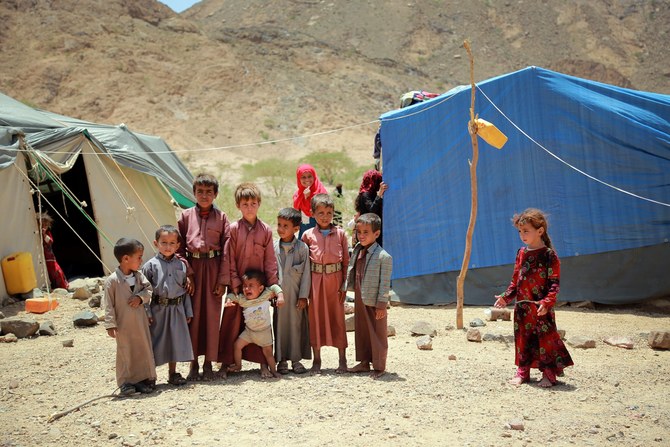

KARACHI: After the success of its eDoctor program in Pakistan, a Pak-Saudi online training and education platform is launching telehealth maternity and childcare services in Yemen, the group’s chief executive told Arab News.
Educast has trained hundreds of Pakistani doctors in telemedicine since 2019 and now seeks to utilize their expertise in war-torn Yemen, which has one of the highest maternal mortality ratios in the world.
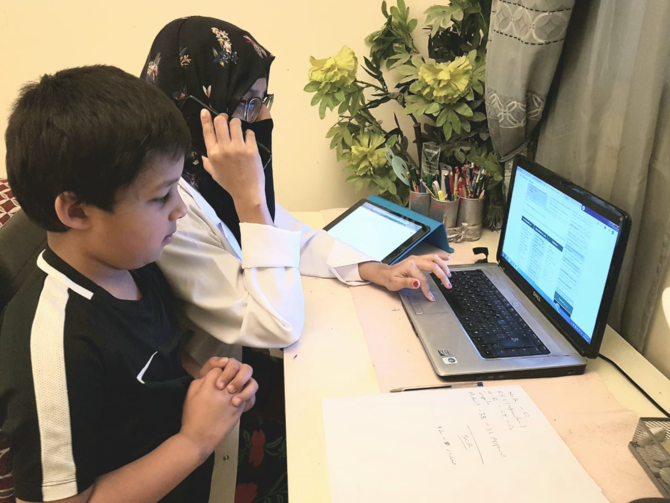
A female doctor provides e-consultancy services to patients in Pakistan from her home in Riyadh, Saudi Arabia, on June 15, 2020. (Photo courtesy: Educast via AN)
“Our main focus in Yemen will be maternal, neonatal and child health,” Abdullah Butt, CEO of Educast, said. “Authorities in Yemen have granted us permission to start the telehealth operations under the eDoctor program. The installation and testing of relevant equipment is completed and operations will be launched in the first week of September.”
The eDoctor initiative was launched in Pakistan in 2019 with academic support from Dow University of Health Sciences (DUHS) in Karachi, Sindh province, to lure back a large numbers of Pakistani women doctors who had stopped practicing medicine for a number of reasons, top among them family pressure or that they had to relocate abroad once married.
“We have provided online training to 800 female e-doctors, working remotely from home in 15 countries. At present, through the platform, 450 women eDoctors are attached to Sindh government’s central coronavirus monitoring cell who remotely oversee thousands of COVID-19 patients,” Butt said.
Under the patronage of Prince Miteb bin Thunayan bin Muhammad Al-Saud and Prince Abdul Aziz bin Miteb Al-Saud, Educast is now seeking to increase the scope of the eDoctor program in different countries around the world.
“Some 200 licensed Pakistani female doctors residing in the Middle East will provide their e-consultant services in Yemen due to their familiarity with Arabic,” Butt said.
The eDoctor program in Yemen will be launched with a local partner, Empowerment Relief, in Ma’rib city at Al-Jufaina camp for internally displaced persons, in the western part of the country.
Ghulam Mustafa Tabbasum, head of eDoctor operations in Yemen, told Arab News that besides teleclinics, the company would also provide training to local health workers: “Through this project, lady health workforce, nursing staff and paramedics, will be trained by experts using our online interaction lectures with experts.”
Pakistani doctors involved in the project say they look forward to serving Yemeni mothers and children who are in dire need of access to skilled care.
“I will do my best with skills and knowledge to help people in Yemen in these crisis and difficult situation they are facing,” UAE-based Dr. Saima Shamim told Arab News.
“Mothers and children in war-torn Yemen need our help and I am excited and feel honored to serve them from Oman,” Dr. Rehana Din Muhammad said from Muscat.


