- The School of Fine Arts and Music was established at one of Sindh's main jails in 2008, around 6,200 prisoners have attended classes there to date
- Currently, around 700 prisoners are learning painting, music, jewellery making and embroidery as part of the program
KARACHI: The scene in the painting is dark: The iron bars of a prison cell and beyond them, hanging nooses, and the profile of a man's face surrounded by books and a padlock that has been unlatched.
The work is by Rahim Bugti, a death row inmate at Central Jail in Pakistan’s port metropolis of Karachi, who says an art rehabilitation programme for the prison's over 3,300 prisoners has helped ease the tedium of life behind bars and teach him new skills.
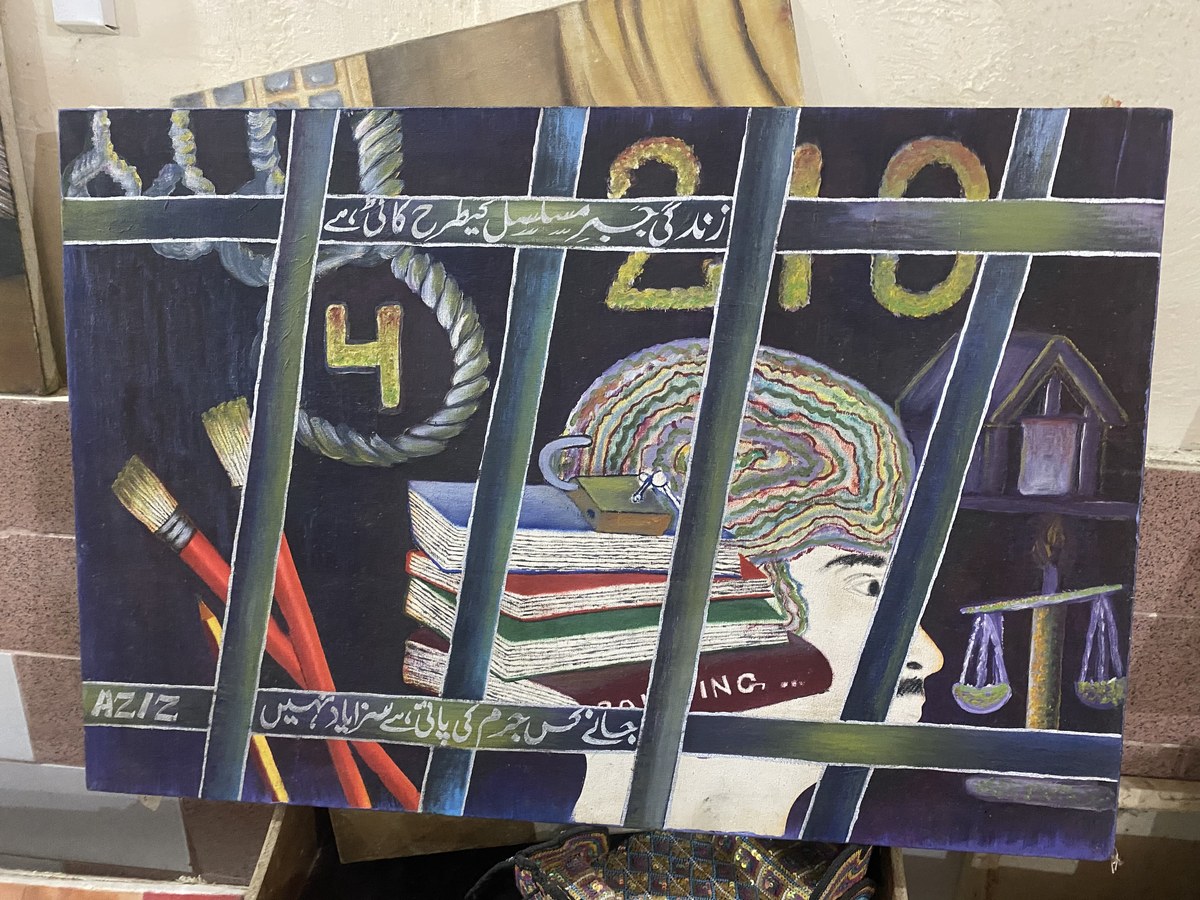
A painting at the School of Fine Arts and Music, a rehabilitation and art therapy program at the Central Jail Karachi, Pakistan, on August 20, 2020 (AN Photo)
Central Jail Karachi is considered a high-security prison and houses, among thousands of others, 146 death row inmates and 944 people convicted of heinous crimes. The prison launched its School of Fine Arts and Music in 2008, offering painting, jewellery, embroidery, music and language training classes to inmates.
Around 6,200 prisoners have participated in the programme to date, as per data shared by the jail superintendent, and 690 are currently enrolled. Most of the instructors of the program are inmates who have attended the program in past years. Classes are held in two shifts daily and all material is provided by jail authorities.
Pakistan’s prisons have a reputation as brutal holding pens, but wardens and jail administrators praise the programme at the Karachi jail for calming inmates and preparing them for improved lives after release.
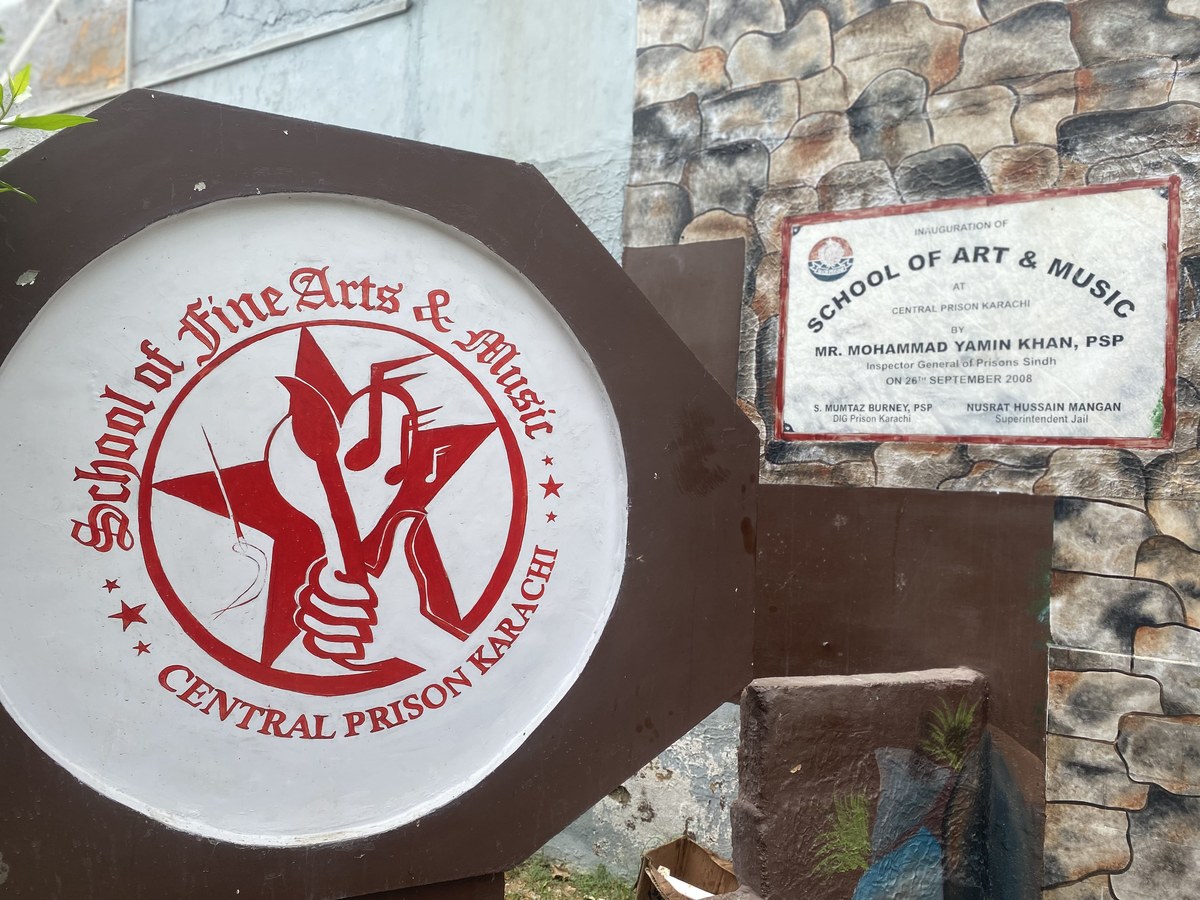
A sign for the School of Fine Arts and Music, a rehabilitation and art therapy program at the Central Jail Karachi, Pakistan, on August 20, 2020. (AN Photo)
And though prison experts acknowledge that art is not likely to turn habitual criminals into model citizens, they also say that prisoners who participate in programs such as the one introduced at Central Jail Karachi not only show less hostility toward other inmates, but also forge closer bonds with their families.
“If I was not painting, I would have become a psycho and got sick,” said Bugti, who in 2007 was awarded the death sentence and 210 years in prison for involvement in militant attacks on security forces in the insurgency-racked Balochistan province.
Though Bugti has almost no prospects of getting parole, the painting classes, especially the ability to sell his work and earn money for his family, have given his life some purpose.
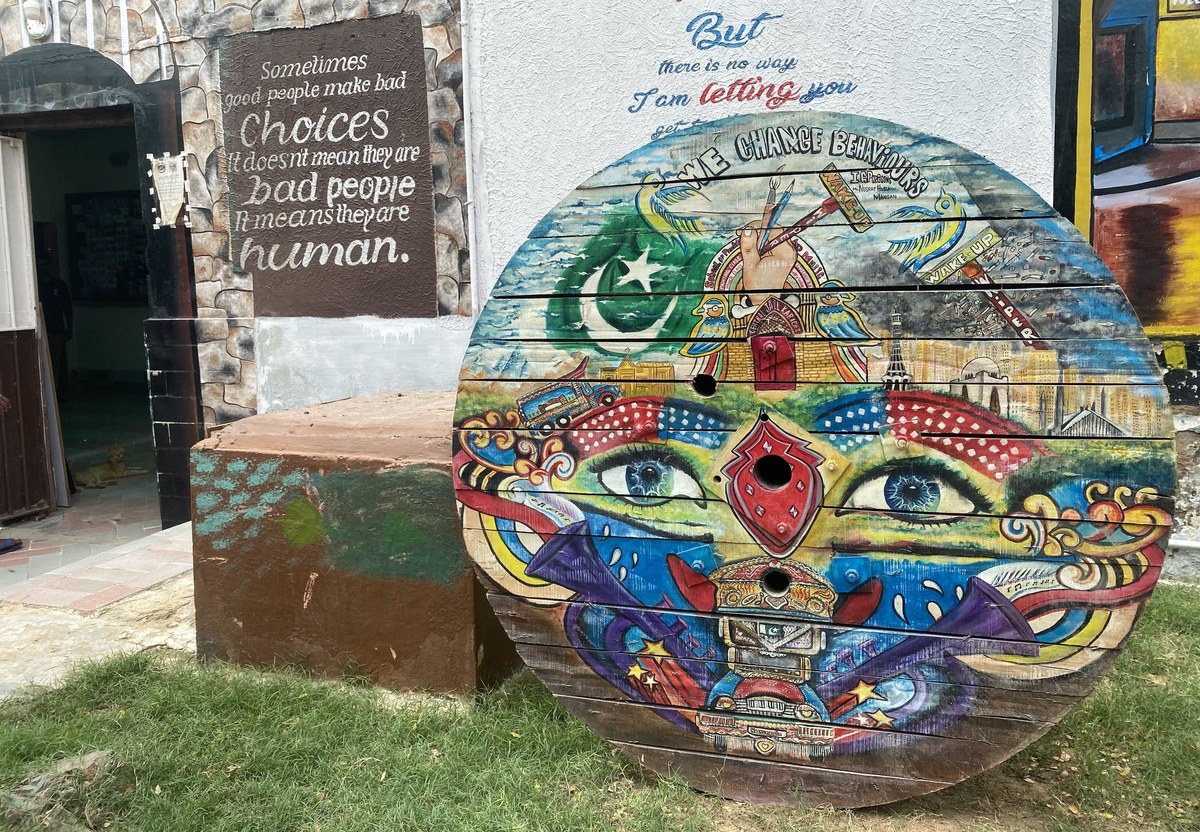
The entrance of the School of Fine Arts and Music, a rehabilitation and art therapy program at the Central Jail Karachi, Pakistan, on August 20, 2020 (AN Photo)
“When I came to jail my mind was closed, I didn’t have any skills,” he said. “Now, here, I have opened the lock of my mind with education and painting. Now I am working.”
In May last year, the Sindh government repealed British-era prison laws and replaced them with the Sindh Prisons and Correctional Facilities Bill 2019, said Murtaza Wahab, the Sindh government advisor on information and law.
The law, and the Karachi jail art programme, he said, were aimed at giving inmates a chance to live “dignified lives” once they were out of prison.
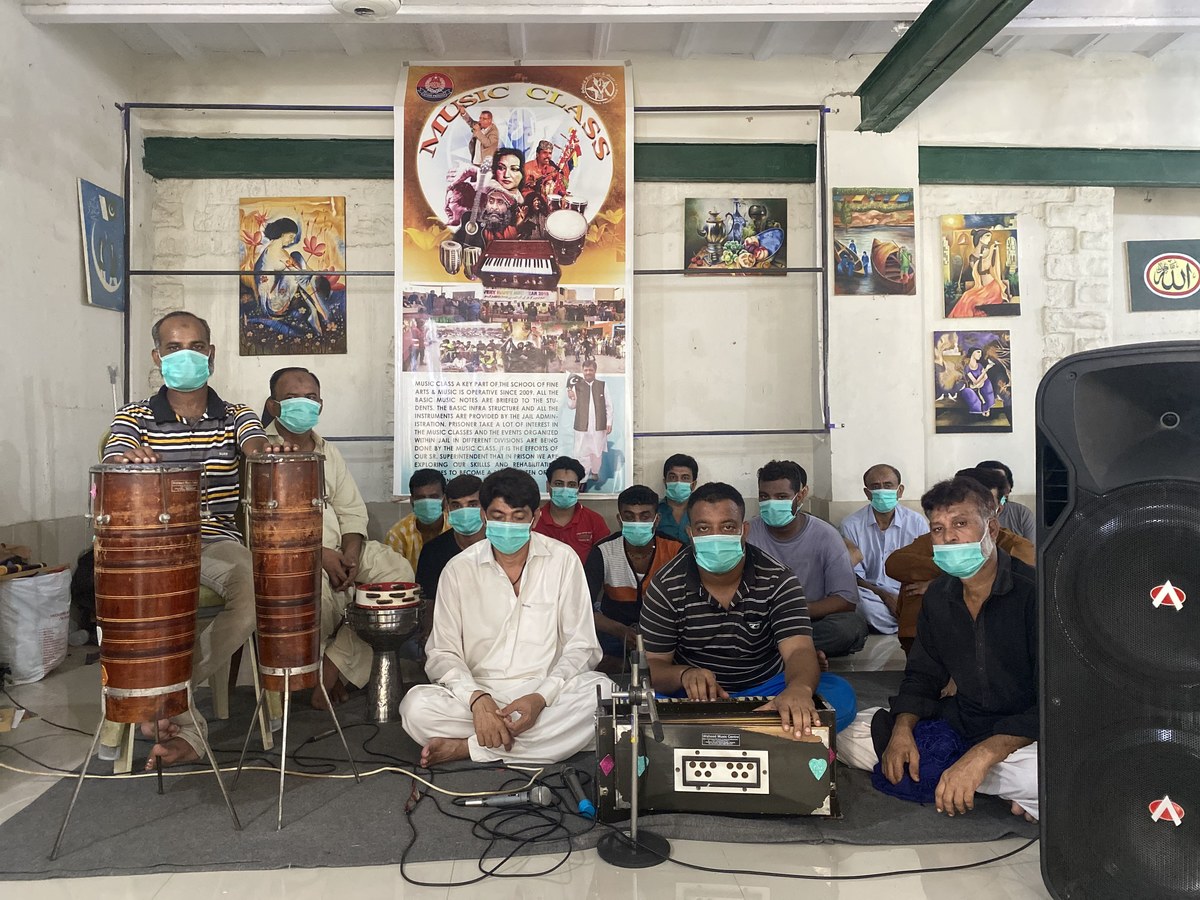
Prisoners sing a song during a music class at the School of Fine Arts and Music, a rehabilitation and art therapy program at the Central Jail Karachi, Pakistan, on August 20, 2020. (AN Photo)
“There are many prisoners who have been sentenced to death and life imprisonment but being students of arts and music, they are now totally changed men,” said Sohail Ahmed, an inmate who supervises classes at the School. “Their families are happy to see them in this better position and after their release they are going to be better citizens.”
When you get into art, Ahmed said, “you start becoming gentle, humble and start loving things and people.”
The classes, he insisted, had instilled in the prisoners the desire to be “better citizens.”
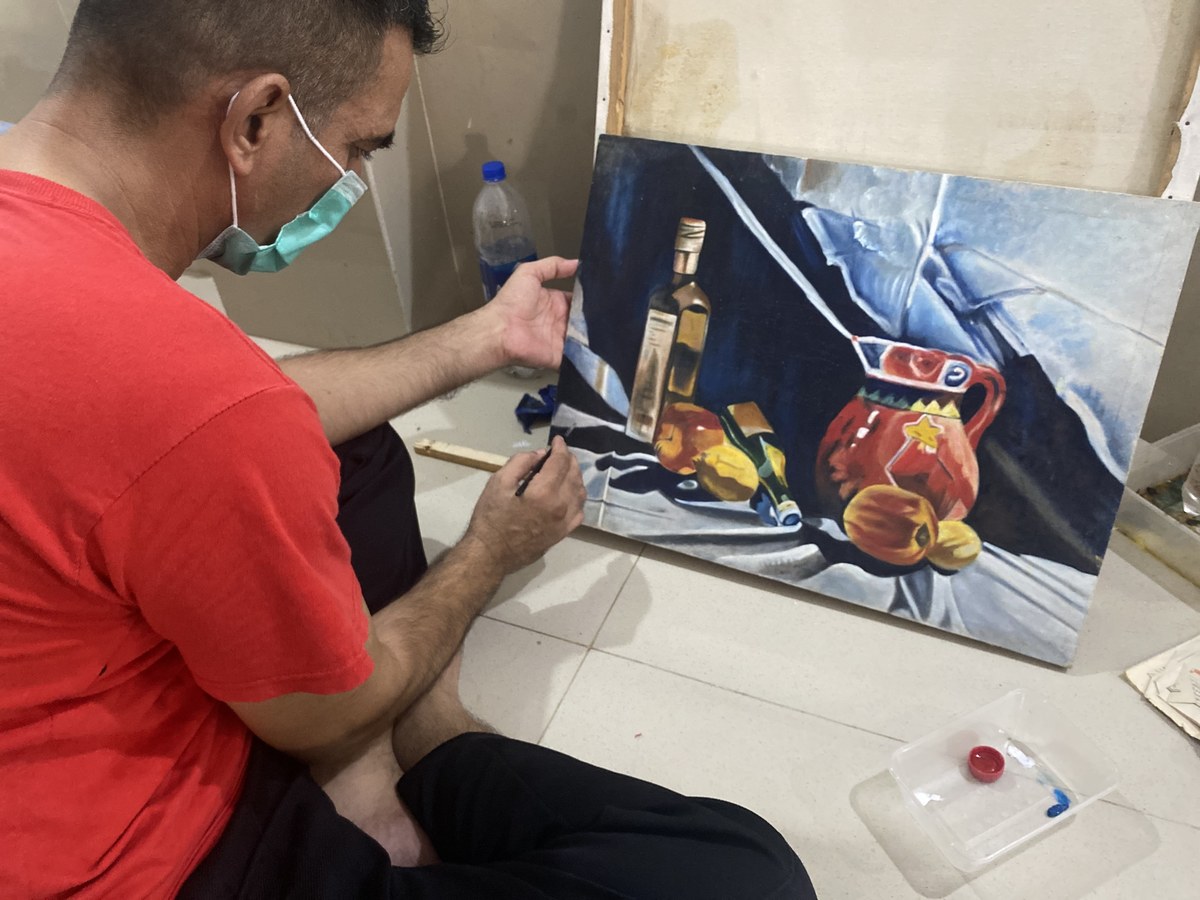
A prisoner poses with his painting at the School of Fine Arts and Music, a rehabilitation and art therapy program at the Central Jail Karachi, Pakistan, on August 20, 2020. (AN Photo)
Some inmates concurred.
“I belong to a very backward area of Balochistan where there is no trend of education but I am now teaching painting in an art school,” said Bugti, an ethnic Baloch, who has won several art competitions and also learnt how to speak in the English and Urdu languages while in prison.
Aslam Qureshi, who has been an inmate at the prison since 2013 after being convicted of kidnapping, first learnt how to paint, then took embroidery classes and now produces 3D paintings. One of his paintings was bought by the governor of Pakistan’s populous Punjab province, Chaudhry Muhammad Sarwar.
“When I complete my jail term, I will take a new identity to society,” Qureshi said. “I’ll be an accomplished painter.”
Although most prison artists are novices, jail authorities said that a few were good enough to sell their works.
Kazi Nazir Ahmed, inspector general of prison police, said paintings that had cost Rs5,000 to make had sold for as high as Rs85,000, with all proceeds going to the artists.
Many of the inmates’ paintings have sold at exhibitions at the central bank and the consulates of different European countries. Inmates said they had received the full selling price for their work, a large chunk of which they sent home to their families.
Bugti said he took two weeks to complete a painting, which could fetch him on average Rs15-20,000.
“They [my family] are shocked when I send money,” Bugti said smilingly, “thinking what does this man do that he sends us money even from jail.”
*The names of all prisoners have been changed at their request to protect their identities