

Yemen, Djibouti talk protection of Bab al-Mandab strait, Red Sea

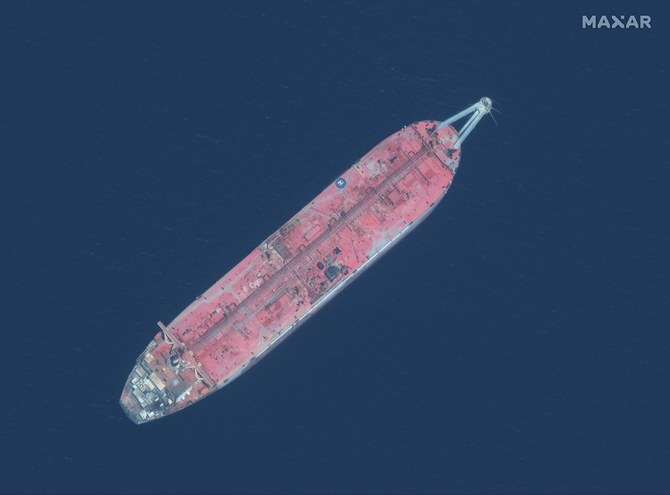
The officials expressed their concern over the lack of cooperation displayed by the Houthis on the Safer oil tanker issue. (File/AFP)
Short Url
Updated 26 August 2020
Follow

Yemen, Djibouti talk protection of Bab al-Mandab strait, Red Sea

  • The two spoke about securing the international maritime navigation fighting terrorism and facing security challenges
  • The issue of the Safer oil tanker was also discussed during the meeting

DUBAI: Top officials from Yemen and Djibouti have met to discuss coordinated efforts to protect the security of the Red Sea and the Bab al-Mandab strait, including the future of the Safer tanker, currently held by the Houthi militia, state news agency Saba has reported.

Yemeni Prime Minister Ma’een Abdulmalik and Djibouti’s ambassador to Saudi Arabia Dhiya'addin Bamakhrama, spoke on Tuesday, expressing concerns over the looming environmental threat posed by the decaying Safer tanker.

And they expressed their concern over the lack of cooperation displayed by the Houthis, who have rejected the United Nations’ continued requests to be granted access to the ship and drain the cargo of oil.
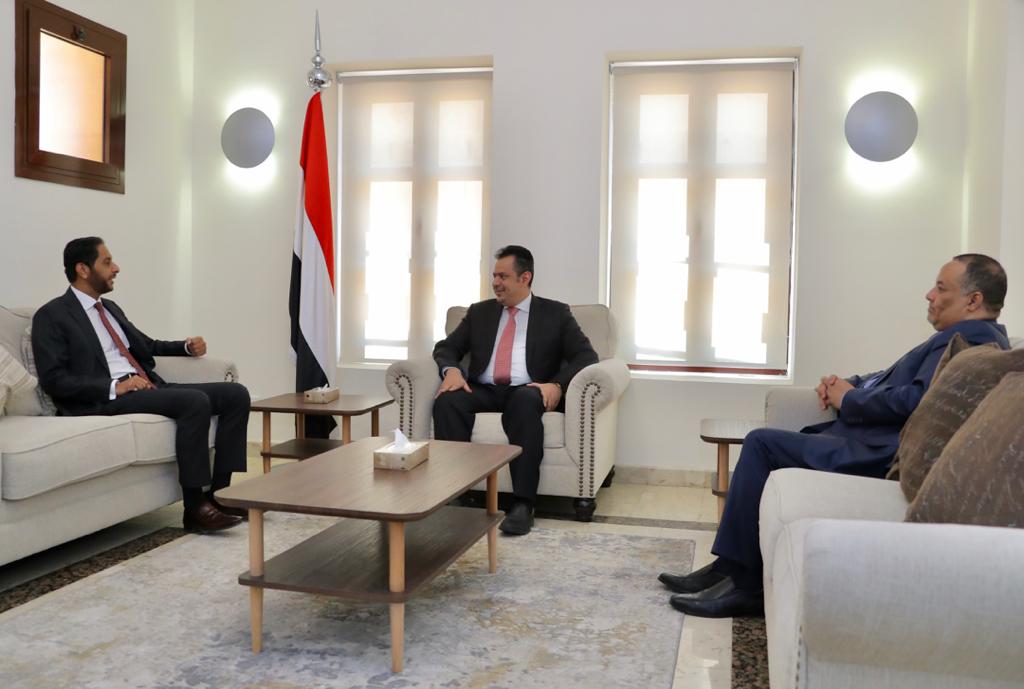


Yemeni Prime Minister Ma’een Abdulmalik and Djibouti’s ambassador to Saudi Arabia Dhiya'addin Bamakhrama spoke on Tuesday. (Saba New)

They spoke about securing the international maritime navigation on these waters, fighting terrorism and facing security challenges across the Arab region.

Abdulmalik said his government welcomed all solutions to avoid looming environmental disaster, highlighting his keenness to coordinate efforts with Djibouti to maintain the security of the Red Sea and Baba al-Mandab, boosting relations between the two countries and enabling the continued flow of international trade through the area.

Expressing his full support to the Yemeni government in defeating the Houthis, Djibouti’s Bamakhrama acknowledged Yemen’s eagerness to solve the decaying oil tanker issue, and its efforts to accelerate the implementation of the Riyadh Agreement.


The art of war: fears for masterpieces on loan to Louvre Abu Dhabi

Updated 13 March 2026
Follow

The art of war: fears for masterpieces on loan to Louvre Abu Dhabi

  • UAE paid more than €1 billion to borrow priceless works, but experts in France want them back

PARIS: The Middle East war has raised fears for the safety of priceless masterpieces on loan from France to the Louvre Abu Dhabi, the museum’s only foreign branch.
The Abu Dhabi museum, which opened in 2017, has so far escaped damage from nearly 1,800 Iranian drone and missile strikes launched since the conflict erupted on Feb. 28.
However, concerns are mounting in France. “The works must be removed,” said Didier Selles, who helped broker the original agreement between France and the UAE.
French journal La Tribune de l’Art echoed that alarm. “The Louvre’s works in Abu Dhabi must be secured!” it said.
France’s culture ministry said French authorities were “in close and regular contact with the authorities of the UAE to ensure the protection of the works loaned by France.”
Under the agreement with the UAE, France agreed to provide expertise, lend works of art and organize exhibitions, in return for €1 billion, including €400 million for licensing the use of the Louvre name. The deal was extended in 2021 to 2047 for an additional €165 million.
Works on loan include paintings by Rembrandt and Chardin, Classical statues of Isis, Roman sarcophagi and Islamic masterpieces: such as the Pyxis of Al-Mughira.

A Louvre Abu Dhabi source said the museum was designed to protect collections from both security threats and natural disasters.