

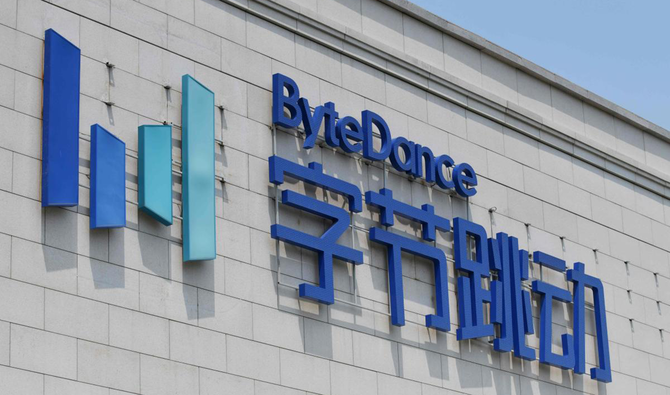
ByteDance investors seek to use stakes to finance TikTok bid

Short Url
Updated 25 August 2020
Follow

ByteDance investors seek to use stakes to finance TikTok bid

  • The ByteDance investors’ plan faces long odds and significant hurdles

BEIJING: ByteDance investors are in talks to use their stakes in the Chinese technology firm to help finance their bid for its popular short-video app TikTok, according to people familiar with the matter.

ByteDance has been in talks to divest TikTok’s North America, Australia and New Zealand operations to potential acquirers, including Microsoft Corp. and Oracle Corp. President Donald Trump has ordered the Chinese company to sever ties with the social media app in the United States, citing concerns over the safety of the personal data it handles. Some ByteDance investors, including investment firm General Atlantic, are vying to own large stakes in the TikTok assets for sale, the sources said. Under their restructuring plan, Microsoft or Oracle could receive a minority stake in the assets, the sources added.

The TikTok assets for sale could be worth between $25 billion and $30 billion, the sources said. To help fund their bid, the ByteDance investors are discussing exchanging some or all of their stakes in the Chinese company with equity in the TikTok assets, according to the sources.

The ByteDance investors’ plan faces long odds and significant hurdles, the sources said. Trump administration officials have said they expect a major US company to lead the TikTok deal and ringfence the app technologically from ByteDance. A US government panel, the Committee on Foreign Investment in the United States (CFIUS), has to sign off on any deal that ByteDance reaches.

Nevertheless, the push by some ByteDance investors for a bigger role in the TikTok deal underscores their efforts to give the Chinese company more options and avert a fire sale. Some of them had to convince ByteDance’s founder and CEO Yiming Zhang to let go of TikTok, the sources said.

Microsoft remains the lead bidder for the TikTok assets because of its deep pockets and technical capacity to design new algorithms for TikTok that will be separate from ByteDance and its Chinese short video app Douyin, according to the sources.


Israeli journalists warn of media crackdown as UK billionaire prepares Channel 13 sale

Updated 13 February 2026
Follow

Israeli journalists warn of media crackdown as UK billionaire prepares Channel 13 sale

  • The Union of Journalists in Israel has condemned the transaction as “an unlawful deal”

LONDON: Israeli journalists and media unions have voiced serious concern over a proposed sale of a major stake in Israel’s Channel 13, warning that the move could deal a devastating blow to independent journalism in the country amid a broader campaign to reshape the media landscape ahead of elections.

According to The Guardian, British billionaire Sir Leonard Blavatnik is preparing to sell a 15 percent stake in Channel 13, one of Israel’s few mainstream channels critical of Prime Minister Benjamin Netanyahu, to telecom tycoon Patrick Drahi, a French-Israeli businessman who already owns media outlets perceived as sympathetic to the current government.

Journalists and free press advocates said the sale risked consolidating pro-government influence in a media environment already under pressure from financial sanctions, lawsuits, and regulatory threats.

The Union of Journalists in Israel has condemned the transaction as “an unlawful deal,” describing it as part of a broader “master plan to capture the media” ahead of the country’s scheduled elections.

Channel 13 has aired critical coverage of Netanyahu in recent years, including reporting on his corruption cases.

Drahi’s reported acquisition would make him a significant stakeholder at a time when Blavatnik is pulling back after years of financial losses, reported The Guardian.

Although the stake falls within the legal threshold for media ownership, critics argued that Drahi’s financial power as the only investor currently willing to inject funds would give him de facto control of editorial direction.

“While Patrick Drahi is only buying 15 percent, our fear is that by buying 15 percent, he gets 100 percent hold of the policy of the channel,” Anat Saragusti, a senior official at the Union of Journalists, told The Guardian. “It’s a lose-lose for the Israeli public, in terms of freedom of speech and diversity of opinions.”

A separate offer from a group of liberal Israeli tech entrepreneurs, reportedly valued at up to $120 million over three years, was also on the table, but ultimately rejected. A spokesperson for Blavatnik’s Access Industries insisted there was no political influence behind the deal and that Drahi’s bid was “the stronger, faster option” of the two.

“Any suggestion that the preferred offer has been selected for political reasons is entirely false,” the spokesperson said, adding that the transaction would allow Channel 13 to invest in high-quality content and digital innovation.

The Netanyahu government has come under growing scrutiny for actions seen as hostile to independent media, including imposing sanctions on the newspaper Haaretz and initiating defamation lawsuits against investigative reporters. The prime minister is also on trial for alleged efforts to trade regulatory favors for favorable press coverage, one of several corruption charges he faces.

“If Channel 13 falls, this would be the end of the free press in Israel,” Saragusti warned. “It’s the tipping point.”