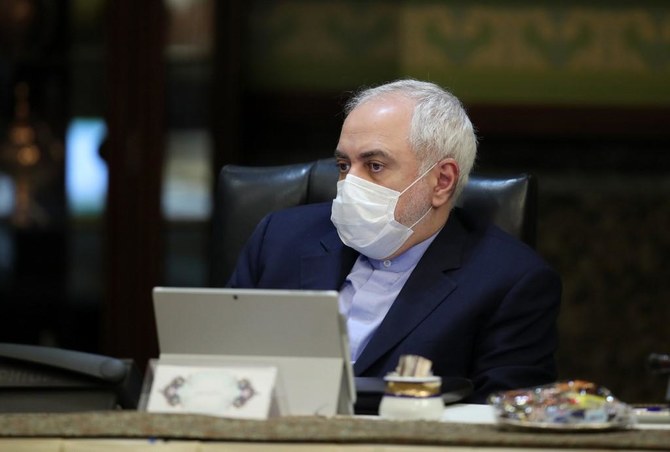
TEHRAN: Iran’s foreign minister in a letter to the UN Security Council said the US has no right to demand the restoration of UN sanctions against Iran, the Foreign Ministry’s website said Friday.
Mohammad Javad Zarif said the US lost the right to make demands in 2018 when it withdrew from the nuclear deal between Iran and major world powers. He also said America’s unilateral pullout violated a UN resolution that required signatories to avoid any damage to the deal.
US Secretary of State Mike Pompeo on Thursday officially informed the UN it is demanding the restoration of all UN sanctions on Iran, but allies and opponents declared the US action illegal and doomed to failure.
Pompeo insisted the United States has the legal right to “snap back” UN sanctions even though President Donald Trump pulled out of the 2015 nuclear deal between Iran and six major powers that was endorsed by the Security Council.
He said UN sanctions will continue the arms embargo on Iran, set to expire on Oct. 18, as well as prohibit ballistic missile testing and nuclear enrichment that could lead to a nuclear weapons program — which Tehran insists it is not pursuing.
The US insistence on snapping back international sanctions against Iran sets the stage for a contentious dispute. The US demand could be ignored by other UN members — calling into question the Security Council’s ability to enforce its own legally binding decisions.
Zarif said the term “snapback” was never mentioned in the deal or in the UN resolution that supported the deal. “The US intentionally has applied the word to suggest speed and (an) automatic” return of sanctions, he said.
The Trump administration wants to reimpose all international sanctions that had been eased under the nuclear deal. Other nations claim the US has no standing to make the demand because the Trump administration pulled the US out of the deal.
Under the agreement, Tehran received sanctions relief in exchange for curbs on its nuclear program. The “snapback” mechanism was created in the event Tehran was proven to be in violation of the accord.
Zarif said the Security Council should stop the US’s unilateral “misuses” of council resolutions, saying “the people of Iran expect the council to force the US to be accountable” for its “damages” to Iran.
The US imposed unilateral sanctions on Iran and sent the country’s economy into free fall following its pullout from the deal.


![]()

Iran says US has no right to demand restoration of sanctions
Short Url
https://arab.news/pjrxb
Iran says US has no right to demand restoration of sanctions
- Iran’s FM Zarif said the US lost the right to make demands in 2018 when it withdrew from the nuclear deal
- The US imposed unilateral sanctions on Iran and sent the country’s economy into free fall following its pullout from the deal

Latest updates




© 2026 SAUDI RESEARCH & PUBLISHING COMPANY, All Rights Reserved And subject to Terms of Use Agreement.