Beirut explosion prompts Egypt to remove dangerous materials from its ports

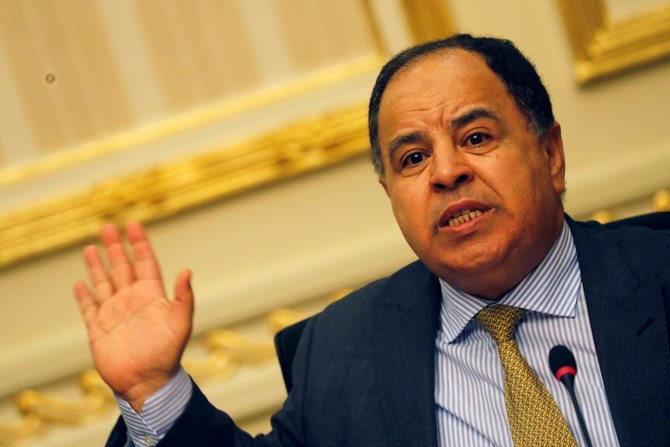
Egyptian Finance Minister Mohamed Maait during a news conference in Cairo, Egypt, July 17, 2019. (Reuters)
Short Url
Updated 18 August 2020
Follow

Beirut explosion prompts Egypt to remove dangerous materials from its ports

  • Egyptian Minister of Finance Mohammed Maait: We have already disposed of large quantities of stagnant, neglected and dangerous materials present in the ports
  • Mohammed Sayed Gad, an environmental expert, said that the Egyptian ports were previously used as a place to store harmful waste

CAIRO: The explosion at the Beirut port in Lebanon has moved the Egyptian government to review the quantities of dangerous materials present in its ports.

Egyptian Minister of Finance Mohammed Maait told Parliament: “We have already disposed of large quantities of stagnant, neglected and dangerous materials present in the ports.”

“There are materials that have been delivered to multiple ministries, including petroleum, defense and the interior. Next December, Egyptian ports will be completely cleaned of all stagnant, neglected and dangerous materials,” he said, according to a statement published by the ministry on the proceedings of the session.

The minister confirmed the review of containers of stagnant goods, containers and dangerous materials in all Egyptian ports, based on the mandate of President Abdel Fattah Al-Sisi.

“We have accomplished a lot in this file, but there are things that need time and procedures. We have already gotten rid of huge quantities of stagnates, especially of prohibited materials such as weapons and fireworks,” he said.

Magdy Abdel Aziz, an advisor to the minister, said that the port cleansing process aims to get rid of all dangerous goods located therein, in addition to waste that may chemically interact with other items and lead to disasters.

He pointed out that the Ministry of Finance has formed a customs unit to follow up on the disposal of dangerous materials in the ports and explained that elimination methods would either involve destroying or selling/giving them away to government agencies that can benefit from them.

Mohammed Sayed Gad, an environmental expert, said that the Egyptian ports were previously used as a place to store harmful waste. He recalled a case from 2017 involving containers carrying toxic substances at the port of Al-Adabiya, in the Egyptian Governorate of Suez, east of the capital Cairo. The issue was neglected and would have likely led to disaster had it not been addressed. This incident is considered one of the most significant issues to face Suez in its recent history.

“This shipment represented an imminent threat to the entire city, and its stay in the city continued to pose a threat to the health of citizens, owing to the possibility of radioactive leakage from the shipment to areas surrounding its location,” he said. “The supervisory and security authorities issued instructions to all government agencies that they urgently examine all shipments and materials.” 

Gad also added that Egyptian Minister of Environment Yasmine Fouad recently issued instructions to the Central Department of Inspection and Environmental Compliance to pass through all establishments producing ammonium nitrate in all Egyptian governorates. The aim is to determine the extent to which these establishments adhere to the standards of the law in terms of transportation and storage methods. This comes as a result of campaigns carried out in cooperation with authorities represented by the General Administration of Environment and Surface Police and the General Authority for Industrial Development.

The minister also directed the regional branches of the Environmental Affairs Agency to inspect these facilities and prepare reports to be presented to the relevant authorities so that they may take the necessary measures in this regard.

“We have been heartened by the report that the Minister of Environment recently presented on the ministry’s efforts in the safe handling of hazardous materials,” Gad said.


UAE to withdraw counter-terrorism units in Yemen, reiterates respect for Saudi sovereignty

Updated 28 min 22 sec ago
Follow

UAE to withdraw counter-terrorism units in Yemen, reiterates respect for Saudi sovereignty

  • Abu Dhabi emphasized its commitment to maintaining close coordination with Riyadh on all matters of mutual concern

ABU DHABI: The UAE announced the withdrawal of its remaining counter-terrorism units in Yemen on Tuesday, citing recent developments and concerns over the safety and effectiveness of ongoing operations.

In a statement issued on Tuesday and carried on Emirates News Agency, the Ministry of Defense said the decision was taken voluntarily and in coordination with relevant international partners, ensuring the safety of UAE personnel

The move follows a comprehensive assessment of current conditions and aligns with the UAE’s broader commitments to regional security and stability, the statement added.

The ministry reiterated that the UAE formally ended its military presence in Yemen in 2019 after completing its agreed missions as part of the Arab Coalition supporting Yemen’s legitimate government.

Since then, its presence had been limited to specialized counter-terrorism teams operating alongside international partners.

The UAE has been part of the Arab Coalition since 2015, contributing to efforts to support legitimacy in Yemen, combat terrorist organisations, and promote security and stability in the country, the statement added.

Earlier on Tuesday, the UAE reaffirmed its unwavering commitment to Saudi Arabia’s security and sovereignty, rejecting any actions that could threaten the Kingdom or undermine regional stability.

In a statement issued in response to recent remarks by Saudi Arabia regarding developments in Yemen, the UAE stressed that it fully respects Saudi Arabia’s national security and considers the fraternal and historical ties between the two countries a cornerstone of regional stability.

Abu Dhabi emphasized its commitment to maintaining close coordination with Riyadh on all matters of mutual concern.

The UAE said its position since the start of events in Yemen’s eastern governorates of Hadramawt and Al-Mahra has been focused on containing tensions, supporting de-escalation, and working toward understandings that preserve security, stability, and the protection of civilians, in coordination with Saudi Arabia.

Abu Dhabi categorically rejected any attempt to implicate it in tensions between Yemeni factions, condemning allegations that it pressured or directed any party to carry out military operations that threaten Saudi Arabia’s security or target its borders.

The UAE also called for recent developments in eastern Yemen to be handled responsibly to prevent escalation, urging reliance on verified facts and coordination among all relevant parties to safeguard shared interests and maintain regional security and stability.