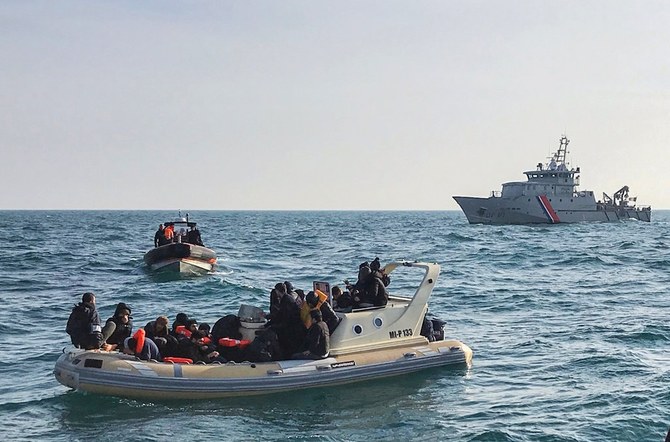
LONDON: British Defense Secretary Ben Wallace said on Sunday additional navy personnel and aircraft were being sent to help tackle a sharp rise in migrant crossings of the Channel.
The deployment of “specialist personnel from the Royal Navy” and a third air force plane to conduct surveillance followed a request for support from the interior ministry.
“These dangerous crossings ultimately put people’s lives in danger and it is right that we support the Border Force by providing specialist capabilities of defense, and our expert personnel to stop this criminal behavior,” Wallace said in a statement.
More than 1,000 migrants have arrived on Britain’s shores in the last 10 days after crossing the Channel in small boats, according to analysis by the domestic Press Association news agency.
The issue is politically-charged in the UK, with the country’s right-wing newspapers decrying the arrivals and many ruling Conservative lawmakers calling for tougher border enforcement.
Prime Minister Boris Johnson this week called the crossings “very bad and stupid and dangerous.”
He has vowed to change legislation that he said made it “very, very difficult” to deport migrants “even though blatantly they’ve come here illegally.”
Meanwhile his immigration minister held talks with counterparts in Paris on Tuesday amid calls for the government to increase pressure on France to prevent migrants arriving in UK waters.
French maritime authorities said Sunday they had rescued 31 migrants, including three children and an infant, who were trying to cross the Channel in small boats.
It followed 38 migrants being picked up by French officials in the waterway — the busiest in the world — on Friday.
However, cross-Channel relations could be harmed by reports interior minister Priti Patel had told fellow Conservative MPs that migrants were coming to Britain because they believe France is a “racist country” where they may be “tortured.”
Government sources said Patel had made clear that she did not share those views and was simply explaining the “pull factors” which led so many migrants to risk their lives in this way, according to UK media reports.


![]()

UK deploys extra navy, air assets to stop Channel migrants
Short Url
https://arab.news/p2hgh
UK deploys extra navy, air assets to stop Channel migrants
- The military deployment followed a request from the UK's interior ministry, headed by Priti Patel
- The English Channel is the busiest waterway in the world, with hundreds of ships passing through daily


Latest updates


© 2026 SAUDI RESEARCH & PUBLISHING COMPANY, All Rights Reserved And subject to Terms of Use Agreement.