

As tourism reopens, Pakistanis head north to reconnect with nature, escape summer’s heat

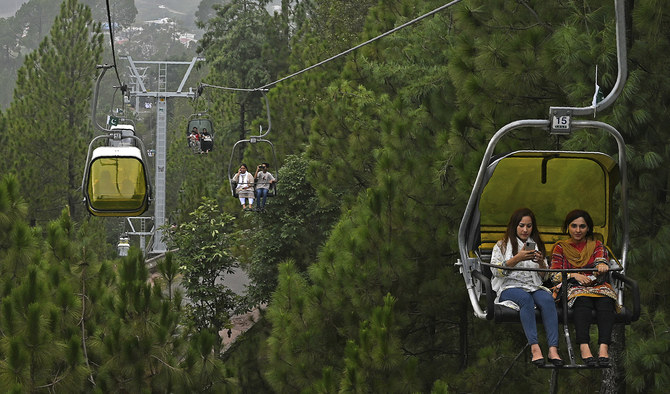
Tourists sit on chairlifts at the Patriata Resort near Murree, some 65 km form Islamabad on Aug. 16, 2020, after the government announced most of the country's remaining restrictions would be lifted following the drop in COVID-19 coronavirus new cases for several weeks. (AFP)
Short Url
Updated 16 August 2020
Follow

As tourism reopens, Pakistanis head north to reconnect with nature, escape summer’s heat

  • Summer season is traditionally the peak of tourism activity in Pakistan’s northern areas
  • Khyber Pakhtunkhwa reopened the hospitality sector with strict guidelines to be enforced by hotels and tourist sites

RAWALPINDI: As Pakistan reopened its tourist destinations earlier this week, visitors from across the country have been heading to its northern areas to escape from steamy summer temperatures and city noise.
With coronavirus figures steadily declining, the government decided to lift restrictions on the hospitality sector on conditions that its players follow safety precautions. Driving up north to Khyber Pakhtunkhwa and Gilgit-Baltistan has since been the top choice for Pakistanis from the country’s urban centers.
“It was nice to get away and to escape from not only the city but from the constant stress of the coronavirus,” Shahryar Khan from Islamabad told Arab News over the phone, as with a group of friends he headed to Gilgit-Baltistan to enjoy the scenic landscapes of Skardu Valley and Deosai Plains on the boundary of Karakoram and the western Himalayas.
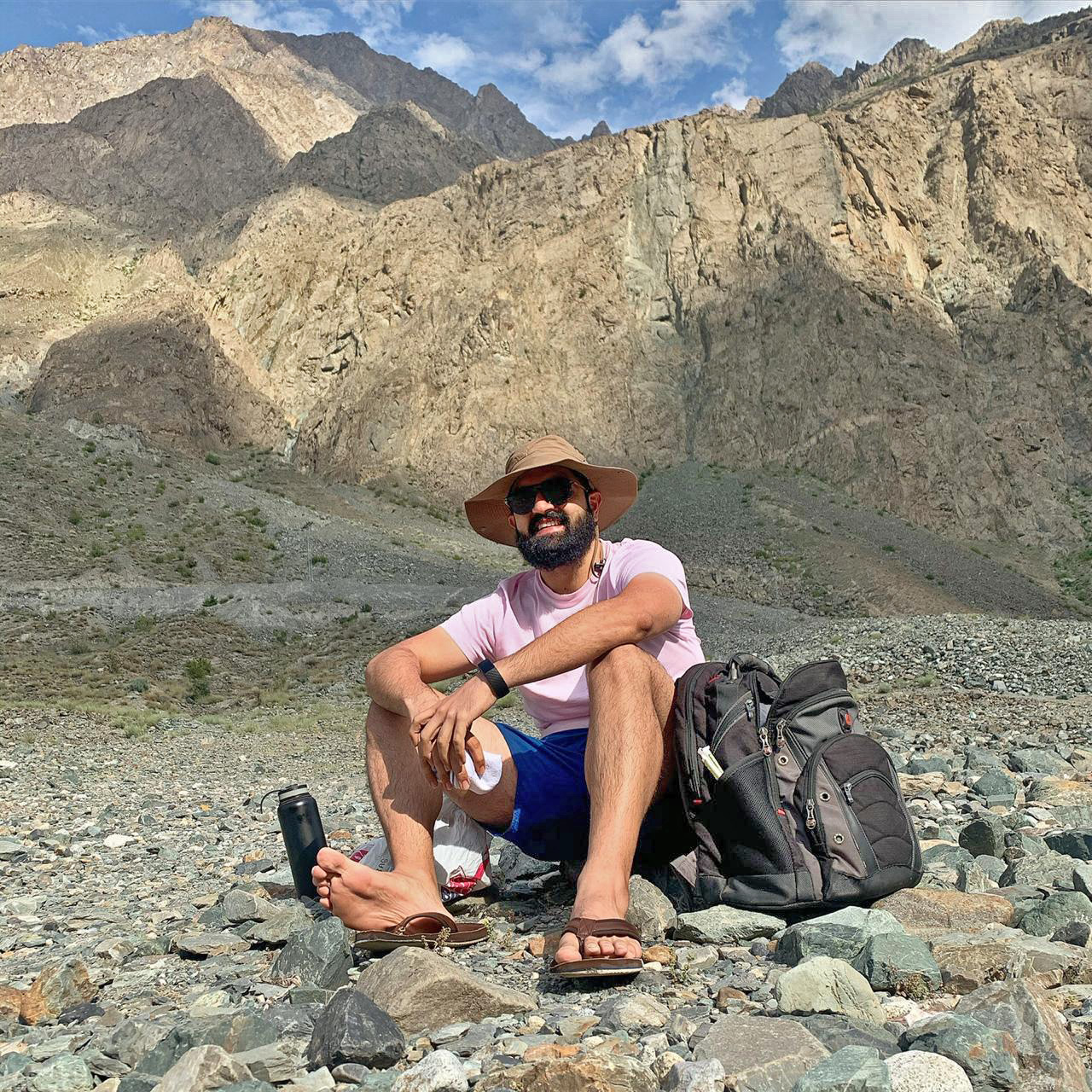


Shahryar Khan visits Satpara Lake in Skardu Valley on Aug. 6, 2020. (Photo courtesy of Shahryar Khan via AN)

The strain of long months of social distancing amid the pandemic has been great, so the opportunity to reconnect with friends and nature is “like a 2020 reset,” Lahore-based stylist Mehek Saeed said during a call from Hunza Valley.
“We have been social distancing for months now and finally worked out a way to comfortably and safely travel to the north, so friends from Lahore and Karachi got together to make the trip out here,” she said.
Others took this opportunity to go hiking. Ameena Chaudhry who moved to Pakistan from Canada this year said she could finally visit the scenic hill stations of Doonga Gali and Nathia Gali located at an altitude of 2,500 meters in Abbottabad district of Khyber Pakhtunkhwa, and climb Miranjani, the region’s highest peak.
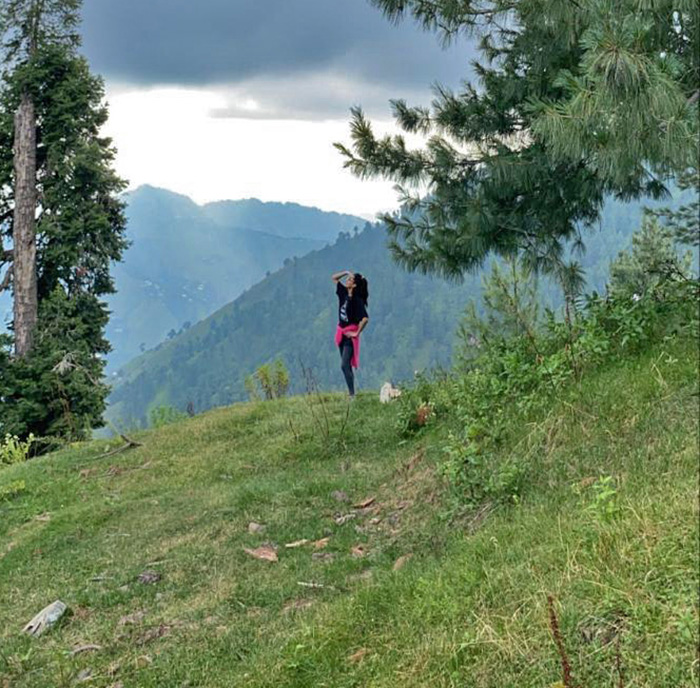


Ameena Chaudhry takes in the view on Nathia Gali's famous hiking trail of Miranjani on Aug. 10, 2020. (Photo courtesy of Ameena Chaudhry via AN)

“It felt so good because I hike in Canada all summer and I love using my legs and connecting with trees and nature with my dog,” she said, “We drove up there ourselves, and felt safe.”
The tourism industry in northern Pakistan, which is the most popular domestic destination during the summer season, has greatly suffered due to the pandemic, Khyber Pakhtunkhwa Tourism Minister Atif Khan told Arab News.
“From the start, right from the prime minister, (resuming tourism) was a priority of the federal government and provincial governments,” he said, “These three summer months are the most important for tourism and, unfortunately, it was these months that were COVID-19 impacted.”
The province reopened the hospitality sector with strict guidelines to be enforced by hotels and tourist sites. They include temperature scans of visitors, providing hand sanitizer, and crowd controls to keep tourists at a safe distance from each other.
In Gilgit-Baltistan, however, where livelihoods depend on tourism, industry players say they were confused ahead of the reopening on how to adapt to the new normal.
The owner of the Mountain Story resort in Hunza, Atif Khan, said they were getting “mixed messages.”
“The local authorities would confirm we would open and that SOPs were going to come out — but we never received them. It was a bit patchy and confused.”


Pakistan to sell excess gas in international markets from Jan.1— petroleum minister

Updated 4 sec ago
Follow

Pakistan to sell excess gas in international markets from Jan.1— petroleum minister

  • Pakistan was reportedly exploring ways to reduce $378 million in annual losses from supply glut caused by excess fuel imports 
  • Move to sell excess LNG in international markets will limit $3.56 billion losses caused since 2018-19, says petroleum minister

ISLAMABAD: Pakistan will sell its excess liquefied natural gas (LNG) in international markets from Jan. 1, Petroleum Minister Ali Pervaiz Malik said, revealing the move would limit losses caused from a years-long supply gut. 

Local and international media outlets had reported in July that Pakistan was exploring ways to sell excess LNG cargoes amid a gas supply glut that government officials said was costing domestic producers $378 million in annual losses. News reports had said Pakistan had at least three LNG cargoes in excess that it imported from Qatar and has no immediate use for.

Speaking to reporters during a press conference on Sunday, Malik said there was an excess of imported gas in Pakistan as the use of this fuel for power generation had reduced in the country during the past few months. He said Islamabad had been forced to sell the gas to local consumers, due to which the circular debt in the gas sector from 2018 till now had ballooned to around Rs1,000 billion [$3.56 billion]. 

“From Jan. 1 we will sell this excess fuel in international markets to reduce our burden and limit our losses of this Rs1,000 billion [$3.56 billion],” Malik said. 

He said this move would also allow Pakistan’s state-owned enterprises in the sector to operate on their full capacity and generate profits and employment. 

Malik also spoke of foreign oil companies that were ready to invest millions in the country in the near future. 

The minister cited the recent visit of Turkish energy minister to Pakistan which had resulted in the state-owned Turkish Petroleum signing deals to carry out onshore and offshore drilling activities in Pakistan. 

“Turkish Petroleum will also open its office in Islamabad, where 10 to 15 Turkish nationals will be working,” Malik said. 

He also said that a delegation of the State Oil Company of Azerbaijan Republic (SOCAR) visit Pakistan this week, adding that it was also expected to collaborate with local companies for oil and gas exploration.

The minister said SOCAR was also opening its office in Pakistan. 

“It will also invest millions of dollars in the construction of an oil pipeline from Machike to Thalian in collaboration with the PSO (Pakistan State Oil) and FWO (Frontier Works Organization),” Malik said.