



KARACHI: Pakistan’s embassy in Saudi Arabia organized a mango festival in Riyadh on Friday to promote different varieties of the famous Pakistani fruit on the 74th Independence Day of the country.
“The mango festival is part of the mango diplomacy initiative of Pakistan to introduce different varieties of Pakistani mangoes worldwide to different nationalities and ethnicities,” said an official statement issued by the country’s diplomatic mission.
The event was inaugurated by the country’s envoy in Saudi Arabia, Raja Ali Ejaz, and it was attended by Arab dignitaries, diplomats and people belonging to different nationalities.
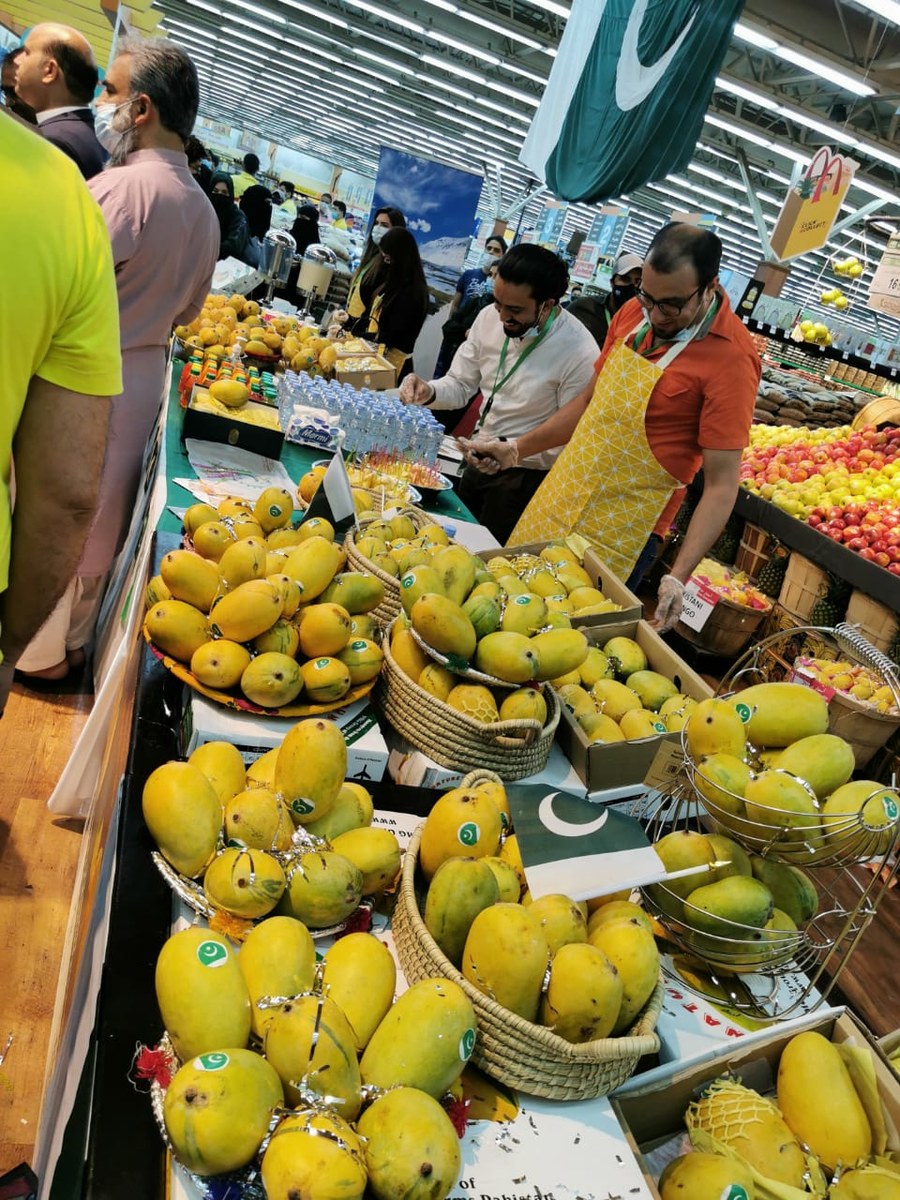
Pakistan’s embassy in Saudi Arabia organized a mango festival in Riyadh on August 14, 2020, to mark the country’s Independence Day and promote Pakistani fruits and vegetables in the kingdom. (Photo courtesy Pakistan’s embassy in Riyadh)
“Arabs have developed a taste for Pakistani mangoes,” Azhar Ali Dahar, who works with the trade and investment wing of the Pakistan embassy in Riyadh, told Arab News on the phone. “The Pakistani mango is now being imported not only from Pakistan but also from other Middle Eastern markets.”
Pakistani diplomats in the kingdom are optimistic that their country’s export of mango will increase by 30 to 40 percent during the next season.
“We have gifted about 1,000 kilograms of mangoes to the notables of the kingdom and hope that this will bring about further growth in the export of the fruit during the next season,” Ehtisham Farooq, trade development officer at the embassy, said.
Pakistan’s overall exports to Saudi Arabia also recorded an increase of 18.85 percent during the first month of the current fiscal year as compared to the same month last year as the country’s trade mission in the kingdom adopted a product diversification strategy.
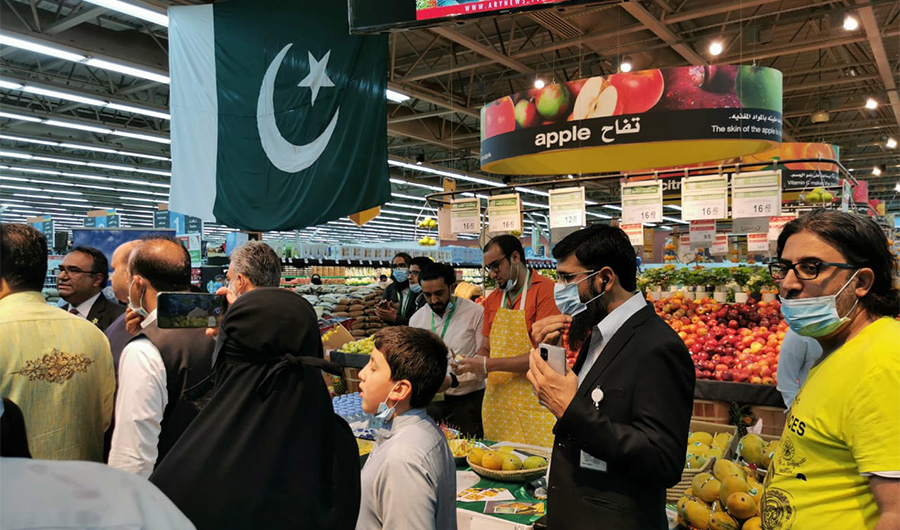
Pakistan’s embassy in Saudi Arabia organized a mango festival in Riyadh on August 14, 2020, to mark the country’s Independence Day and promote Pakistani fruits and vegetables in the kingdom. (Photo courtesy Pakistan’s embassy in Riyadh)
“During July 2020, Pakistan’s export to the kingdom witnessed a surge of 18.85 percent to $42.32 million as compared to $35.61 million worth of exports in July 2019,” Dahar said. “The demand for food items has also increased the demand of Pakistani products during and after the virus-related lockdown.”
“We are also negotiating with local authority to allow the import of fish from Pakistan which will further increase our exports,” he added.
During the outgoing fiscal year, despite the all the impediments caused by the novel coronavirus, the country’s export of fruits and vegetables surged by 12.5 percent, amounting to $730 million.
“Pakistani exporters adopted land and sea routes when it became difficult to export their products by air,” Waheed Ahmed, patron-in-chief of the All Pakistan Fruit and Vegetable Exporters, Importers and Merchants Association, said.
“The federal government extended its support and assistance to the exporters and took timely decisions in removing barriers to the enhancement of exports,” he added.
Ahmed noted that the efforts also resulted in the reduction of air freight, facilitating exporters to compete in the highly demanding Middle Eastern and Gulf markets.
Pakistan’s imports from Saudi Arabia also increased by 5.57 percent to $162.55 million in July 2020 as compared to $153.97 million in July 2019. Pakistan’s overall exports during July 2020 increased by six percent to $2 billion.


