

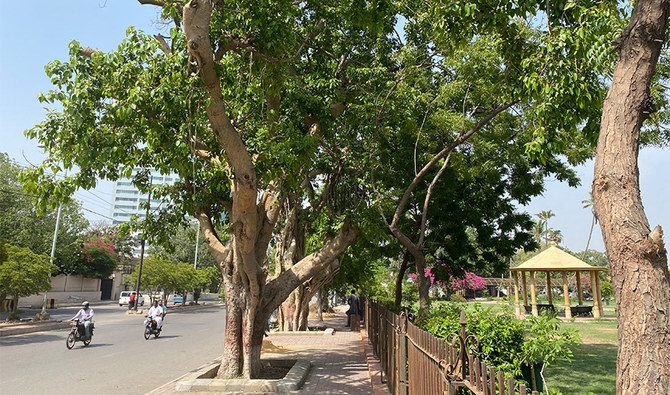

KARACHI: The year 2014 saw a construction boom in Pakistan’s teeming port city of Karachi after a military operation led to a drop in soaring crime rates.
But as the ‘forest of towers’ came up, Karachi’s ancient banyan trees started to be chopped down to make way.
Particularly at risk were trees in the upscale Clifton neighborhood, leading Karachi-based architect Marvi Mazhar to team up with other advocates and push authorities to declare the centuries-old banyan trees “protected heritage” on December 7, 2019.
“It all began in 2014 when the city was witnessing the construction of Bahria Tower, Park Tower and an underpass,” Mazhar told Arab News on Thursday. “A few banyan trees were chopped down because the underpass needed to be built.”
Mazhar said she took to social media platforms to raise her voice and create awareness and then began documenting the location of the endangered trees.
“I documented about 68 trees in the [old Clifton] area and presented the document to the provincial administration. Fortunately, it declared these trees natural heritage,” she said.
Mazari and her team at the Karachi National Heritage Association are now working to preserve all 68 trees by marking them with numbers and setting up benches in their shadow for visitors. The activists aim to prune the trees and create shaded spaces where people could gather and to “set these trees free from concrete since their roots have been trapped under sidewalks.”
“They [banyan trees] are not only like natural canopies where people gather to protect themselves from scorching sun but also add to the beauty of the city,” she said. “Banyan trees also provided structure to our city.”
“The word ‘banyan’ comes from ‘bania’ [or Hindu merchant] since traders used to set up their stalls in the shadow of these trees and sell their products,” Mazari said. “This is an interesting narrative of history that we have been hearing.”
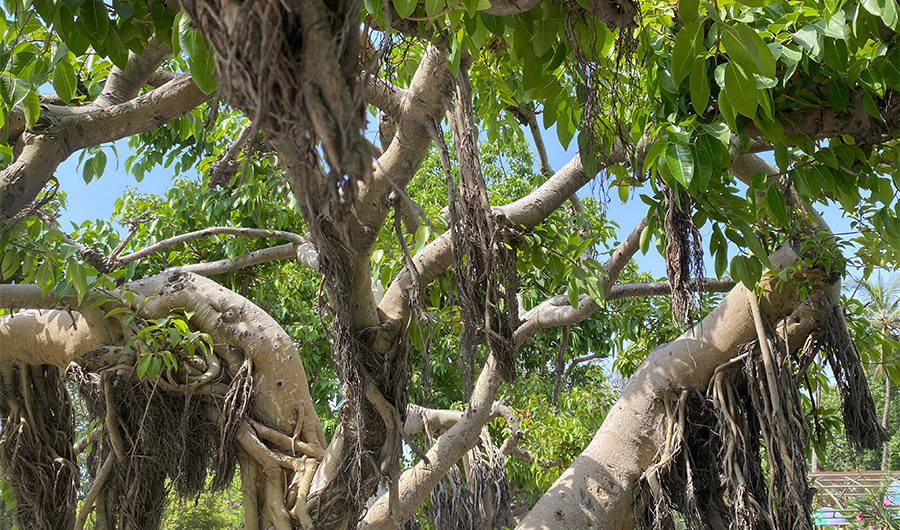
Banyan trees at Shahrah-e-Iran road in old Clifton Karachi, Pakistan, an area of the city which was developed in the 19th century when Henry Bartle Frere served as the commissioner of Sindh. Photograph taken on August 6, 2020 (AN Photo)
A brief history of the banyan trees has been inscribed on a plaque which has been placed on a road in Clifton where most of the trees are located, so the city’s future residents can “take pride in their cultural heritage,” said Murtaza Wahab, adviser to the chief minister of Sindh on environment and climate change.
“We are taking steps to preserve and protect these trees and make it possible for people to come and see them and find out more about their stories,” he said.
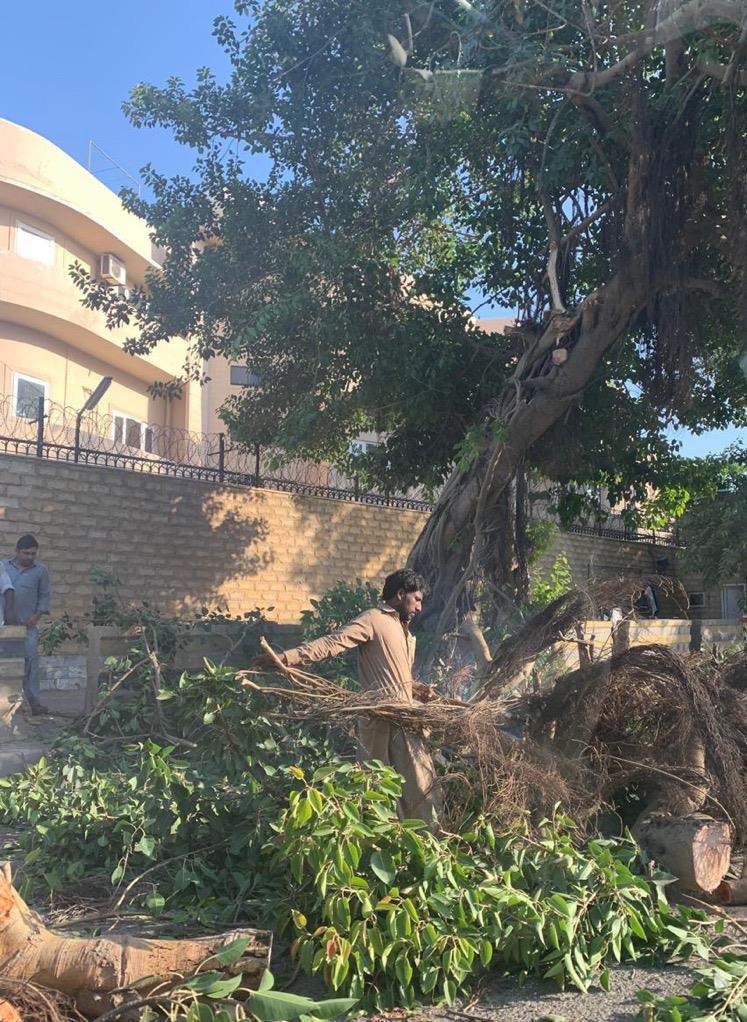
In this undated photo, a banyan tree in Karachi’s old Clifton area is seen uprooted by heavy rains (Photo courtesy Marvi Mazhar)
The Sindh government, Wahab said, was now prioritizing environmental protection through more tree plantation, and several projects such as the development of urban forests at the Lyari Expressway and Malir river belt were part of its initiative to fight climate change.
Pakistani Prime Minister Imran Khan has said he aims to fight climate change and pollution by planting trees across the country on government land clawed back from politically connected landlords who have illegally profited from it for years.
Khan has promised to plant 10 billion trees across the country over the next five years.
Environment expert Mehmood Alam Khalid said Karachi needed 200 million trees to beat the growing heat and climate change in general.
“Banyan trees have been cut to create space for buildings in this sprawling city,” Khalid said, “but no one has cared to plant more of them.”


