

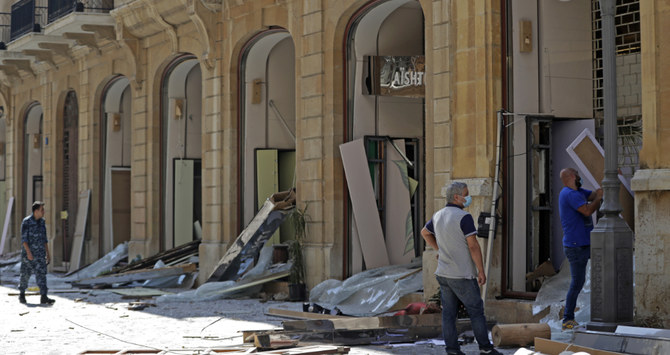

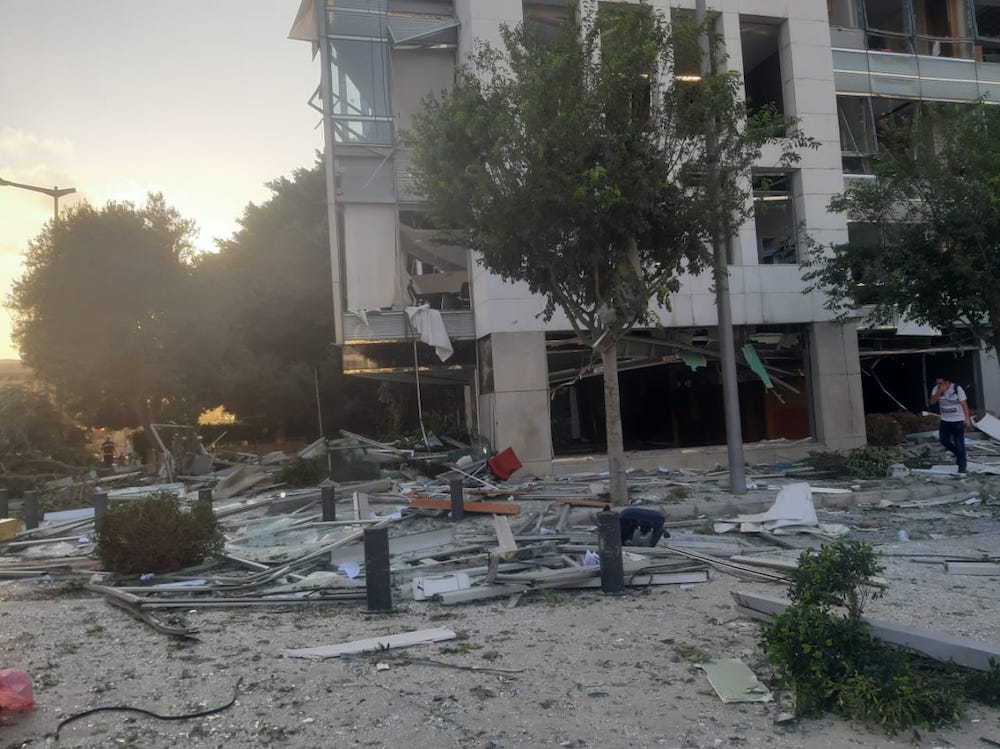
BEIRUT: The new glass-fronted buildings in the Beirut port area housed the offices of many media and business enterprises. But all that remained after Tuesday night’s massive explosions were concrete mounds and twisted steel.
The final casualty figures are still unknown, with many missing and the wounded still not counted. The toll could have been much higher, but for two factors: Summer working hours and remote work.
Many employees finished work at 3 p.m. and many others were working from home as part of the precautionary and preventive measures against COVID-19. Those who were in the vicinity have harrowing tales.
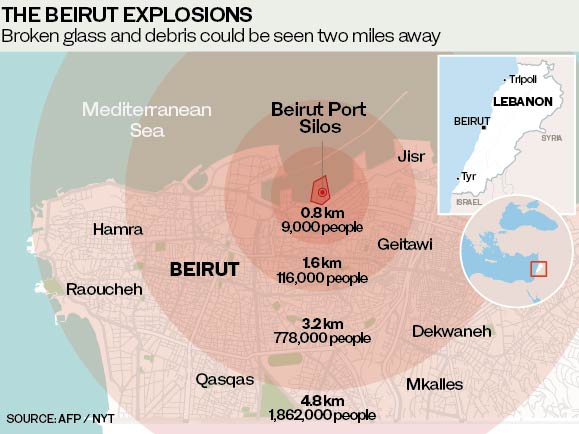
In one of those modern buildings, the editorial and technical support team of An-Nahar newspaper had gathered to launch their newest project, An-Nahar Al-Arabi.
“We were in a hall in the upper floor about to end the celebrations and editors of the newspaper’s print edition had started to enter the building when we heard the first explosion,” said journalist Rana Najjar, who suffered minor head injuries.
“The port is opposite our offices and some of us had started to take pictures when we saw the fire. Then a huge explosion followed. Some of us ran under the desks or scrambled farther in search of safety. Others were stuck in their offices as the ceiling collapsed. Shards of broken glass injured many.”
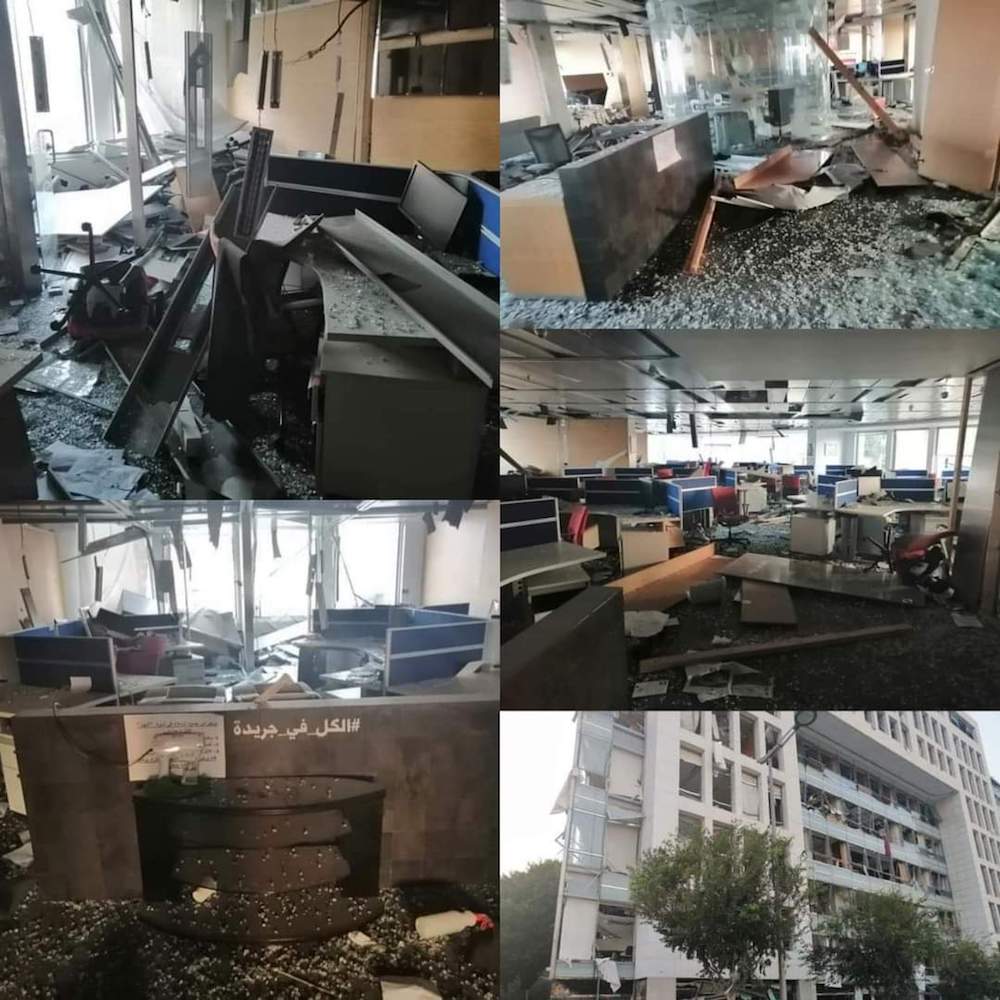
Building fronts across Beirut were shattered by the force of the blast. (AN Photo/Najia Houssari)
The newspaper was still maintaining a limited-staff schedule because of the pandemic, according to Najjar.
“Casualties could have been much higher if all the employees were present in the building,” she told Arab News. “We could not head to the stairways and get out of the building right away because of the extensive damage. Once outside, we started helping the injured.”
Fifteen colleagues were seriously injured, with others suffering slight wounds, Najjar said.
The new glass-fronted buildings in the Beirut port area housed the offices of many media and business enterprises. (AN Photo/Najia Houssari)
“A security officer next to Al-Jurdiya building was seriously injured, while a Syrian man set out to search for his brother who was repairing the water tank on the rooftop. I stopped passing cars and motorcycles to send the wounded to the hospitals.”
Najjar found a colleague, Salwa Baalbaki, with a dislocated shoulder and serious hand injuries. “I stopped a motorcyclist and told him to take her to the hospital,” Najjar recalled. “I found an Ethiopian girl bleeding from the head and started helping her.”
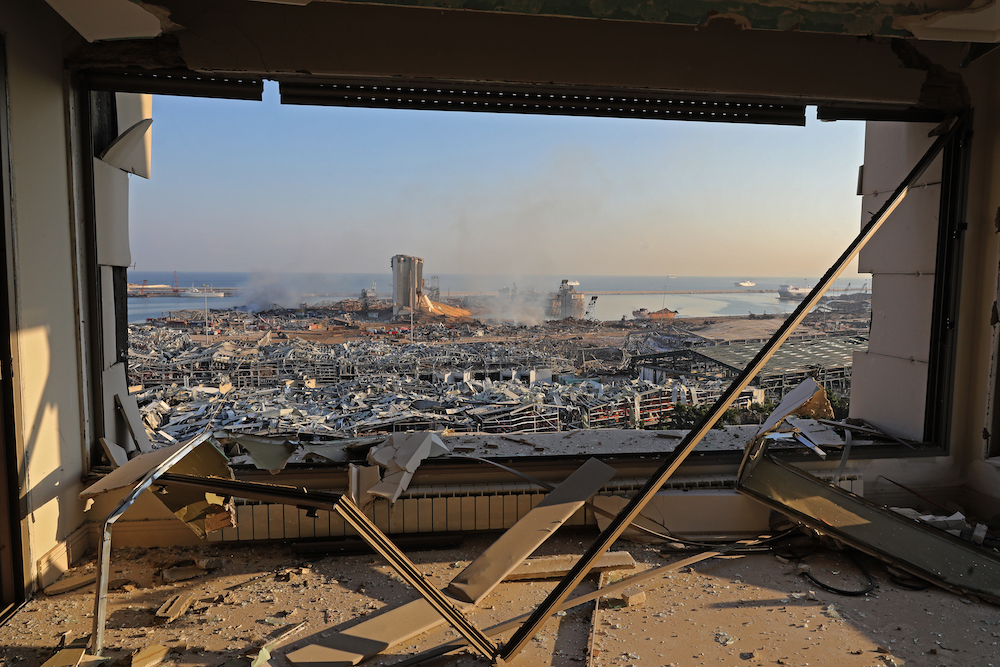
A view shows the aftermath of yesterday's blast at the port of Lebanon's capital Beirut, on August 5, 2020. (AFP)
The journalist then drove to the hospital emergency room in her own car to seek treatment for her own injuries.
Journalist Ibrahim Haidar, also of An-Nahar, who suffered injuries to the head and face, said he was at his desk writing when he heard the first explosion.
“I got up and went to report to the local desk what I saw,” he told Arab News. “As I was returning to my desk, another massive explosion tore everything apart.”
Amjad Iskandar, head of the Beirut office of Independent Arabia, said remote work saved many lives and protected completed assignments on home computers. (AN Photo/Najia Houssari)
Once outside the building, a motorcyclist stopped to pick up Haidar. “I did not ride behind him because I started to get dizzy. Another man took me in his car to the AUB Medical Hospital, but it was full of injured people,” he said.
“I then went to CMC Hospital, which refused to treat my wounds. So I went to Khoury Hospital, where I found 200 people waiting for treatment. They stitched my head wounds and asked me to go home. Two hours later, I started bleeding again, so I went back to the hospital for more stitches.”
Haidar said the newspaper management decided in March to let employees work from home because of the pandemic. “Two months ago, we returned to the office, but the website employees kept working from home. Hence they avoided this disaster,” he said.
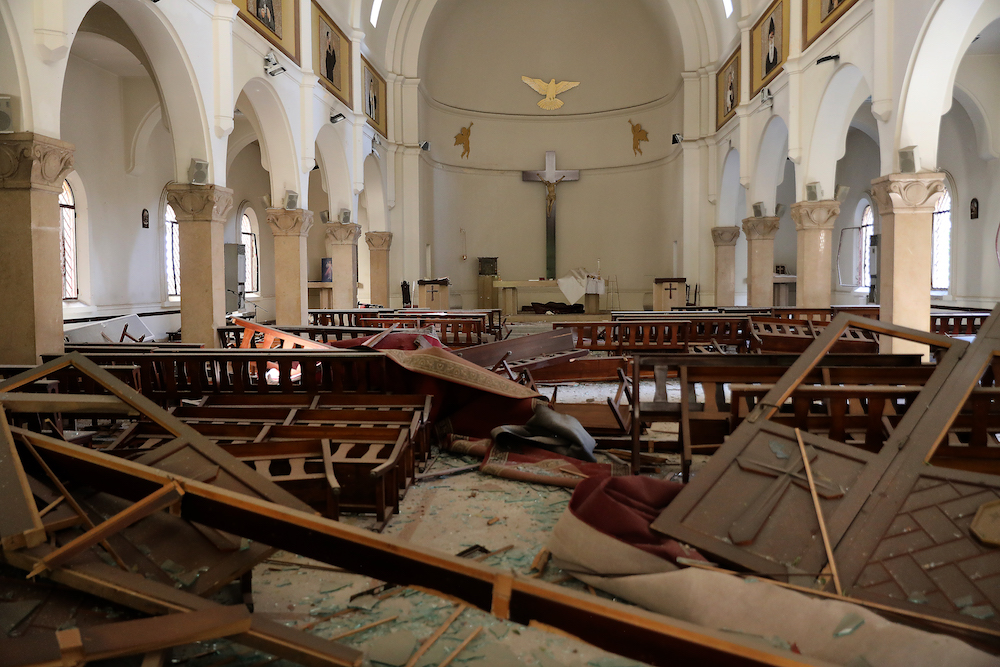
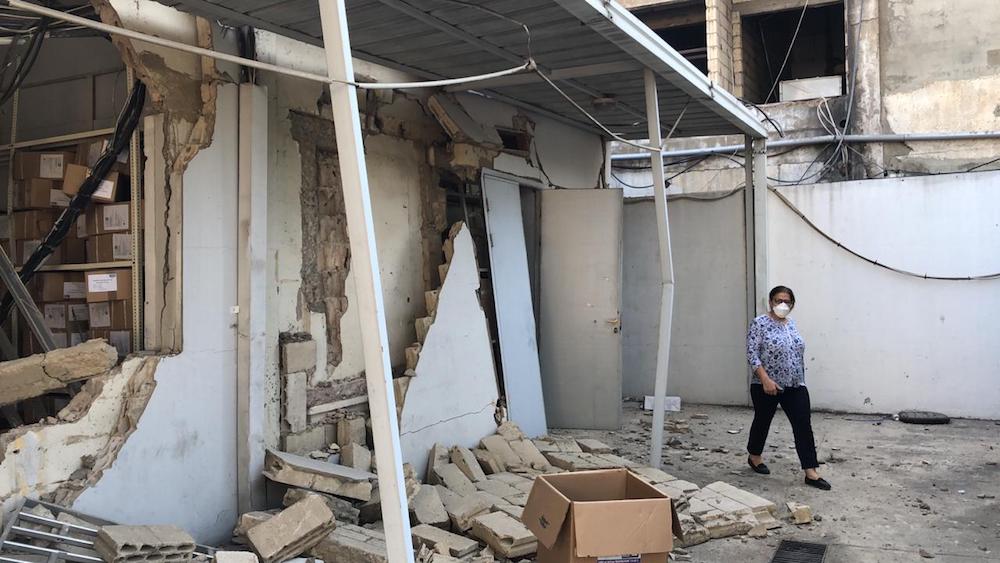
The interior of a church is pictured in the aftermath of yesterday's blast that tore through Lebanon's capital and resulted from the ignition of a huge depot of ammonium nitrate at Beirut's port, on August 5, 2020. (AFP)
Amjad Iskandar, head of the Beirut office of Independent Arabia, said remote work saved many lives and protected completed assignments on home computers.
Ahmed Al-Maghrabi, also of Independent Arabia, was more emphatic: “Thank you, coronavirus.”
Employees at companies that keep Lebanon’s service economy ticking had similar experiences.
Medgulf Insurance Co., which employs 300 people, has offices in two buildings near the port. “We used to stay at work until 6 p.m. before the hours got reduced because of the pandemic,” Ashraf Bakkar, the company’s chief underwriter, told Arab News.
“Many of us work from home. Those in the office on Tuesday decided to leave work at 4 p.m., shutting down the server and keeping one employee on stand-by duty. Luckily for him, at the time of the explosion, he was in the bathroom. Had he been at his desk, he would be dead or at least seriously injured.”
Twitter: @najiahoussari


