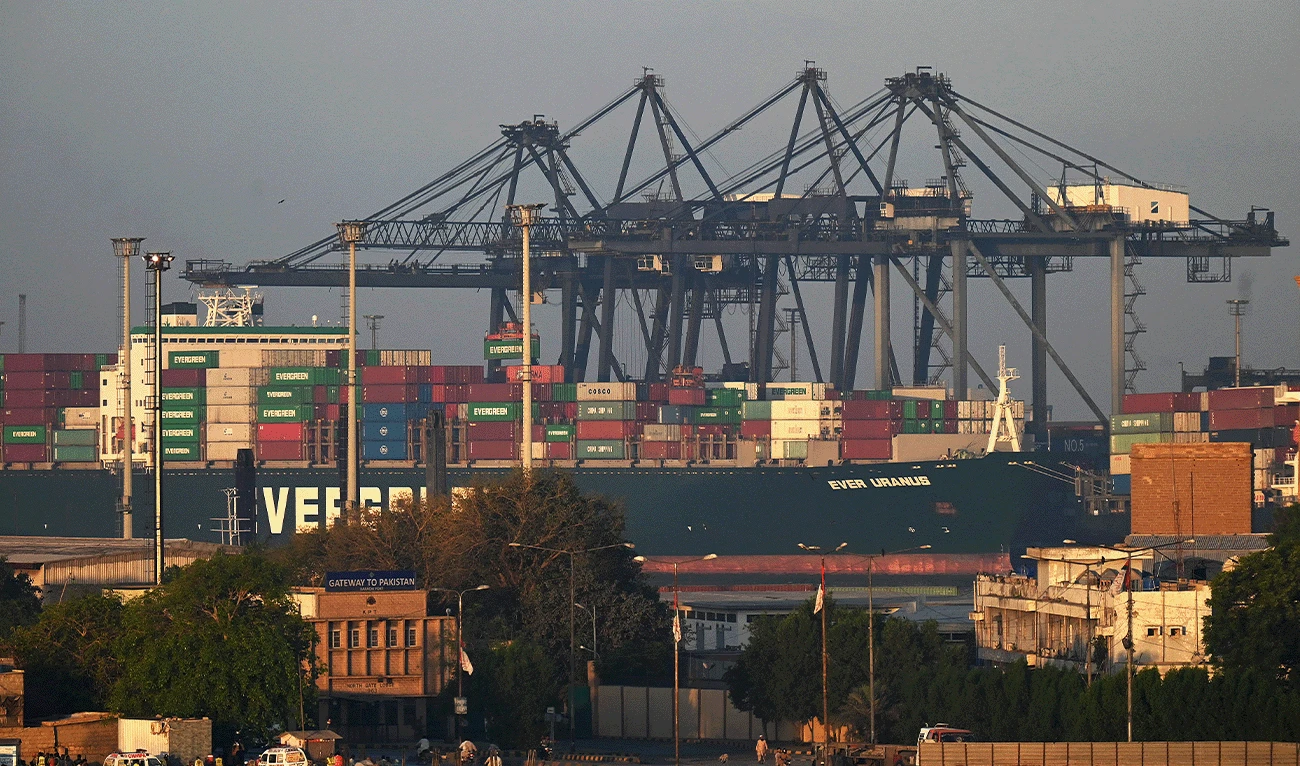
KARACHI: A 14-year old Pakistani boy has died in the Lebanon port blast that killed more than 100 people on Tuesday, the Pakistani embassy in Beirut said on Wednesday.
The prime minister and president of Lebanon have said 2,750 tons of ammonium nitrate, used in fertilizers and bombs, had been stored for six years at the Beirut port without safety measures, and had blown up.
“A 14-year old who was admitted to the hospital died today,” Aman Ullah, head of chancery at the Pakistani embassy in Beirut, told Arab News over the phone.
Sajid Arshed Ali, his son Zulbab Sajid and three-year-old daughter Hadeed Sajid were brought to the hospital in critical condition, Aman Ullah said in a written statement.
“14 years [old] Zulbab Sajid could not survive and breathed his last on Wednesday morning while father and daughter are still in ICU,” he said.
Pakistan’s ministry of overseas Pakistanis has said there are around 1,000 Pakistanis in Lebanon.
Tuesday’s explosion was the most powerful ever suffered by Beirut, a city still scarred by civil war three decades ago and reeling from a deep financial crisis rooted in decades of corruption and economic mismanagement.
The head of Beirut port and the head of customs both said on Wednesday that several letters were sent to the judiciary asking for the dangerous material be removed, but no action was taken.
One Pakistani dead, two critically injured in blast — Pakistan embassy in Beirut
https://arab.news/pagyb
One Pakistani dead, two critically injured in blast — Pakistan embassy in Beirut
- Sajid Arshed Ali, 14-year-old son Zulbab Sajid and three-year-old daughter Hadeed Sajid were brought to hospital in critical condition
- Boy succumbs to injuries in what has been called the most powerful blast ever suffered by Beirut
World Bank president in Pakistan to discuss development projects, policy issues
- Pakistan, World Bank are currently gearing up to implement a 10-year partnership framework to grant $20 billion loans to the cash-strapped nation
- World Bank President Ajay Banga will hold meetings with Pakistan Prime Minister Shehbaz Sharif and other senior officials during the high-level visit
ISLAMABAD: World Bank President Ajay Banga has arrived in Pakistan to hold talks with senior government officials on development projects and key policy issues, Pakistani state media reported on Sunday, as Islamabad seeks multilateral support to stabilize economy and accelerate growth.
The visit comes at a time when Pakistan and the World Bank are gearing up to implement a 10-year Country Partnership Framework (CPF) to grant $20 billion in loans to the cash-strapped nation.
The World Bank’s lending for Pakistan, due to start this year, will focus on education quality, child stunting, climate resilience, energy efficiency, inclusive development and private investment.
"World Bank President Ajay Banga arrives in Pakistan for a high-level visit," the state-run Pakistan TV Digital reported on Sunday. "During his stay, he will meet Prime Minister Shehbaz Sharif and other senior officials to discuss economic reforms, development projects, and key policy issues."
Pakistan, which nearly defaulted on its foreign debt obligations in 2023, is currently making efforts to stabilize its economy under a $7 billion International Monetary Fund (IMF) program.
Besides efforts to boost trade and foreign investment, Islamabad has been seeking support from multilateral financial institutions to ensure economic recovery.
“This partnership fosters a unified and focused vision for your county around six outcomes with clear, tangible and ambitious 10-year targets,” Martin Raiser, the World Bank vice president for South Asia, had said at the launch of the CPF in Jan. last year.
“We hope that the CPF will serve as an anchor for this engagement to keep us on the right track. Partnerships will equally be critical. More resources will be needed to have the impact at the scale that we wish to achieve and this will require close collaboration with all the development partners.”
In Dec., the World Bank said it had approved $700 million in financing for Pakistan under a multi-year initiative aimed at supporting the country's macroeconomic stability and service delivery.
It followed a $47.9 million World Bank grant in August last year to improve primary education in Pakistan's most populous Punjab province.