

‘As if I reached heaven’: Pilgrim among handful of Pakistanis at socially distanced Hajj

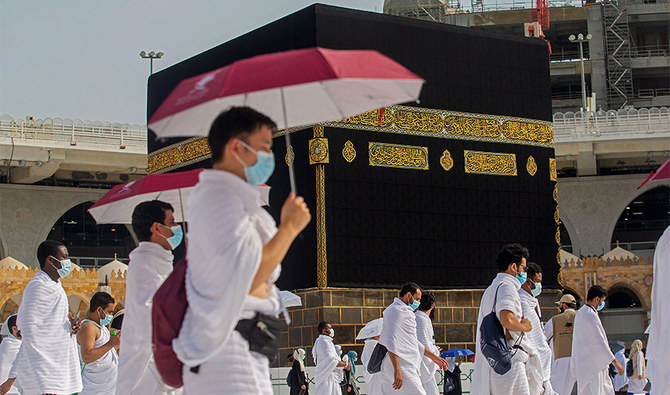
A handout picture provided by Saudi Ministry of Media on July 31, 2020 shows pilgrims circumambulating around the Kaaba, the holiest shrine in the Grand mosque in the holy Saudi city of Makkah. (AFP)
Short Url
Updated 04 August 2020
Follow

‘As if I reached heaven’: Pilgrim among handful of Pakistanis at socially distanced Hajj

  • Pakistani driver Zainal Abideen says he felt as if he were roaming in heaven when he entered the Great Mosque
  • Says all costs borne by Saudi government, transportation and accommodation arrangements fit for “kings“

ISLAMABAD: Zainul Abideen, a Pakistani driver working in Saudi Arabia, could not believe his ears when he got a call last month that he had been chosen to perform the Hajj pilgrimage this year. 
One of the holiest rites in Islam, Hajj usually brings millions of worshippers from all over the world shoulder to shoulder. But this year, the Saudi government limited attendance to curb the spread of the coronavirus, shrinking one of the world’s most famous crowds to a select, socially distanced few.


Zainul Abideen, a Pakistani driver working in Saudi Arabia, performs Hajj between July 28 to August 2, 2020 in Makkah, Saudi Arabia. (Photo courtesy: Zainul Abideen)

Last year, some three million white-clad pilgrims from across the world flocked to Makkah to attend Hajj. But with large gatherings impossible given the pandemic, only a few thousand pilgrims — Saudis and foreign residents living in the country — gathered this year.
Abideen said he was one of only five Pakistanis who performed Hajj this year, though Arab News could not verify this figure from Pakistani or Saudi officials. He said he was tested for COVID-19 and had to be in quarantine for four days in a hotel in Makkah prior to leaving for Hajj.
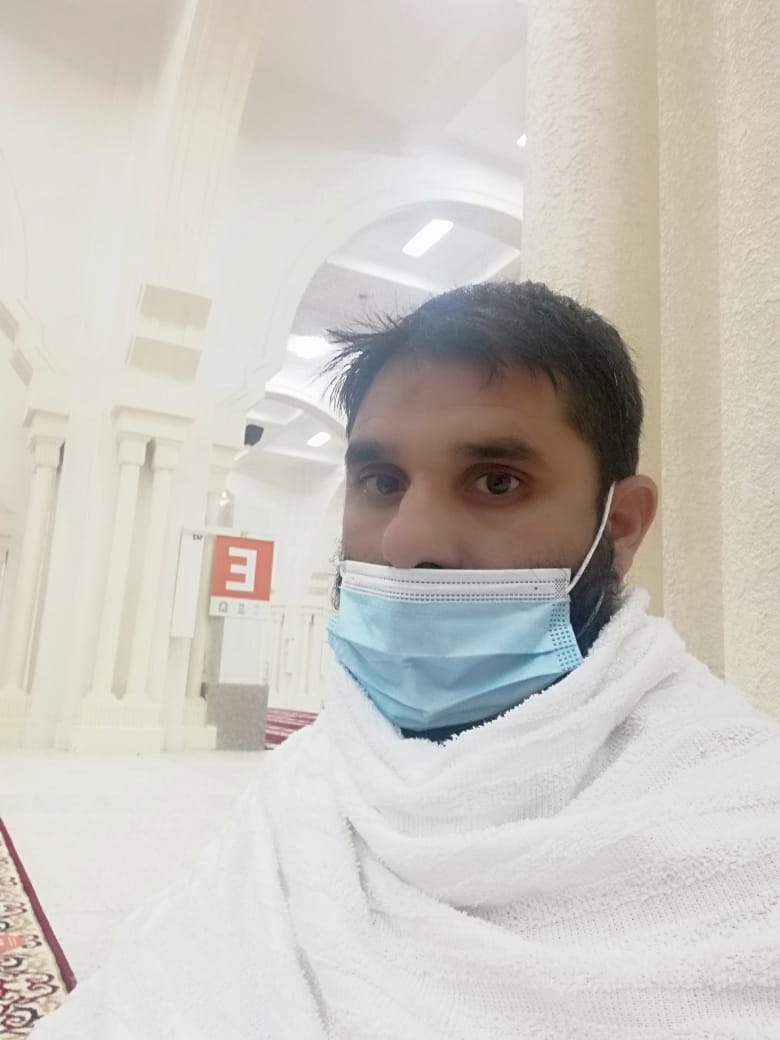


Zainul Abideen, a Pakistani driver working in Saudi Arabia, performs Hajj between July 28 to August 2, 2020 in Makkah, Saudi Arabia. (Photo courtesy: Zainul Abideen)

“I was very happy; it was as if I had reached heaven,” Abideen, who hails from Pakistan’s northwestern Swat district and has lived in Saudi Arabia for five years, told Arab News in a telephone interview on Tuesday. “In the Grand mosque, I felt that I was roaming around in heaven.”
“If anyone says he would spend 100,000 Saudi riyals to be able to attend this Hajj, he would not have gotten this chance because there were limited people who got the chance,” Abideen said. “There are billions of people but Allah has chosen a few of us to perform Hajj.”
Abideen said his kafeel had applied on his behalf to perform the Hajj before the coronavirus pandemic hit. Like other energy-rich Gulf Cooperation Council states, foreigners working in Saudi Arabia must have their residence permits made by a national sponsor known as kafeel.
When Abideen got the call that he had been chosen, he was worried about expenses, expecting the limited pilgrimage to be more expensive.
“I inquired from the caller about total expenses of Hajj this year; he replied there will be no expenses as all costs would be borne by the Saudi government,” he said, adding that transportation, accommodation and other arrangements for the pilgrimage were fit for “kings.”


Pakistan, global crypto exchange discuss modernizing digital payments, creating job prospects 

Updated 05 December 2025
Follow

Pakistan, global crypto exchange discuss modernizing digital payments, creating job prospects 

  • Pakistani officials, Binance team discuss coordination between Islamabad, local banks and global exchanges
  • Pakistan has attempted to tap into growing crypto market to curb illicit transactions, improve oversight

ISLAMABAD: Pakistan’s finance officials and the team of a global cryptocurrency exchange on Friday held discussions aimed at modernizing the country’s digital payments system and building local talent pipelines to meet rising demand for blockchain and Web3 skills, the finance ministry said.

The development took place during a high-level meeting between Finance Minister Muhammad Aurangzeb, Pakistan Virtual Assets Regulatory Authority (PVARA) Chairman Bilal bin Saqib, domestic bank presidents and a Binance team led by Global CEO Richard Teng. The meeting was held to advance work on Pakistan’s National Digital Asset Framework, a regulatory setup to govern Pakistan’s digital assets.

Pakistan has been moving to regulate its fast-growing crypto and digital assets market by bringing virtual asset service providers (VASPs) under a formal licensing regime. Officials say the push is aimed at curbing illicit transactions, improving oversight, and encouraging innovation in blockchain-based financial services.

“Participants reviewed opportunities to modernize Pakistan’s digital payments landscape, noting that blockchain-based systems could significantly reduce costs from the country’s $38 billion annual remittance flows,” the finance ministry said in a statement. 

“Discussions also emphasized building local talent pipelines to meet rising global demand for blockchain and Web3 skills, creating high-value employment prospects for Pakistani youth.”

Blockchain is a type of digital database that is shared, transparent and tamper-resistant. Instead of being stored on one computer, the data is kept on a distributed network of computers, making it very hard to alter or hack.

Web3 refers to the next generation of the Internet built using blockchain, focusing on giving users more control over their data, identity and digital assets rather than big tech companies controlling it.

Participants of the meeting also discussed sovereign debt tokenization, which is the process of converting a country’s debt such as government bonds, into digital tokens on a blockchain, the ministry said. 

Aurangzeb called for close coordination between the government, domestic banks and global exchanges to modernize Pakistan’s payment landscape.

Participants of the meeting also discussed considering a “time-bound amnesty” to encourage users to move assets onto regulated platforms, stressing the need for stronger verifications and a risk-mitigation system.

Pakistan has attempted in recent months to tap into the country’s growing crypto market, crack down on money laundering and terror financing, and promote responsible innovation — a move analysts say could bring an estimated $25 billion in virtual assets into the tax net.

In September, Islamabad invited international crypto exchanges and other VASPs to apply for licenses to operate in the country, a step aimed at formalizing and regulating its fast-growing digital market.