

‘As if I reached heaven’: Pilgrim among handful of Pakistanis at socially distanced Hajj

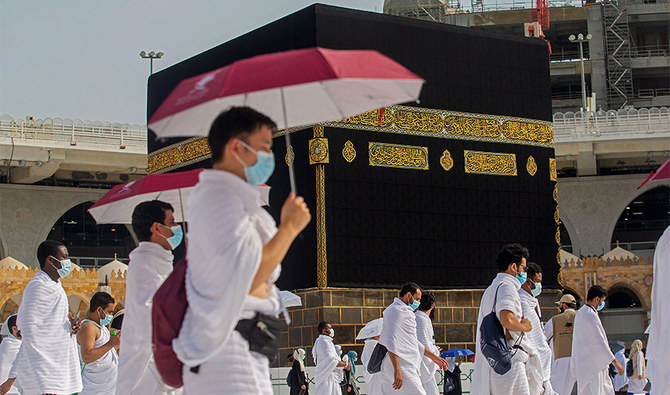
A handout picture provided by Saudi Ministry of Media on July 31, 2020 shows pilgrims circumambulating around the Kaaba, the holiest shrine in the Grand mosque in the holy Saudi city of Makkah. (AFP)
Short Url
Updated 04 August 2020
Follow

‘As if I reached heaven’: Pilgrim among handful of Pakistanis at socially distanced Hajj

  • Pakistani driver Zainal Abideen says he felt as if he were roaming in heaven when he entered the Great Mosque
  • Says all costs borne by Saudi government, transportation and accommodation arrangements fit for “kings“

ISLAMABAD: Zainul Abideen, a Pakistani driver working in Saudi Arabia, could not believe his ears when he got a call last month that he had been chosen to perform the Hajj pilgrimage this year. 
One of the holiest rites in Islam, Hajj usually brings millions of worshippers from all over the world shoulder to shoulder. But this year, the Saudi government limited attendance to curb the spread of the coronavirus, shrinking one of the world’s most famous crowds to a select, socially distanced few.


Zainul Abideen, a Pakistani driver working in Saudi Arabia, performs Hajj between July 28 to August 2, 2020 in Makkah, Saudi Arabia. (Photo courtesy: Zainul Abideen)

Last year, some three million white-clad pilgrims from across the world flocked to Makkah to attend Hajj. But with large gatherings impossible given the pandemic, only a few thousand pilgrims — Saudis and foreign residents living in the country — gathered this year.
Abideen said he was one of only five Pakistanis who performed Hajj this year, though Arab News could not verify this figure from Pakistani or Saudi officials. He said he was tested for COVID-19 and had to be in quarantine for four days in a hotel in Makkah prior to leaving for Hajj.
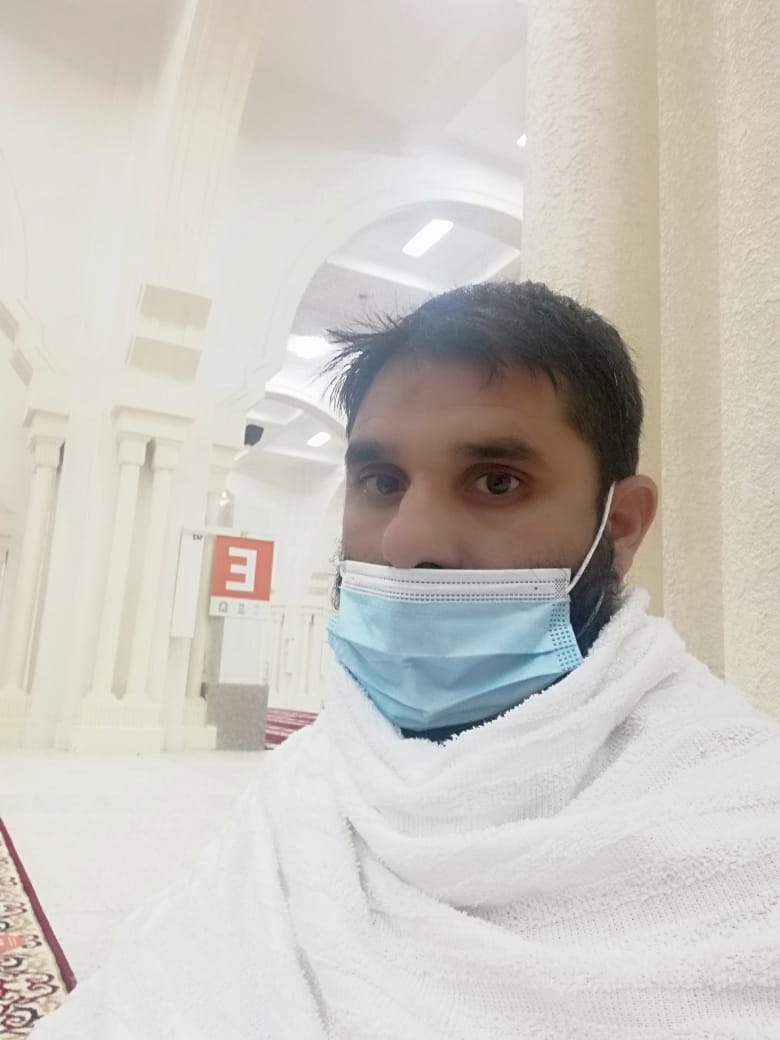


Zainul Abideen, a Pakistani driver working in Saudi Arabia, performs Hajj between July 28 to August 2, 2020 in Makkah, Saudi Arabia. (Photo courtesy: Zainul Abideen)

“I was very happy; it was as if I had reached heaven,” Abideen, who hails from Pakistan’s northwestern Swat district and has lived in Saudi Arabia for five years, told Arab News in a telephone interview on Tuesday. “In the Grand mosque, I felt that I was roaming around in heaven.”
“If anyone says he would spend 100,000 Saudi riyals to be able to attend this Hajj, he would not have gotten this chance because there were limited people who got the chance,” Abideen said. “There are billions of people but Allah has chosen a few of us to perform Hajj.”
Abideen said his kafeel had applied on his behalf to perform the Hajj before the coronavirus pandemic hit. Like other energy-rich Gulf Cooperation Council states, foreigners working in Saudi Arabia must have their residence permits made by a national sponsor known as kafeel.
When Abideen got the call that he had been chosen, he was worried about expenses, expecting the limited pilgrimage to be more expensive.
“I inquired from the caller about total expenses of Hajj this year; he replied there will be no expenses as all costs would be borne by the Saudi government,” he said, adding that transportation, accommodation and other arrangements for the pilgrimage were fit for “kings.”


Traders estimate $18 million losses as rescue operations continue after Karachi mall inferno

Updated 41 min 2 sec ago
Follow

Traders estimate $18 million losses as rescue operations continue after Karachi mall inferno

  • DNA testing underway to identify victims still missing after blaze destroys 1,200 shops
  • Emergency services dispatched on Tuesday to another fire at Karachi’s New Vegetable Market

KARACHI/ISLAMABAD: Karachi’s business community on Tuesday estimated losses of about $18 million after a devastating fire tore through a major shopping plaza in the city, with rescue teams continuing search and recovery operations at the site amid fears that more victims may still be trapped under the debris.

The fire broke out late Saturday at Gul Plaza, a multi-story shopping complex in Karachi’s congested Saddar area, spreading rapidly through the building, which has over 1,200 shops, and trapping workers and shoppers inside. Recovery efforts have been slowed by severe structural damage and fears of collapse, officials said.

Dr. Summaiya Syed, Karachi’s chief police surgeon, said 20 deaths had been confirmed so far, with identification still underway for several bodies recovered from the site.

Karachi has a long history of deadly fires in commercial buildings, often blamed on overcrowding, aging infrastructure and weak enforcement of fire safety regulations in a city of more than 20 million people.

Atiq Mir, president of the Karachi Tajir Ittehad, which represents around 600,000 small traders across the city, said assessments by traders now put the financial damage from the Gul Plaza fire at nearly Rs5 billion ($18 million), far higher than initial estimates. 

“The plaza had at least 8000-10,000 laborers and then those affiliated to them. We can easily say nearly 10,000 families have been affected by this fire,” Mir told Arab News. 

Shafi Ahmed, who owned a store in the basement, grieves after his loss, following a massive fire that broke out in the Gul Plaza Shopping Mall in Karachi, Pakistan, January 19, 2026. (Reuters)

He urged the government to announce a compensation grant of at least Rs5 billion ($18 million) and said the Karachi Chamber of Commerce and Industry would be the most appropriate body to oversee transparent distribution of relief funds.

On Monday, the provincial government of Sindh said it would provide Rs10 million ($36,000) in compensation to the family of each person killed in the Gul Plaza fire. 

Chief Minister Murad Ali Shah also announced the formation of a joint committee involving provincial officials and the Karachi Chamber of Commerce and Industry (KCCI) to assess losses and oversee rehabilitation of affected traders. He said authorities were exploring temporary arrangements to relocate 1,000 to 1,200 shops so businesses could resume operations as quickly as possible.

Citing past precedents such as the Bolton Market arson and the Cooperative Market fire, Shah said similar compensation and recovery mechanisms had previously helped traders rebuild their livelihoods and would guide the current response.

TOPSHOT - Rescue workers search amid the debris using excavators after a massive fire at a shopping mall in Karachi on January 19, 2026. (AFP)

On Tuesday, Karachi Mayor Murtaza Wahab said heavy machinery had been deployed to clear debris and allow access to Gul Plaza’s basement, where search teams believe victims may still be trapped.

“Under all circumstances, the rescue operation must be completed and the search for victims further accelerated,” Wahab said during a visit to the site, according to a statement. 

“All departments of the Karachi Metropolitan Corporation will remain on alert until every missing person is traced and the operation is concluded.”

Emergency personnel survey the damaged portion of the building, following a massive fire that broke out in the Gul Plaza Shopping Mall in Karachi, Pakistan, January 19, 2026. (Reuters)

As rescue operations intensified at Gul Plaza, emergency services were dispatched to another fire at Karachi’s New Vegetable Market, officials said, underscoring persistent safety challenges.

Deputy Mayor Salman Abdullah Murad said fire brigade units and Rescue 1122 teams were immediately deployed and the blaze was brought under control.

“The fire is under control and there is no danger,” Murad said, adding that the affected area had been secured and cooling operations were underway.

Police officials said no casualties were reported in the vegetable market incident.