ISLAMABAD: China’s Ambassador to Pakistan Yao Jing has said Pakistan has the potential to become a hub of regional connectivity and trade as Islamabad pushes to complete stalled projects under a multibillion dollar energy and infrastructure corridor sponsored by Beijing.
In an interview to Pakistan news channel Geo News, which was aired on Monday night, Yao said Pakistan and China were working closely on the completion of projects under the China Pakistan Economic Corridor (CPEC), under which Beijing has pledged about $60 billion for infrastructure in Pakistan, central to China’s wider Belt and Road initiative to develop land and sea trade routes in Asia and beyond.
“Due to CPEC, due to our cooperation with Pakistan we would like to explore and will have full use of this potential for Pakistan as the hub for regional connectivity,” Yao said.
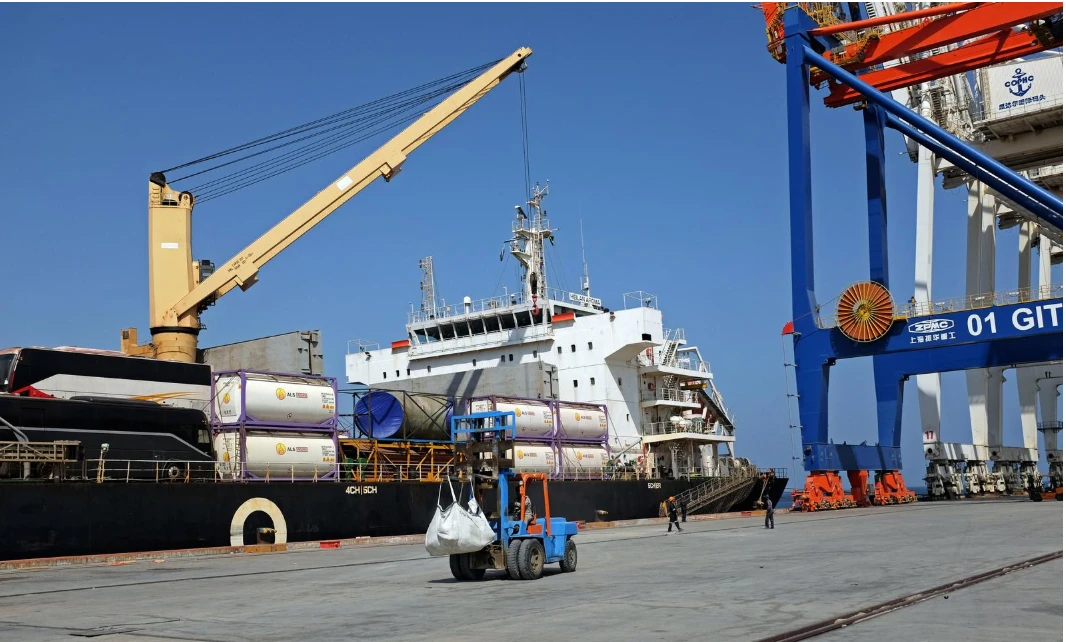
He said the deep sea port of Gwadar in the southwestern Balochistan province could be at the center of regional connectivity and a possible railway link from Gwadar to Kandahar or other parts of Afghanistan and to Central Asian through Afghanistan could become a key trade and transportation route.
Gwadar is the crown jewel of China’s $60 billion investment in Belt and Road Initiative projects in Pakistan. The plan is to turn Gwadar into a trans-shipment hub and megaport to be built alongside special economic zones from which export-focused industries will ship goods worldwide. A web of energy pipelines, roads and rail links will connect Gwadar to China’s western regions.
Pakistan has potential to become ‘hub of regional connectivity’ — Chinese envoy
https://arab.news/nehg5
Pakistan has potential to become ‘hub of regional connectivity’ — Chinese envoy
- Islamabad is pushing to complete stalled projects under a multibillion dollar energy and infrastructure corridor sponsored by Beijing
- Ambassador Yao says deep sea port of Gwadar in Balochistan province could be center of regional connectivity, become key trade route
Pakistan high court pauses tree-cutting in Islamabad until Feb. 2
- Islamabad High Court asks CDA to ‘explain and justify’ tree-cutting at next hearing
- CDA officials say 29,000 trees were cut due to allergies, deny felling in green belts
ISLAMABAD: The Islamabad High Court has ordered an immediate halt to tree-cutting in the federal capital until Feb. 2, seeking justification from civic authorities over the legality of a large-scale felling drive that has seen thousands of trees removed in recent months.
The interim order, issued by a single-judge bench led by Justice Khadim Hussain Soomro, came during proceedings on a petition challenging the Capital Development Authority’s (CDA) tree-cutting operations in Islamabad’s Shakarparian area and H-8 sector.
At the outset of the hearing, the petitioner’s counsel argued that trees were being felled in violation of the Pakistan Environmental Protection Act 1997, the Islamabad Wildlife Ordinance 1979 and the city’s master plan.
“Respondents shall not cut trees till the next date of hearing,” Justice Soomro said in the court order released on Friday while referring to CDA officials.
“Respondents are directed to come fully prepared and to file paragraph-wise comments before the next date of hearing, along with a comprehensive report explaining the justification and legal basis for the cutting of trees,” he added.
According to the court order, the petitioner maintained that the CDA had not made any public disclosure regarding the legal basis for the operation and that the felling was causing environmental harm.
The petition sought access to the official record of tree-cutting activities and called for the penalization of CDA officials responsible for the act under relevant criminal and environmental laws.
It also urged the court to impose a moratorium on infrastructure projects in Islamabad, order large-scale replanting as compensation and constitute a judicial commission headed by a retired Supreme Court judge to probe the alleged violations.
CDA officials acknowledge around 29,000 paper mulberry trees have been cut in the capital in recent months, arguing that the species triggers seasonal allergies such as sneezing, itchy eyes and nasal congestion.
They also maintain that no trees have been removed from designated green belts and that the number of replacement trees planted exceeds those felled.
Designed in the 1960s by Greek architect Constantinos Doxiadis, Islamabad was conceived as a low-density city with green belts and protected natural zones at its core.
Critics, however, say the recent felling has extended beyond paper mulberry trees and question whether authorities are adhering to the city’s master plan and the legal protections governing forested and green areas.
The court has adjourned its hearing until Feb. 2, 2026.