


BEIRUT: Lebanon is enduring an Eid holiday surge in COVID-19 infections, with a record 224 new coronavirus cases recorded on Saturday.
The new patients bring the total number of cases in Lebanon to 4,555, and the death toll rose by two to 59.
Among the casualties of the pandemic fallout were celebrations to mark the 75th anniversary of Lebanon’s army.
A general lockdown reimposed last Thursday in a renewed effort to contain the outbreak forced the military to curtail its plans.
The occasion was marked with little of the fanfare of previous years, and traditional celebrations including a parade and graduation ceremony were abandoned.
Instead President Michel Aoun delivered a televised speech and received a delegation led by army chief Gen. Joseph Aoun.
The president told the army that “surrender is not permitted.” He said: “During my military career, I learned how to walk in a minefield to save the wounded. And today the wounded is the country itself.”
Aoun used his address to criticize opponents of reform to address Lebanon’s worst economic crisis in decades.
“The reforms that are being implemented will not stop until we know the real situation of public finances, and lay our hand on suspicious files in order to find the right solutions and sue the corrupt,” he said.
The president said that an anti-corruption campaign would extend to all government sectors in an effort to win back the trust of the Lebanese people.
He criticized those “who are attacking all salvation attempts in order to score vocal triumphs, especially those who ran away from responsibility in the midst of the crisis.”
Aoun also called on the army “to preserve Lebanese sovereignty against Israeli aggression while abiding by UN Resolution 1701,” pointing out that “we have to defend ourselves, our territories, water and sovereignty, and there will be no complacency.”
The army chief told the president: “Since the start of protests last October, the subsequent economic crisis and the outbreak of the pandemic, the Lebanese army has made every effort to preserve security and stability.”
The military would “remain the guarantor and the core basis for the country’s safety and security,” he said.
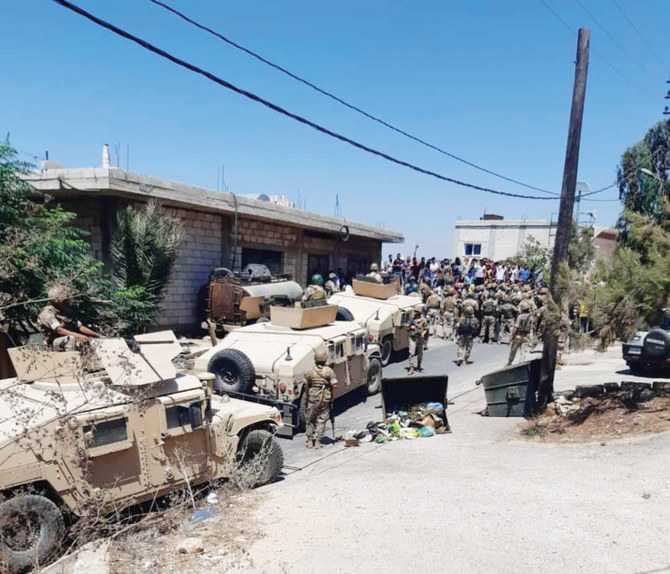
On the eve of Army Day, clashes between Lebanese troops and villagers in the northern Wadi Khaled area on the border with Syria left one person dead and several soldiers wounded.
The clashes erupted after the army arrested townsmen for allegedly smuggling sheep from Syria into Lebanon.
Soldiers clashed with protesters and fired rubber bullets at residents who blocked roads.


