Pakistani YouTuber finds fame as doppelgänger for Ertugrul lead actor 

Mustafa Hanif, who runs a YouTube channel documenting his travels around Pakistan, poses as the title character Ertugrul Ghazi from the Turkish historical drama Diriliş: Ertugrul, on the rooftop of his home in Karachi, Pakistan, on July 17, 2020. (Mustafa Hanif)
Short Url
Updated 01 August 2020
Follow

Pakistani YouTuber finds fame as doppelgänger for Ertugrul lead actor 

  • Engin Altan Duzyatan has become hugely popular in Pakistan for portraying the role of Ertugrul Ghazi in the historical Turkish TV series
  • Since Hanif found out he resembles the Turkish star, he has done a viral video shoot recreating scenes from the TV show

RAWALPINDI: Pakistani YouTuber Mustafa Hanif has taken social media in Pakistan, where the Turkish TV series Ertugul has a huge following, by storm for his uncanny resemblance to the show’s lead actor Engin Altan Duzyatan.
The series, which ran in Turkey until 2019, is loosely based on the story of a 13th century nomadic Turkic tribal leader called Ertugrul who confronted Mongols, Crusaders and Byzantine rulers in what are now Syria and Turkey.
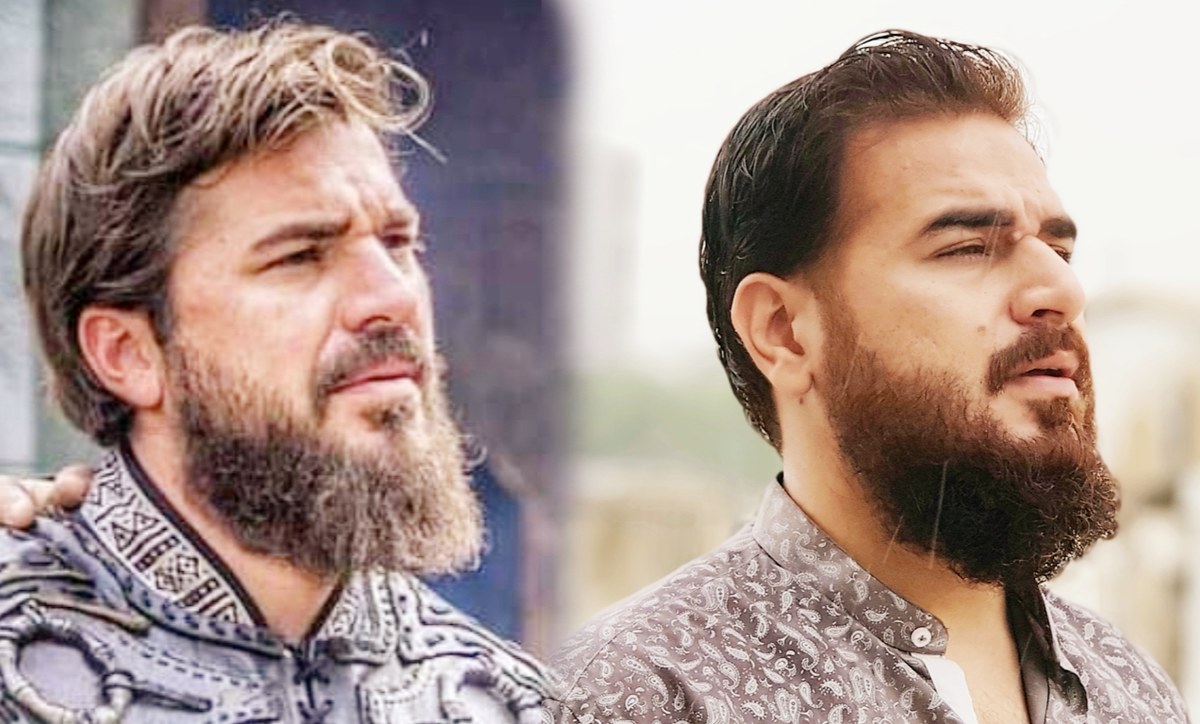


Mustafa Hanif poses as Ertugrul Ghazi from the historical Turkish TV series on the rooftop of his home in Karachi, Pakistan, on July 17, 2020. (Mustafa Hanif)

Pakistani broadcaster PTV began airing Urdu-dubbed episodes of the show during Ramadan this year, and it has since become the most watched program ever aired by the outlet.
In 2018, a friend of Hanif’s showed him a picture of Duzyatan, pointing out the YouTuber’s resemblance to the celebrity.
“I was really shocked when I saw him,” Hanif told Arab News over the phone, laughing, saying he immediately started devouring episode after episode of the show. “I have watched every episode of every season of ‘Ertugrul. I have even completed the follow-up series ‘Kurulus Osman.’”



Mustafa Hanif, who resembles the lead character of the Turkish Tv show Ertugrul, rides on a horse in Karachi, Pakistan, on May 21, 2020. (Mustafa Hanif)

In May this year, Hanif arranged a video shoot at his home in Karachi where he dressed up as Ertugrul and rode on a horse to recreate a scene from the series.
“I put in a lot of effort to make the shoot happen the way I had envisioned it,” Hanif said. “I rented the horse and costume and hired a professional cameraman.”
The video, titled “Ertugrul Ghazi in Karachi,” has been viewed 140,000 times on Hanif’s YouTube channel.
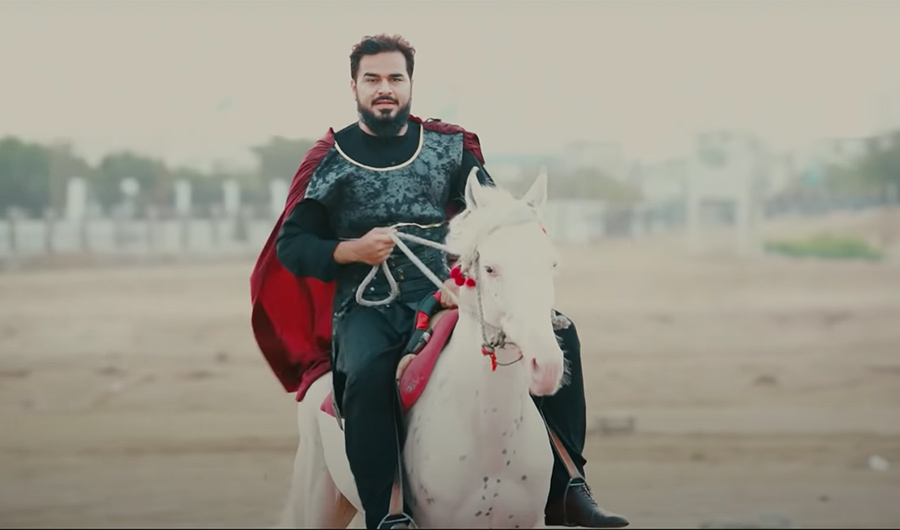


Mustafa Hanif, who resembles the lead character of the Turkish TV show Ertugrul, rides on a horse in Karachi, Pakistan, on May 21, 2020. (Mustafa Hanif)

“There’s been a big boost in my followers since the video and my photos,” Hanif said.
He said though he had never considered acting as a career in the past, now he would be interested in a role in an Islamic history series similar to Ertugrul, if he were offered one.
In the next few months, preferably September, Hanif says he plans to head to Turkey to visit to visit the historical sites featured in the show. He also hopes to meet the actors from the show someday, he said.


Pakistan says IMF has not imposed new conditions under $7 billion bailout

Updated 4 sec ago
Follow

Pakistan says IMF has not imposed new conditions under $7 billion bailout

  • Finance ministry says measures cited as ‘new conditions’ are phased extensions of reforms already agreed
  • Media described steps like civil servants’ asset disclosures and sugar industry deregulation as new demands

ISLAMABAD: Pakistan said on Sunday some of the reform measures mentioned in the media and linked to the International Monetary Fund (IMF) bailout program are not “new conditions” imposed by the lender but extensions of commitments already agreed under the arrangement.

Local media and social platforms have described a series of IMF-linked structural benchmarks as fresh conditions under the $7 billion loan for Pakistan in recent weeks. News reports published and broadcast in India also mentioned 11 measures under the loan, describing them as new IMF demands imposed on the country.

“The Ministry of Finance has clarified the intent, context, and continuity of reform measures under Pakistan’s IMF Extended Fund Facility (EFF) program, particularly in response to recent commentary regarding so-called ‘new conditions,’” said an official statement circulated in Islamabad.

“The purpose is to reaffirm that the measures referenced are part of a phased, medium-term reform agenda agreed with the IMF, many of which are extensions or logical progressions of reforms already initiated by the Government of Pakistan,” it added.

The ministry said the EFF is designed to support medium-term structural reforms implemented in a sequenced manner, with each program review building on prior actions to meet policy objectives agreed at the outset.

It provided detailed clarification on 11 measures that had been characterized as new conditions, including public disclosure of asset declarations of civil servants, strengthening the operational effectiveness of the National Accountability Bureau, empowering provincial anti-corruption bodies through access to financial intelligence and facilitating foreign remittances.

Other measures cited included the development of the local currency bond market, deregulation of the sugar industry, a comprehensive reform roadmap for the Federal Board of Revenue, a medium-term tax reform strategy, phased privatization of power distribution companies, regulatory reforms to strengthen corporate compliance and contingency measures to address potential revenue shortfalls.

The ministry said several of these reforms had been embedded in the Memorandum of Economic and Financial Policies (MEFP), a document detailing mutually agreed commitments, dating back to May 2024 and March 2025, including pledges related to tax policy, governance, energy sector restructuring and revenue mobilization.

“During discussions and negotiations with the IMF, the Government of Pakistan presents its planned policy reform initiatives,” the statement added. “Where the IMF assesses that these initiatives contribute to the agreed program objectives, they are incorporated into the MEFP.”

“As a result,” it continued, “many of the structural benchmarks and actions included in the latest MEFP are derived from reforms already undertaken or initiated by the Government of Pakistan, rather than being externally imposed or newly introduced conditions.”

The statement noted the measures outlined in the latest MEFP represent “continuity, sequencing and deepening of Pakistan’s agreed reform agenda” under the IMF loan, rather than the “imposition of abrupt or unprecedented conditions.”