

Pakistani YouTuber finds fame as doppelgänger for Ertugrul lead actor 

Mustafa Hanif, who runs a YouTube channel documenting his travels around Pakistan, poses as the title character Ertugrul Ghazi from the Turkish historical drama Diriliş: Ertugrul, on the rooftop of his home in Karachi, Pakistan, on July 17, 2020. (Mustafa Hanif)
Short Url
Updated 01 August 2020
Follow

Pakistani YouTuber finds fame as doppelgänger for Ertugrul lead actor 

  • Engin Altan Duzyatan has become hugely popular in Pakistan for portraying the role of Ertugrul Ghazi in the historical Turkish TV series
  • Since Hanif found out he resembles the Turkish star, he has done a viral video shoot recreating scenes from the TV show

RAWALPINDI: Pakistani YouTuber Mustafa Hanif has taken social media in Pakistan, where the Turkish TV series Ertugul has a huge following, by storm for his uncanny resemblance to the show’s lead actor Engin Altan Duzyatan.
The series, which ran in Turkey until 2019, is loosely based on the story of a 13th century nomadic Turkic tribal leader called Ertugrul who confronted Mongols, Crusaders and Byzantine rulers in what are now Syria and Turkey.
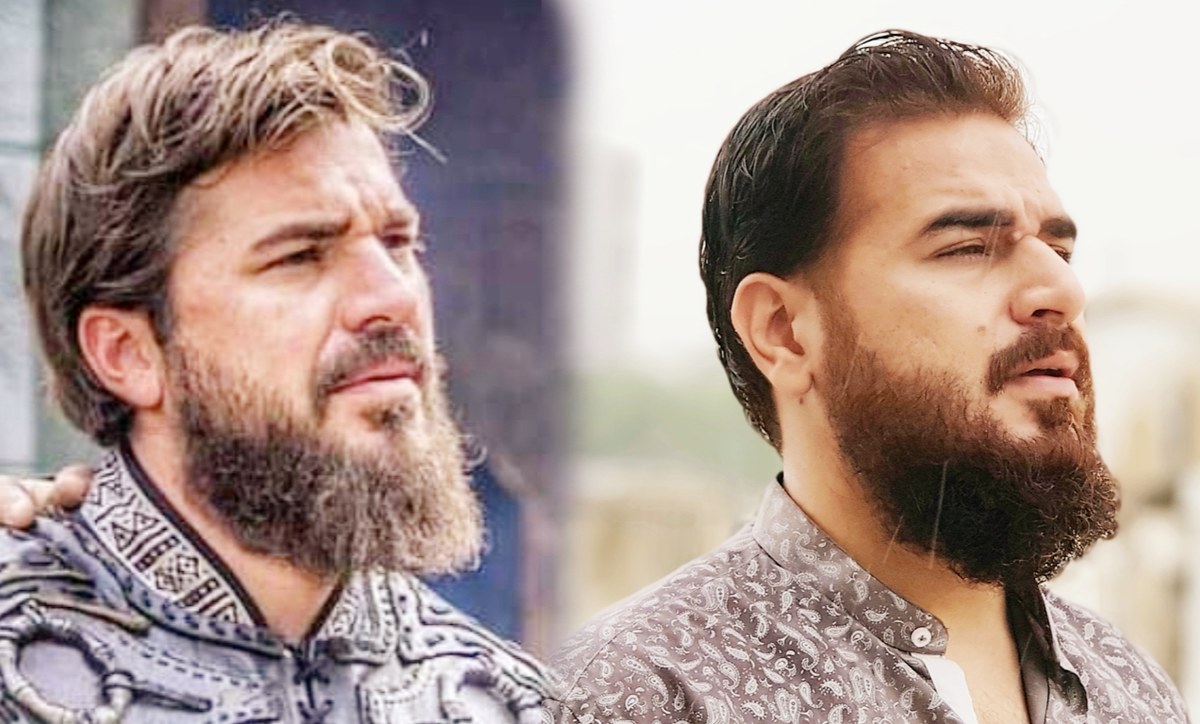


Mustafa Hanif poses as Ertugrul Ghazi from the historical Turkish TV series on the rooftop of his home in Karachi, Pakistan, on July 17, 2020. (Mustafa Hanif)

Pakistani broadcaster PTV began airing Urdu-dubbed episodes of the show during Ramadan this year, and it has since become the most watched program ever aired by the outlet.
In 2018, a friend of Hanif’s showed him a picture of Duzyatan, pointing out the YouTuber’s resemblance to the celebrity.
“I was really shocked when I saw him,” Hanif told Arab News over the phone, laughing, saying he immediately started devouring episode after episode of the show. “I have watched every episode of every season of ‘Ertugrul. I have even completed the follow-up series ‘Kurulus Osman.’”
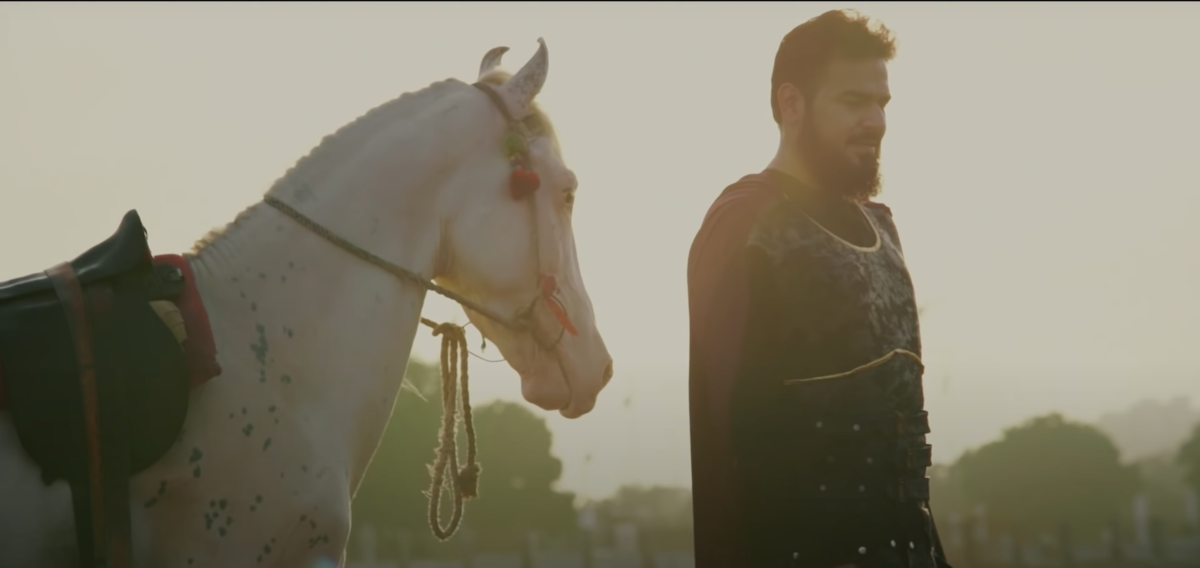


Mustafa Hanif, who resembles the lead character of the Turkish Tv show Ertugrul, rides on a horse in Karachi, Pakistan, on May 21, 2020. (Mustafa Hanif)

In May this year, Hanif arranged a video shoot at his home in Karachi where he dressed up as Ertugrul and rode on a horse to recreate a scene from the series.
“I put in a lot of effort to make the shoot happen the way I had envisioned it,” Hanif said. “I rented the horse and costume and hired a professional cameraman.”
The video, titled “Ertugrul Ghazi in Karachi,” has been viewed 140,000 times on Hanif’s YouTube channel.
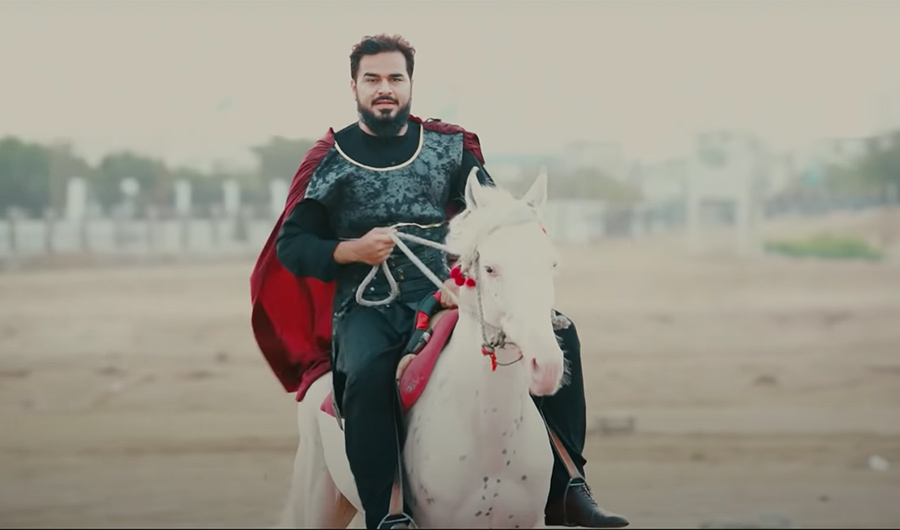


Mustafa Hanif, who resembles the lead character of the Turkish TV show Ertugrul, rides on a horse in Karachi, Pakistan, on May 21, 2020. (Mustafa Hanif)

“There’s been a big boost in my followers since the video and my photos,” Hanif said.
He said though he had never considered acting as a career in the past, now he would be interested in a role in an Islamic history series similar to Ertugrul, if he were offered one.
In the next few months, preferably September, Hanif says he plans to head to Turkey to visit to visit the historical sites featured in the show. He also hopes to meet the actors from the show someday, he said.


Pakistan says will press ahead with trilateral cooperation with China and Bangladesh

Updated 4 sec ago
Follow

Pakistan says will press ahead with trilateral cooperation with China and Bangladesh

  • Islamabad signals closer engagement with Dhaka amid shifting regional dynamics
  • Trilateral platform gains traction after recent China-Pakistan strategic talks last week

ISLAMABAD: Pakistan said on Thursday it would continue to pursue a trilateral cooperation framework with China and Bangladesh aimed at boosting regional connectivity, trade and development, as consultations among the three countries move forward.

The framework, launched last year at the senior officials’ level, has gained renewed attention as ties between Pakistan and Bangladesh improve following years of limited engagement, while Dhaka’s relations with India, a longtime archrival of Pakistan, have come under strain amid domestic political upheaval.

Addressing reporters on Thursday, Pakistan’s Foreign Office spokesman Tahir Andrabi said Islamabad remained committed to the Pakistan-China-Bangladesh cooperation mechanism and intended to follow up on earlier consultations to deliver “practical outcomes.”

“On the Pakistan, Bangladesh and China mechanism, if you recall, a meeting took place last year [2025] at the level of vice ministers and foreign secretaries,” Andrabi told a weekly media briefing, adding that Pakistan looked forward to “positive outcomes” in line with an agreed joint communiqué.

“So of course, the consultations between the three of us would continue in the future to strive for outcomes which are beneficial for the peace, progress and prosperity of our people,” he said when asked specifically about Bangladesh’s role in the framework.

The trilateral cooperation was also referenced in a joint press communiqué issued after the Seventh Round of the China-Pakistan Foreign Ministers’ Strategic Dialogue held last week.

“The two sides expressed readiness to continue leveraging the China-Afghanistan-Pakistan Trilateral Foreign Ministers’

Dialogue and the China-Bangladesh-Pakistan cooperation mechanism to deliver new outcomes,” the statement said.
Andrabi said Pakistan’s engagement with China would continue across bilateral and trilateral formats, underscoring Islamabad’s preference for cooperative regional approaches focused on economic development rather than bloc politics.

Bangladesh was part of Pakistan until 1971, when it gained independence following a bloody war of independence. Relations between the two countries have shown signs of improvement in recent months, as Dhaka recalibrates its foreign policy after the ouster of former prime minister Sheikh Hasina in 2024. India has so far declined Bangladesh’s request to extradite Hasina, who fled to New Delhi after violent student-led protests.

In a related development, Pakistan’s Air Chief Marshal Zaheer Ahmed Baber Sidhu earlier this week held talks with a high-level Bangladeshi defense delegation on strengthening air force cooperation, including the potential sale of JF-17 Thunder fighter jets jointly developed by Pakistan and China.