

Organization of Islamic Cooperation declares Dhaka the ‘OIC Youth Capital 2020’

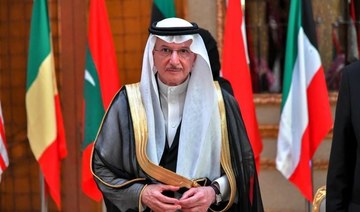
The Organization of Islamic Cooperation members take part in an online ceremony on Monday to declare Dhaka the ‘OIC Youth Capital 2020.’ (SPA)
Short Url
Updated 28 July 2020
Follow

Organization of Islamic Cooperation declares Dhaka the ‘OIC Youth Capital 2020’

  • The OIC chief called for comprehensive solutions to the challenges facing the youth, combining elements from all pillars of the OIC Youth Strategy with the objective of responding to the COVID-19 crisis and defining a better tomorrow for the youth

The secretary-general of the Organization of Islamic Cooperation (OIC), Dr. Yousef Al-Othaimeen, on Monday attended a virtual ceremony declaring Bangladesh’s capital Dhaka the “OIC Youth Capital 2020.”
Al-Othaimeen praised the efforts of Bangladesh Prime Minister Sheikh Hasina’s efforts and continued support to the OIC, its institutions, and the activities that the organization carries out for the sake of the Muslim Ummah and especially for the youth.
He urged the youth in the Muslim world to drive change through greater involvement and interest in the fields of science, technology, and innovation and reject intolerance, terrorism and violent extremism in all its forms and manifestations.
The secretary-general said that the coronavirus disease (COVID-19) pandemic would have a long-lasting social, cultural, economic, political and multidimensional impact on all societies.
He said the youth are affected the most by the pandemic as it hindered many of them from continuing their regular studies and employment. He said the situation calls for taking immediate measures to support the youth.
The OIC chief also called for comprehensive solutions to the challenges facing the youth, combining elements from all pillars of the OIC Youth Strategy with the objective of responding to the COVID-19 crisis and defining a better tomorrow for the youth.
He reiterated the readiness of the OIC General Secretariat to cooperate with member states as well as with OIC institutions in all matters that would contribute to the promotion of youth-related issues.


Iranian ambassador thanks Saudi for not allowing territory to be used during war

Updated 43 min 55 sec ago
Follow

Iranian ambassador thanks Saudi for not allowing territory to be used during war

  • Alireza Enayati tells AFP Iran appreciates Kingdom's pledge not to allow its 'airspace, waters, or territory' to be used in US attacks
  • Envoy also denies that his country hit the US embassy in Riyadh this week with drones

RIYADH: Iran’s ambassador to Saudi Arabia Alireza Enayati said on Thursday his country remained appreciative of Saudi Arabia’s pledge to not allow its airspace or territory to be used during the ongoing war with the US and Israel.
“We appreciate what we have repeatedly heard from Saudi Arabia — that it does not allow its airspace, waters, or territory to be used against the Islamic Republic of Iran,” he told AFP.
Before the outbreak of war, Riyadh had thrown its support behind diplomatic efforts to diffuse tensions between Tehran and Washington and vowed that its airspace would not be allowed to be used for attacks against Iran.
Enayati also categorically denied that his country hit the US embassy in Riyadh this week, after Saudi officials said Iran targeted the compound with drones.
Saudi Arabia has repeatedly accused Tehran of launching missile salvos and drone attacks at its territory and warned that the kingdom reserved the right to defend itself, including by retaliating.
Iran had earlier denied attacking the sprawling Ras Tanura refinery — one of the largest in the Middle East — which Riyadh had also accused Tehran of targeting twice with drones.
Enayati added to the denial, saying Iran also had no hand in the targeting of the US embassy that triggered a fire at the compound.
“We confirmed that Iran has no role in the attack on the US embassy in Riyadh,” the ambassador told AFP.
“If the operations command in Tehran attacks somewhere, it takes responsibility for it.”
The war in the Middle East has engulfed the otherwise stable Gulf region as Iran retaliates over US and Israeli strikes that killed its supreme leader, launching strikes at Israel, the wider region and beyond.
At least 13 people have been killed in the Gulf, including seven civilians, since Iran began its attacks on Saturday.
Enayati, however, denied that Iran was waging a regional war as retaliation for the attacks on his country by the US and Israel.
“This is not a regional war and it is not our war. It was imposed on the region,” he told AFP.