Bike-hailing services losing 90% business to Pakistan’s pillion-riding ban

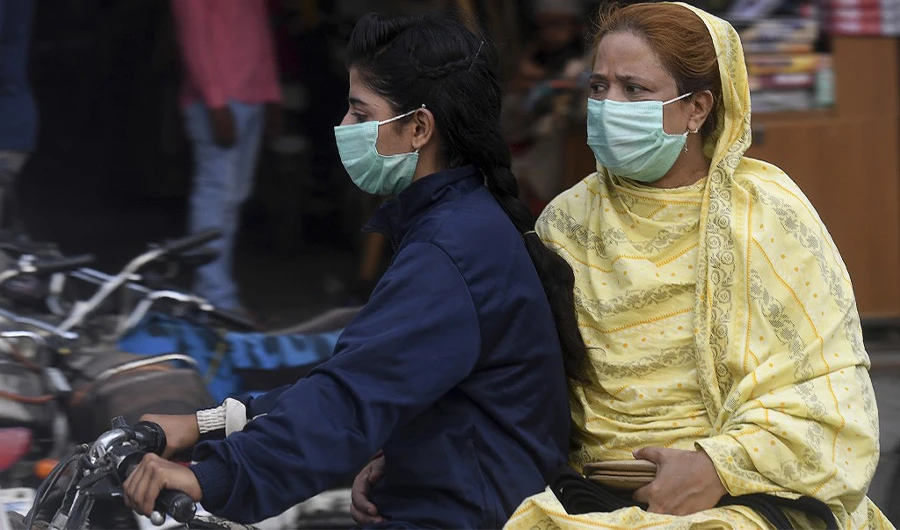
Women wearing facemasks ride on a motorbike in Karachi, Pakistan, on June 8, 2020. Provincial authorities across the country have banned pillion riding amid other measures taken to prevent the spread of coronavirus. (AFP)
Short Url
Updated 27 July 2020
Follow

Bike-hailing services losing 90% business to Pakistan’s pillion-riding ban

  • Information ministry says has requested authorities to lift the ban to help ride-hailing businesses resume service
  • The ban has affected around 60 million urban dwellers in major Pakistani cities, says Bykea founder

KARACHI: Pakistan’s online ride-hailing service providers are losing 90 percent of their business to a ban on pillion riding which remains in place despite the easing of other coronavirus-related restrictions, stakeholders say. 

Provincial authorities across the country have banned motorcycle pillion riding amid other measures taken to prevent the spread of coronavirus, right after the government imposed a countrywide lockdown in March following a spike in infection figures. 

“During lockdowns, our business was completely shut down,” Muneeb Maayr, founder and CEO of Bykea, an Urdu-language bike-hailing and logistics app, told Arab News on Friday.

“The official ban on pillion riding still goes on despite lockdown easing. It has impacted the business up to 80-90 percent.” 

The ride-haling sector’s stakeholders have asked the National Command and Operation Center (NCOC), which oversees Pakistan’s coronavirus response, that the ban be lifted as lockdowns and restrictions on other businesses have already been eased. 

Information Technology Minister Syed Amin ul Haque told Arab News on Thursday that the ministry has written to NCOC to direct provinces to lift the ban.

“This is a provincial matter and we have written a letter to NCOC that the all provinces be directed to lift the ban on pillion riding so that the systems of Bykea and Careem move toward improvement,” the minister said, “I had a meeting with the Bykea chief, they are facing big problems due to the ban in the big cities where they operate.” 

Bykea has a network of over 500,000 drivers, offering services in Rawalpindi, Lahore and Karachi. With the company’s operations downscaled to 10 percent, only delivery services have been entertained by them since the ban. Those who ordered motorbikes to go to commute to work are now forced to travel by taxi or rickshaw, which costs them much more.

“Bike is mode of transportation of middle-class segment of society,” Bykea’s Maayr said, “The ban has impacted around 60 million urban dwellers in major cities of Pakistan.”

Regarding measures to protect customers from the virus, he said a standard procedure should be that they bring their own helmets. “Wearing helmets by both riders would be the safest way of traveling as compared to other modes of transportation like cars and rickshaws.” 

Pakistan PM invites UAE investment across tech and resource sectors at National Day event

Updated 08 December 2025
Follow

Pakistan PM invites UAE investment across tech and resource sectors at National Day event

  • Shehbaz Sharif says the UAE remains a key economic partner and continues to lend ‘critical support’ to Pakistan
  • UAE envoy says both nations have potential for cooperation in renewable energy, AI and economic diversification

ISLAMABAD: Pakistan is ready to welcome investment from the United Arab Emirates across emerging technologies and resource sectors, Prime Minister Shehbaz Sharif said on Monday, as both countries marked the 54th National Day of the Gulf country in Islamabad.

Speaking at the ceremony attended by senior ministers, diplomats and business leaders, Sharif said the UAE remained a key economic partner for Pakistan and continued to lend “critical support” to the country’s stabilizing economy.

“Pakistan takes great pride in its strategic partnership with the UAE, which continues to deepen across every domain of life,” he said. “With Pakistan’s economy stabilizing, we stand ready to welcome Emirati investment in renewable energy, AI, fintech, agriculture and minerals.”

Sharif praised the UAE’s leadership and recalled his earliest memories of the Gulf nation as “a land that believed in possibilities long before they became realities,” saying the country’s progress under President Sheikh Mohamed bin Zayed Al Nahyan commanded “profound admiration.”

UAE Ambassador Salem Al Bawab Al Zaabi said the Emirates was committed to strengthening ties with Pakistan in areas including the economy, energy and artificial intelligence.

He said the two countries shared a “deep-rooted friendship built on mutual respect, shared values and a common vision for regional peace and development.”

“We see tremendous potential for collaboration in renewable energy, artificial intelligence, sustainability and economic diversification,” the ambassador said, adding that the UAE aimed to broaden the scope of its economic relations with Pakistan.

The UAE hosts around 1.8 million Pakistani expatriates, one of the country’s largest overseas communities, who Sharif said contributed “tirelessly” to the Gulf state’s development.

Sharif and Deputy Prime Minister Ishaq Dar also joined the UAE ambassador in a cake-cutting ceremony to mark the occasion.