

Saudi filmmakers ‘The Godus Brothers’ premiere debut film

1 / 6
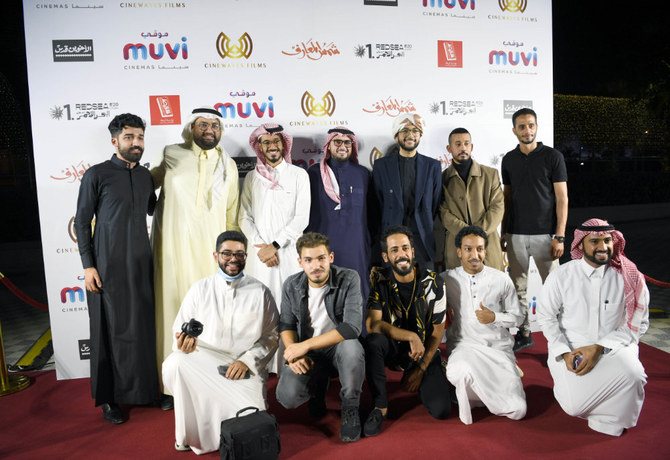
The cast and makers of Shams AlMa’arif during premiere night on Saturday in Riyadh. (AN Photo/Bashir Saleh)
2 / 6
The cast and makers of Shams AlMa’arif during premiere night on Saturday in Riyadh. AN Photo/Thamer Alfuraiji
3 / 6
Sohayb Godus. (AN Photo/Thamer Alfuraiji)
4 / 6
The cast and makers of Shams AlMa’arif during premiere night on Saturday in Riyadh. (AN Photo/Bashir Saleh)
5 / 6
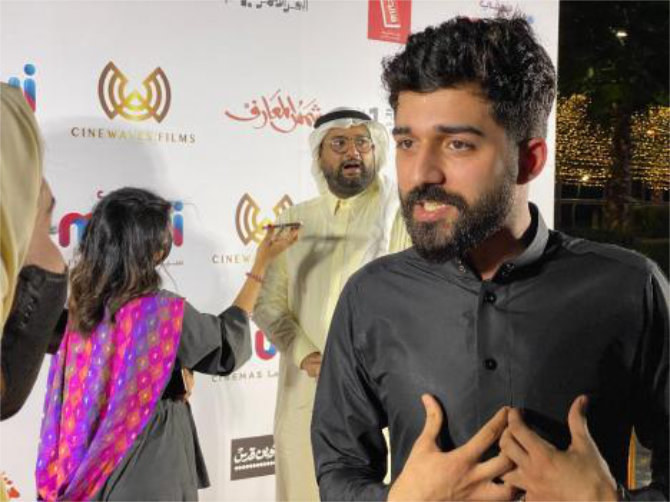
Faris Godus. (AN Photo/Thamer Alfuraiji)
6 / 6
Baraa Alem. (AN Photo/Thamer Alfuraiji)
Short Url
Updated 26 July 2020
Follow

Saudi filmmakers ‘The Godus Brothers’ premiere debut film

  • Shams Alma’arif (The Book of Sun) is a must-see coming-of-age story that the Saudi youth can relate to
  • It was originally slated to premiere at the now-labeled "Label Edition" Red Sea Film Festival

RIYADH: Filmmaking duo “The Godus Brothers” raised the curtain on their latest, most ambitious project to date with their first full-length feature film, Shams Alma’arif (The Book of Sun) premiered on Thursday night in Jeddah, and Riyadh on Saturday night.

The film, directed by Faris Godus and produced by Sohayb Godus, who also stars in the film, was shot in Saudi Arabia. 

Originally slated to premiere at the now-labeled "Label Edition" Red Sea Film Festival, the film is a must-see coming-of-age story that the Saudi youth can relate to.

The film stars Baraa Alem as Husam, a high school senior with a passion for filmmaking. He and his best friend Maan, played by Ismail Alhasan, are struggling to maintain popularity with their comedic YouTube channel. When caught filming on school property, they find an unlikely ally in their physics teacher Orabi, played by Sohayb Godus, who insists on joining them when he finds out that they are planning to make a movie of their own.

Sohayb told Arab News about the excitement of making their first feature film, and how he felt like their past experiences as content creators had affected them.
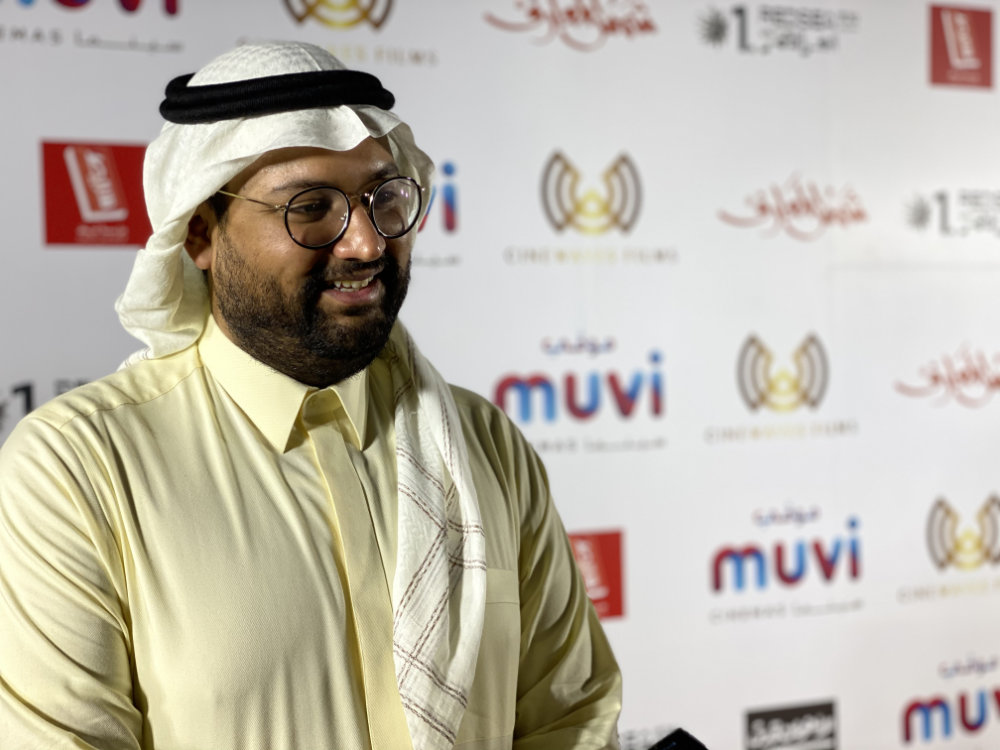


Sohayb Godus. (AN Photo/Thamer Alfuraiji)

“Faris and I are so excited, because this has been our dream since childhood. Creating content on digital platforms made us realize that we could achieve the dream of making a feature film. We realized it was doable and I think this applies to all content creators in Saudi Arabia,” he said.

“(In Saudi Arabia) we have a rich soil to build content on and so many stories to tell. I do believe that nowadays the support coming from our country is just awesome. People have so many chances to create films now,” he added.

Faris, who also wrote the script, said that he hoped viewers would enjoy the personal nature of the story.

“This is a story that is very close to our hearts. It’s very personal to everyone who worked on it, because it’s based in large part on our own story. I hope that everyone who sees it will realize the importance of supporting the arts,” he said.
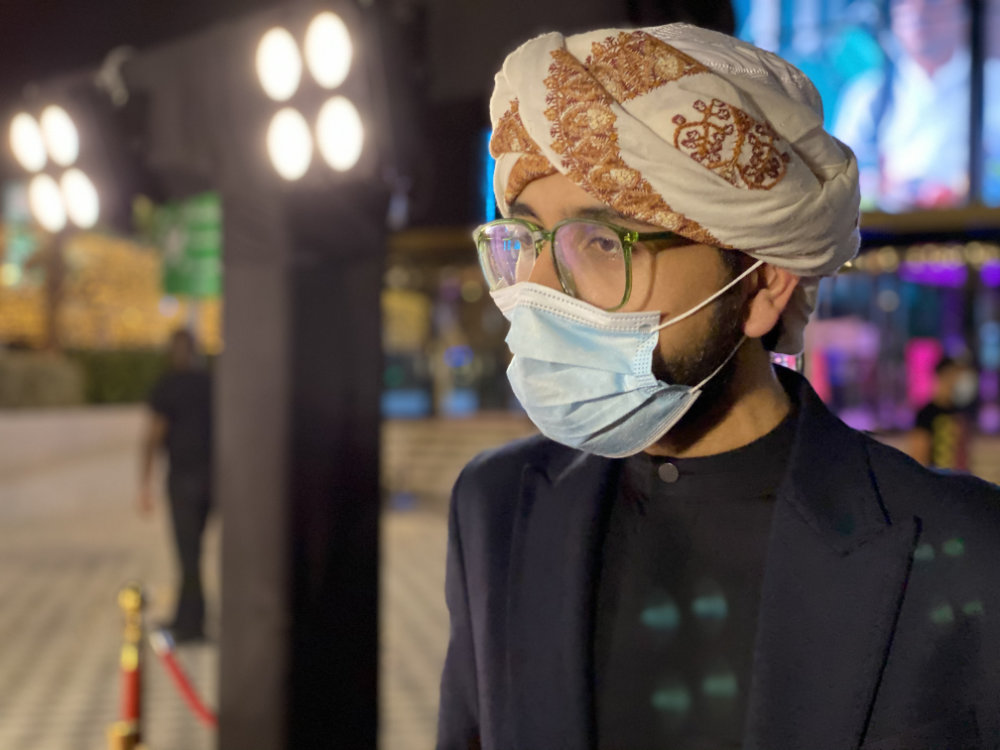


Faris Godus. (AN Photo/Thamer Alfuraiji)

Speaking to Arab News, Alem told of his experience of playing the main character, and how he felt bringing the story to life on screen.

“Faris wrote an incredibly personal story, in more ways than one. You can imagine the character of Husam as an amalgamation of both of us, in a way. Reliving ten years’ worth of past experience, my passion for cinema and filmmaking, and the mischief we used to get up to in school, was an incredibly personal experience,” he said.

He hopes that viewers would leave the film feeling like they can relate to the characters, or that they could consider the characters in the film their friends.

“It’s basically a character film. The story is great, but you can’t help but fall in love with these characters first,” he said.
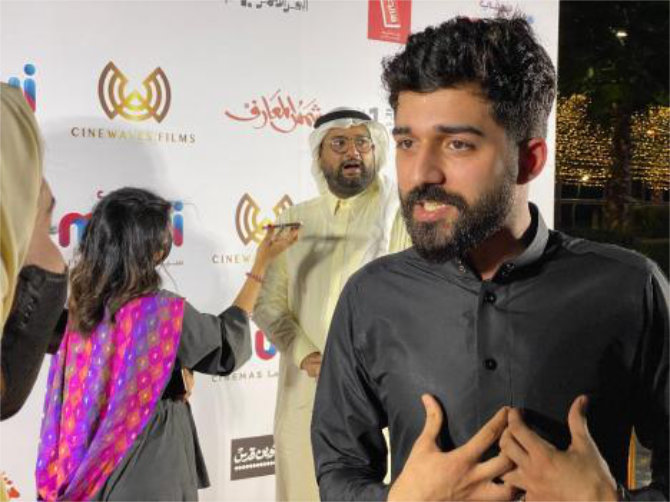


Baraa Alem. (AN Photo/Thamer Alfuraiji)

Though the “movie-within-a-movie” premise is hardly a new one, the film offers a refreshing twist on an old trope. The film is a glorious, nostalgic romp through Jeddah in 2010, during the golden age of the Saudi YouTube movement. Peppered with references to Saudi pop culture and offering an interesting take on the history of Saudi cinema and television.

The film also features moments that are poignant, emotionally taxing, and familiar to any Saudis who dreamt of working in the creative industry ten years ago. It also highlights the often-vicious comments that are the bread-and-butter of Saudi YouTubers, in one of the film’s most emotional sequences.

The laughs are almost non-stop, even interspersed with surprising moments of tenderness and wisdom. The film perfectly encapsulates the complex feelings of an entire generation of Saudi youth, who struggled before the current era to imagine a future when creative professions could ever be taken seriously.

Shams AlMa’arif showcases the trials and tribulations of becoming a filmmaker in Saudi Arabia in an age where actors and directors needed to be creative in order to see their visions achieved, battling a lack of resources, support from society, and access to locations for filming.

Shams AlMa’arif is now available to watch in MUVI cinemas across Saudi Arabia and will be available in all cinemas by July 31st.


From historic desert landscapes to sound stages: AlUla’s bid to become the region’s film capital

Updated 07 February 2026
Follow

From historic desert landscapes to sound stages: AlUla’s bid to become the region’s film capital

DUBAI: AlUla is positioning itself as the center of cinema for the MENA region, turning its dramatic desert landscapes, heritage sites and newly built studio infrastructure into jobs, tourism and long‑term economic opportunity.

In a wide‑ranging interview, Zaid Shaker, executive director of Film AlUla, and Philip J. Jones, chief tourism officer for the Royal Commission for AlUla, laid out an ambitious plan to train local talent, attract a diverse slate of productions and use film as a catalyst for year‑round tourism.

“We are building something that is both cultural and economic,” said Shaker. “Film AlUla is not just about hosting productions. It’s about creating an entire ecosystem where local people can come into sustained careers. We invested heavily in facilities and training because we want AlUla to be a place where filmmakers can find everything they need — technical skill, production infrastructure and a landscape that offers limitless variety. When a director sees a location and says, ‘I can shoot five different looks in 20 minutes,’ that changes the calculus for choosing a destination.”

At the core of the strategy are state‑of‑the‑art studios operated in partnership with the MBS Group, which comprises Manhattan Beach Studios — home to James Cameron’s “Avatar” sequels. “We have created the infrastructure to compete regionally and internationally,” said Jones. “Combine those studios with AlUla’s natural settings and you get a proposition that’s extremely attractive to producers; controlled environment and unmatched exterior vistas within a short drive. That versatility is a real selling point. We’re not a one‑note destination.”

The slate’s flagship project, the romantic comedy “Chasing Red,” was chosen deliberately to showcase that range. “After a number of war films and heavy dramas shot here, we wanted a rom‑com to demonstrate the breadth of what AlUla offers,” said Shaker. “‘Chasing Red’ uses both our studio resources and multiple on‑location settings. It’s a story that could have been shot anywhere — but by choosing AlUla we’re showing how a comical, intimate genre can also be elevated by our horizons, our textures, our light.

“This film is also our first under a broader slate contract — so it’s a proof point. If ‘Chasing Red’ succeeds, it opens the door for very different kinds of storytelling to come here.”

Training and workforce development are central pillars of the program. Film AlUla has engaged more than 180 young Saudis in training since the start of the year, with 50 already slated to join ongoing productions. “We’re building from the bottom up,” said Shaker. “We start with production assistant training because that’s often how careers begin. From there we provide camera, lighting, rigging and data-wrangling instruction, and we’ve even launched soft‑skill offerings like film appreciation— courses that teach critique, composition and the difference between art cinema and commercial cinema. That combination of technical and intellectual training changes behavior and opens up real career pathways.”

Jones emphasized the practical benefits of a trained local workforce. “One of the smartest strategies for attracting productions is cost efficiency,” he said. “If a production can hire local, trained production assistants and extras instead of flying in scores of entry‑level staff, that’s a major saving. It’s a competitive advantage. We’ve already seen results: AlUla hosted 85 productions this year, well above our initial target. That momentum is what we now aim to convert into long‑term growth.”

Gender inclusion has been a standout outcome. “Female participation in our training programs is north of 55 percent,” said Shaker. “That’s huge. It’s not only socially transformative, giving young Saudi women opportunities in an industry that’s historically male-dominated, but it’s also shaping the industry culture here. Women are showing up, learning, and stepping into roles on set.”

Looking to 2026, their targets are aggressive; convert the production pipeline into five to six feature films and exceed 100 total productions across film, commercials and other projects. “We want private-sector partners to invest in more sound stages so multiple productions can run concurrently,” said Jones. “That’s how you become a regional hub.”

The tourism case is both immediate and aspirational. “In the short term, productions bring crews who fill hotels, eat in restaurants and hire local tradespeople,” said Shaker. “In the long term, films act as postcards — cinematic invitations that make people want to experience a place in person.”

Jones echoed that vision: “A successful film industry here doesn’t just create jobs; it broadcasts AlUla’s beauty and builds global awareness. That multiplies the tourism impact.”

As “Chasing Red” moves into production, Shaker and Jones believe AlUla can move from an emerging production destination to the region’s filmmaking epicenter. “We’re planting seeds for a cultural sector that will bear economic fruit for decades,” said Shaker. “If we get the talent, the infrastructure and the stories right, the world will come to AlUla to film. And to visit.”