Iran’s judiciary said on Saturday that passengers of an airliner that Tehran has said was “harassed” this week by an American fighter jet over Syria can sue the US military for damages in Iranian courts.
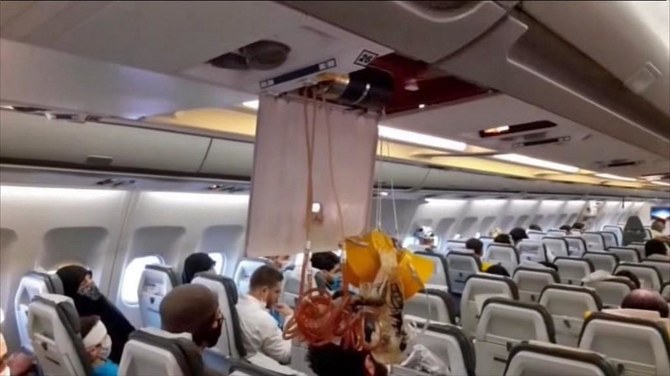
Iranian media said on Friday that several passengers on the Mahan Air flight heading from Tehran to Beirut were injured on Thursday after the pilot rapidly changed altitude to avoid collision with the US jet.
The US military said its F-15 was at a safe distance and the fighter was conducting a visual inspection of the airliner as it passed near the Tanf garrison in Syria, home to US forces.
“All passengers on Mahan Air Flight 1152, Iranians and non-Iranian, can sue the terrorist US military — commanders, perpetrators, supervisors and deputies — in Iranian courts for moral and physical damages,” Ali Bagheri-Kani, head of the judiciary’s human rights office was quoted as saying by the semi-official ILNA news agency.
He said complainants could also take an international legal route through the International Civil Aviation Organization, the UN agency that oversees international civil aviation agreements.
He said Iranian courts follow laws that deal with human rights violations and “adventurist and terrorist acts of the United States in the region.”
It was not clear if any passenger would sue the US military.
Iran said on Friday it had lodged a complaint with the ICAO.
The incident was the latest in tensions between Tehran and Washington since President Donald Trump withdrew the United States in 2018 from Iran’s nuclear deal with six powers and reimposed sanctions that have battered Iran’s economy.
Footage of the inside of the airliner broadcast by Iranian state TV on Friday showed a passenger lying immobile on the floor and another with a wounded nose and forehead.


![]()

Iranian judiciary says passengers on ‘harassed’ airliner can sue US in Iran courts
Short Url
https://arab.news/bsmsq
Iranian judiciary says passengers on ‘harassed’ airliner can sue US in Iran courts
- Iranian media said several passengers were injured after the pilot rapidly changed altitude to avoid collision with the US jet
- Head of judiciary said complainants could also take an international legal route
Latest updates


Recommended


© 2026 SAUDI RESEARCH & PUBLISHING COMPANY, All Rights Reserved And subject to Terms of Use Agreement.