



KARACHI: Pakistan’s minister for information technology said on Thursday the livelihoods of thousands of Pakistanis would be affected if the Google-owned video sharing website YouTube was banned.
This week, the Supreme Court hinted at a possible ban on YouTube over ‘objectionable’ content.
Pakistan banned access to YouTube in September 2012 after an anti-Islam film uploaded to the site sparked violent protests. The ban was lifted in 2016 but digital rights activists and IT experts say tens of millions of rupees in revenue was lost due to the nearly four-year blockade.
“As far as YouTube is concerned, I understand thousands of people’s livelihood is associated with it,” Syed Amin ul Haque, minister for IT and telecommunication, told Arab News in an interview. “It is a source of education, learning and business for people. I think YouTube is a good channel and its activities could be taken forward positively.”
“Banning anything means obstructing its growth,” Haque added. “Ban is not the solution to the problems, instead it [problems] could be improved through filtration.”
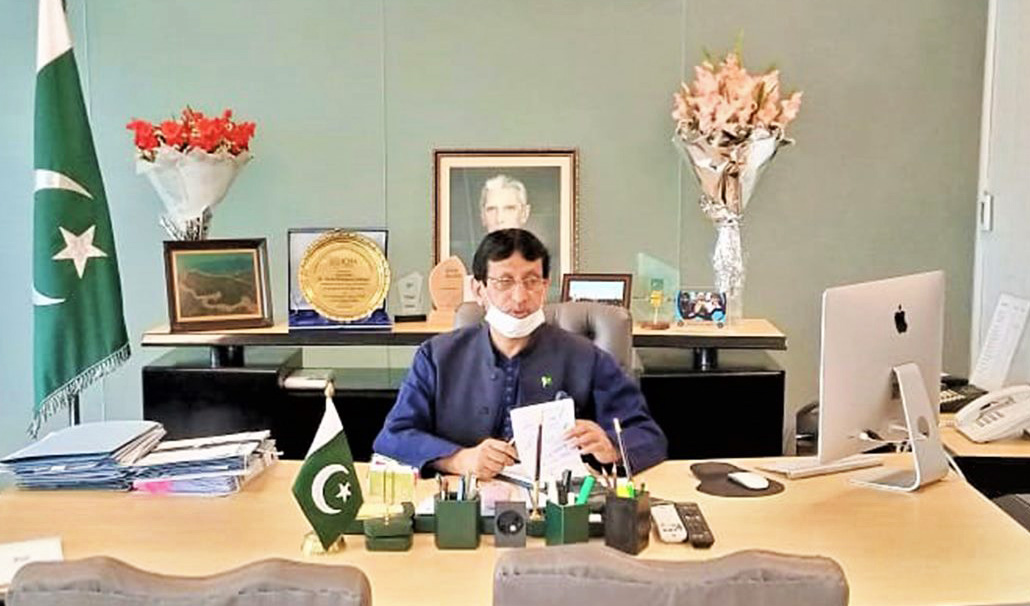
This photograph released on April 22, 2020 by Pakistan's Ministry Of IT & Telecom shows federal minister for IT and telecommunication Syed Amin ul Haque in his office. (Photo courtesy: @MoitOfficial/Twitter)
Pakistan’s telecommunication regulator banned live-streaming app Bigo over “vulgar content” this week and issued a “final warning” to Chinese video sharing platform Tiktok on similar grounds. On Friday, the regulator said it had decided to retain a July 1 ban on the popular online game PUBG, though the Islamabad High Court subsequently asked it to lift the block.
Pakistani PM’s adviser on digitization, Tania Aidrus, has also said banning content was “not a solution.”
“The 3 years when YouTube was banned in Pakistan it held back our content creator ecosystem which has just started to flourish now, creating employment opportunities for thousands,” Aidrus wrote on Twitter on July 22. “Our focus should be on ensuring better curation of content through policy and dialogue.”
“Brute force measures like banning will not serve any purpose and will hold us back from achieving the vision of #DigitalPakistan,” she added.
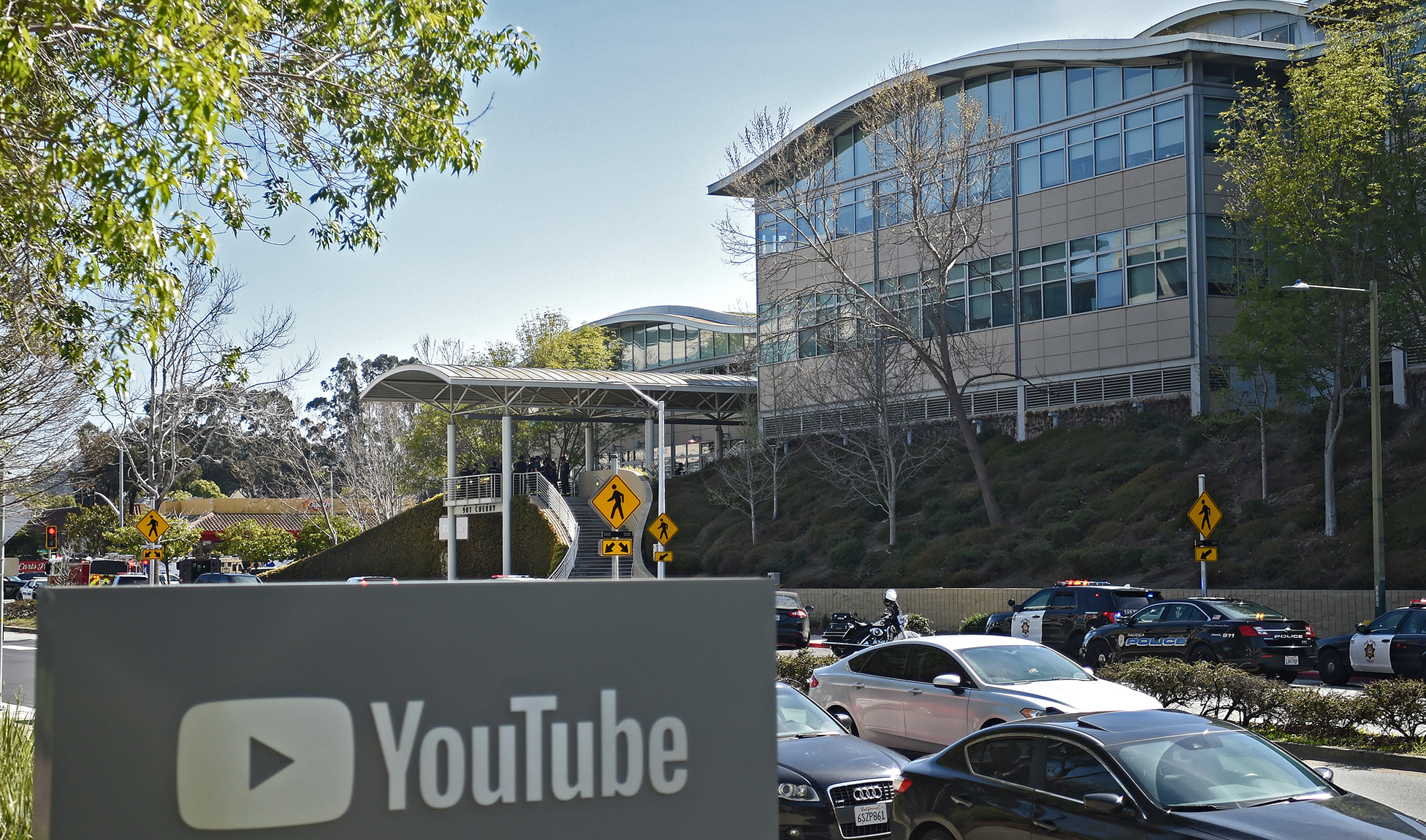
This file photo taken on April 03, 2018 shows YouTube's headquarters office in San Bruno, California. (AFP)
Pakistan’s IT industry is fast growing. According to a June performance report by the Pakistan Software Export Board (PSEB), an organization that works under the Ministry of IT, export remittances from IT & IT enabled Services (ITeS) surged to $1.003 billion, a jump of 23.42 percent, in the first 10 months of fiscal year 2019-20 (July – April).
In the July-May period of the outgoing fiscal year, ITeS export remittances rose to $1.11 billion, 21 percent higher than the previous year, the IT minister said.
For the next three years, he added, Pakistan had set a five billion dollar target for IT exports.
“We have tried to set a IT export target for the next 3 years, which is the remaining term of our government. It will be increased from the $1.11 billion to $5 billion,” Haque said. “We are confident that the target will be achieved.”
He said the government was taking several measures to enhance IT exports, including reconstituting the Pakistan Software Export Board and improving the tax regime.
Pakistan has exempted software exports from taxes until 2025 but local general sales tax on services has been set at 13-17%.
“Taxation is the biggest issue and for that we have talked to all concerned departments,” the minister said. “Today [Thursday] we had a meeting with the prime minister [Imran Khan] who has issued directives for constitution of an inter-ministerial committee within 24 hours so taxes could be minimized for ease of local industry.”
Shehryar Hydri, an IT consultant and member of the central executive committee of the Pakistan Software Houses Association (P@SHA), said while India, Bangladesh and Philippines provided wide ranging support to their IT sectors, the Pakistani government “fails to support the export potential of this booming sector that is growing 10-15% every year.”
He said Pakistan’s export figure was much higher than the official $1.11 billion, and could be as high as $3 billion, which would double in the next five years.
“Pakistani IT professionals earn millions of dollars which are not reflected as IT exports mainly due to lack of proper documentations at banks, where they are simply counted as remittances,” Hydri said “The IT industry will double in size over the next 5 years, crossing $4 billion, without any major government support.”
Pakistan’s main IT export destination is the United States, where 50% of its software goes. The Middle East gets around 10 percent.
“Major animations and games studios in the GCC [Cooperation Council for the Arab States of the Gulf] market are outsourcing work to their Pakistani partners and several large IT firms have entered Saudi Arabia and other markets for major technology projects,” Hydri said.
“Due to the close proximity of the market, Pakistan makes an ideal and cost effective partner for the digital transformation of the Middle East market”.




