

Philippine Muslims to have burial ground in Manila

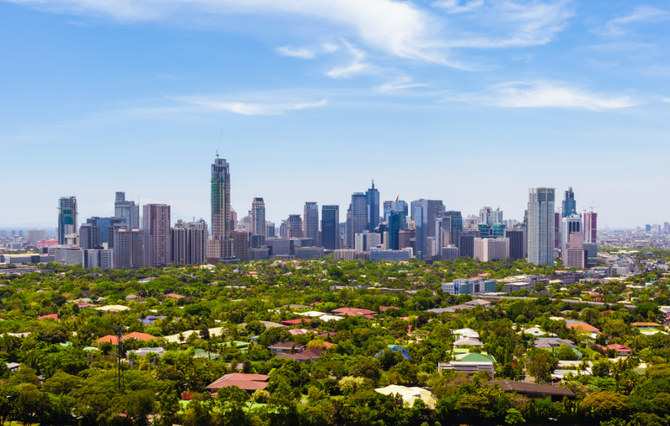
The 2,400-square-meter cemetery will hold 378 tombs and a mosque. (Shutterstock)
Short Url
Updated 24 July 2020
Follow

Philippine Muslims to have burial ground in Manila

  • The $1 million cemetery development will cover 2,400 square meters, with 378 tombs and a mosque
  • Muslim residents until now had to travel to Taguig City, Bulacan province or Mindanao for burials

MANILA: Muslim residents of the Philippines capital soon will no longer have to make lengthy journeys to take the deceased to their final resting place.

On Wednesday, the city government led by Mayor Francisco “Isko Moreno” Domagoso broke ground for the construction of Manila’s first Muslim cemetery.

Calling it a historic moment, Domagoso said the project is a way of recognizing the important contributions of Muslims to the history and culture of the city.

“Today is history, because we wanted to show to the next generation that they should be reminded of who we are as Manilenos and this should not be forgotten,” Domagoso said in a speech during the historic ceremony.

The 2,400-square-meter cemetery will hold 378 tombs and a mosque. Manila has allotted 49.3 million pesos ($1 million) for the project, which will also include the construction of a cultural hall.

“This is our own little way to make them feel that they are recognized and belong to the city of Manila. Not only belong, but also recognized as our ancestors,” the mayor said, as he apologized for neglect by previous administrations, which failed to provide Muslims a proper burial ground.

“It’s long overdue. It’s been 500 years of a certain level of neglect and denial. Today our children will remember and will continue to remember and respect cultures, traditions and customs in our city with regard to our Muslim community,” Domagoso said.

The mayor said Muslims “brought greatness to the city” even before the Spanish reached Philippine shores.

“We were then the land of rajahs, because rajahs ruled the then Kingdom of Manila, specifically the Rajah Sulayman dynasty. Why is it important to discuss the role of Rajah Sulayman in the history of Manila? It is to show that there is a need to give due recognition to the Muslims in the development of our city, as it was them who founded and made great the Kingdom of Manila before the Spanish conquest,” he said.

In the Islamic tradition, the deceased must be buried within 24 hours from the time of their death. However, until now, Muslims residents of Manila had to travel great distances to Taguig City, Bulacan province or Mindanao in order to bury their dead.

National Commission on Muslim Filipinos Chairman Saidamen Pagarungan, who was present during the ceremony, thanked Domagoso and the city government on behalf of all Filipino Muslims.

“This historic gift will be remembered not only by your Muslim constituents in Manila but also by the 12 million Muslim population of the country. The city government of Manila deserves our gratitude,” he said.

“I sincerely hope there will be more steps from the city of Manila that assert and protect the welfare of your Muslim brothers and sisters,” he added.

Pagarungan said he also hoped that the “beauty and splendor” of the Manila Golden Mosque will be reclaimed. The former tourist attraction is now surrounded by unsightly and illegal buildings.

“There is really a need to reclaim the beauty of the Manila Golden Mosque to symbolize the historical roots of Manila as an Islamic city, in the same manner that we have the Rajah Sulayman park in Roxas Boulevard,” he said.


Bangladesh mourns Khaleda Zia, its first woman prime minister

Updated 30 December 2025
Follow

Bangladesh mourns Khaleda Zia, its first woman prime minister

  • Ousted ex-premier Sheikh Hasina, who imprisoned Zia in 2018, offers condolences on her death
  • Zia’s rivalry with Hasina, both multiple-term PMs, shaped Bangladeshi politics for a generation

DHAKA: Bangladesh declared three days of state mourning on Tuesday for Khaleda Zia, its first female prime minister and one of the key figures on the county’s political scene over the past four decades.

Zia entered public life as Bangladesh’s first lady when her husband, Ziaur Rahman, a 1971 Liberation War hero, became president in 1977.

Four years later, when her husband was assassinated, she took over the helm of his Bangladesh Nationalist Party and, following the 1982 military coup led by Hussain Muhammad Ershad, was at the forefront of the pro-democracy movement.

Arrested several times during protests against Ershad’s rule, she first rose to power following the victory of the BNP in the 1991 general election, becoming the second woman prime minister of a predominantly Muslim nation, after Pakistan’s Benazir Bhutto.

Zia also served as a prime minister of a short-lived government of 1996 and came to power again for a full five-year term in 2001.

She passed away at the age of 80 on Tuesday morning at a hospital in Dhaka after a long illness.

She was a “symbol of the democratic movement” and with her death “the nation has lost a great guardian,” Bangladesh’s interim leader Muhammad Yunus said in a condolence statement, as the government announced the mourning period.

“Khaleda Zia was the three-time prime minister of Bangladesh and the country’s first female prime minister. ... Her role against President Ershad, an army chief who assumed the presidency through a coup, also made her a significant figure in the country’s politics,” Prof. Amena Mohsin, a political scientist, told Arab News.

“She was a housewife when she came into politics. At that time, she just lost her husband, but it’s not that she began politics under the shadow of her husband, president Ziaur Rahman. She outgrew her husband and built her own position.”

For a generation, Bangladeshi politics was shaped by Zia’s rivalry with Sheikh Hasina, who has served as prime minister for four terms.

Both carried the legacy of the Liberation War — Zia through her husband, and Hasina through her father, Sheikh Mujibur Rahman, widely known as the “Father of the Nation,” who served as the country’s first president until his assassination in 1975.

During Hasina’s rule, Zia was convicted in corruption cases and imprisoned in 2018. From 2020, she was placed under house arrest and freed only last year, after a mass student-led uprising, known as the July Revolution, ousted Hasina, who fled to India.

In November, Hasina was sentenced to death in absentia for her deadly crackdown on student protesters and remains in self-exile.

Unlike Hasina, Zia never left Bangladesh.

“She never left the country and countrymen, and she said that Bangladesh was her only address. Ultimately, it proved true,” Mohsin said.

“Many people admire Khaleda Zia for her uncompromising stance in politics. It’s true that she was uncompromising.”

On the social media of Hasina’s Awami League party, the ousted leader also offered condolences to Zia’s family, saying that her death has caused an “irreparable loss to the current politics of Bangladesh” and the BNP leadership.

The party’s chairmanship was assumed by Zia’s eldest son, Tarique Rahman, who returned to Dhaka just last week after more than 17 years in exile.

He had been living in London since 2008, when he faced multiple convictions, including an alleged plot to assassinate Hasina. Bangladeshi courts acquitted him only recently, following Hasina’s removal from office, making his return legally possible.

He is currently a leading contender for prime minister in February’s general elections.

“We knew it for many years that Tarique Rahman would assume his current position at some point,” Mohsin said.

“He should uphold the spirit of the July Revolution of 2024, including the right to freedom of expression, a free and fair environment for democratic practices, and more.”