

Beijing’s AIIB approves $250 million loan to Pakistan to fight COVID-19 impact

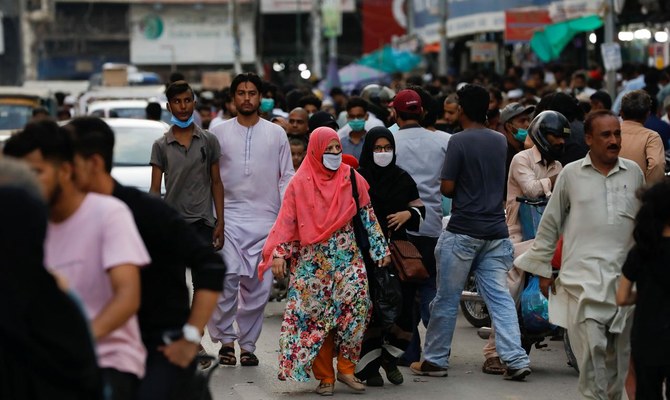
Women wearing protective face masks walk amid the rush of people along a road as the outbreak of the coronavirus disease (COVID-19) continues, in Karachi, Pakistan July 20, 2020. (Reuters)
Short Url
Updated 22 July 2020
Follow

Beijing’s AIIB approves $250 million loan to Pakistan to fight COVID-19 impact

  • Project to be co-financed by World Bank, AIIB previously approved $500 million loan for Pakistan for coronavirus response
  • Loan to be used to strengthen health infrastructure, social safety nets, investment in human capital and economic growth 

BEIJING: The Beijing-backed Asian Infrastructure Investment Bank (AIIB) said on Wednesday it would lend $250 million to Pakistan to help the country deal with the effects of the COVID-19 pandemic.

The project will be co-financed by the World Bank and will bolster a Pakistan government program to strengthen health infrastructure, social safety nets, investment in human capital and economic growth, the AIIB said in a statement.

The AIIB has previously approved a loan of $500 million for Pakistan’s response to COVID-19. Both loans are part of the AIIB’s $10 billion funding facility to help public and private sectors fight the outbreak.


Pakistan footwear sector flags used imports as barrier to export growth

Updated 05 March 2026
Follow

Pakistan footwear sector flags used imports as barrier to export growth

  • Industry says production capacity far exceeds domestic consumption, signaling export potential
  • Its delegation tells commerce minister up to 40 percent of domestic market met through used shoe imports

KARACHI: Pakistan’s leather and footwear industry has warned that rising imports of used shoes are distorting the domestic market and limiting export growth, according to a commerce ministry statement issued on Thursday after industry representatives met Commerce Minister Jam Kamal Khan.

The meeting focused on export potential, domestic market challenges and regulatory concerns linked to the import of second-hand footwear, which industry leaders say is undermining local manufacturers despite significant production capacity.

“Pakistan’s annual footwear consumption is estimated at around 550 million pairs, while the country has an installed production capacity of nearly 700 million pairs annually, indicating significant potential for both domestic supply and export expansion,” the delegation said, according to the commerce ministry statement.

“A considerable portion of this capacity remains underutilized due to market distortions created by the growing influx of used footwear imports,” it added.

Industry representatives told the minister that around 30-40 percent of Pakistan’s domestic footwear market is currently supplied through imports of used shoes, many of which enter the country under the broader customs category of used clothing and accessories.

They said branded footwear is often imported at very low declared values under this classification, creating what they described as unfair competition for domestic manufacturers.

To address the issue, the delegation proposed introducing a separate Harmonized System (HS) code for used footwear, which would allow regulators to better track imports, improve customs valuation and introduce sector-specific regulatory measures.

The commerce ministry said the proposal has been placed on the agenda of the Tariff Policy Board and could eventually be considered as part of the upcoming federal budget following consultations and approvals.

The commerce minister acknowledged the importance of the leather and footwear sector as a potential export driver and reiterated the government’s support for local manufacturing and export-led growth, the statement said.

He also encouraged industry stakeholders to expand exports while ensuring locally produced footwear remains affordable for domestic consumers.

Both sides agreed to maintain close coordination to help the sector boost employment, increase production and expand Pakistan’s presence in international footwear markets.