Anti-polio drive resumes in Pakistan after drop in coronavirus infections

Residents shop at a wholesale market in Karachi, Pakistan on June 10, 2020. (AFP photo)
Short Url
Updated 21 July 2020
Follow

Anti-polio drive resumes in Pakistan after drop in coronavirus infections

  • Campaign had been suspended in March due to lockdown measures
  • Door-to-door immunization program seeks to vaccinate 800,000 children in five districts

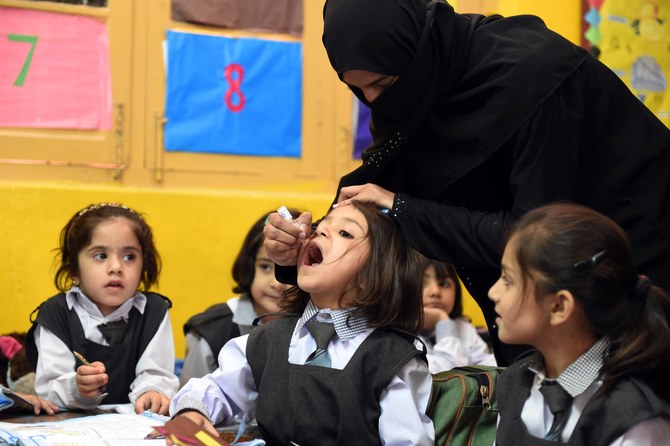
ISLAMABAD: Pakistan on Monday resumed its anti-polio vaccination drive for nearly 800,000 children in five districts, four months after suspending the campaign due to the coronavirus outbreak and after reporting a significant drop in the number of COVID-19 infections in the past few weeks.
“Polio Vaccination Campaign begins in selected areas of Pakistan. Cooperate with the teams to ensure adherence to COVID-19 preventive measures and make a healthy and polio-free life for your child a reality,” representatives from the country’s Polio Eradication Program (PEP) tweeted on Monday.
The World Health Organization (WHO) in late March had issued a directive to cancel all anti-polio activities “to avoid placing communities and frontline workers at the risk of contracting COVID-19.”
However, in the first phase of the campaign, officials said they aimed to vaccinate 800,000 children under the age of five from the districts of Faisalabad, Attock, South Waziristan, and parts of Karachi and Quetta.
Earlier in a statement on July 12, Dr. Rana Muhammad Safdar, coordinator of the National Emergency Operations Center at the health ministry’s PEP said: “We are initially aiming to target areas with continuous poliovirus circulation to protect children against the crippling polio disease during this case response.”
Safdar added that polio workers had been trained in COVID-19 protocols and that the anti-polio campaign would be utilized to raise awareness about preventive measures against coronavirus as well.
Polio is endemic in Pakistan and neighboring Afghanistan, with both countries making concerted efforts to eradicate the problem.
According to data provided by the PEP, 58 polio cases have been reported across Pakistan’s provinces since the beginning of the year, with 21 in Khyber Pakhtunkhwa, 20 in Sindh, 14 in Balochistan, and three in Punjab.


Pakistanis at remote border describe scramble to leave Iran

Updated 6 sec ago
Follow

Pakistanis at remote border describe scramble to leave Iran

  • Returning Pakistani nationals recount missile fire in Tehran, transport gridlock as people rush to exit Iran
  • PM Sharif condemns targeting of Iranian leader as embassies urge citizens to leave amid escalating strikes

TAFTANT, Pakistan: Pakistani nationals hauled suitcases across the border from neighboring Iran, describing missiles being launched and travel chaos as they scrambled to leave the country after the US and Israel launched strikes over the weekend.

AFP journalists saw a steady trickle of people passing through large metal gates at the remote border crossing between Iran’s Mirjaveh and Taftan in Pakistan’s western Balochistan province.

Powerful explosions have rocked Iran’s capital Tehran since Saturday, with embassies from countries around the world telling their citizens to leave.

“All our Pakistani brothers who were in Tehran and other cities had started to leave and were arriving at the terminal, which caused a lot of crowd pressure,” 38-year-old trader Ameer Muhammad told AFP on Monday.

“Due to the crowds, there were major transport problems.”

The isolated Taftan border lies around 500 kilometers (310 miles) from Balochistan’s capital and largest city, Quetta.

AFP journalists saw the Iranian flag flying at half-mast as soldiers stood guard.

Most people wheeled bulky luggage over the frontier’s foot crossing, while freight lorries formed a long line.

Irshad Ahmed, a 49-year-old pilgrim, told AFP he was staying at a hostel in Tehran when he saw missiles being fired nearby.

“There was an army base near the hostel, and we saw many missiles being fired,” he said.

“After that, we went to the Pakistani embassy so that they could evacuate us from there. They brought us here safely.”

Pakistan’s Prime Minister Shehbaz Sharif has said the killing of Ayatollah Ali Khamenei was a “violation” of international law.

“It is an age old convention that the Heads of State/Government should not be targeted,” Sharif wrote on X.

The “people of Pakistan join the people of Iran in their hour of grief and sorrow and extend the most sincere condolences on the martyrdom” of Khamenei, he added.

A teacher at Tehran’s Pakistani embassy, who gave his name as Saqib, told AFP: “Before we left, the situation was normal. The situation was not that bad.”

The 38-year-old said the strikes on Tehran on Saturday “pushed us to leave the city.”

“The situation became bad on Saturday night, when attacks caused precious lives to be lost,” he said.