

Google’s new tool lets you translate Ancient Egyptian hieroglyphics
Updated 16 July 2020
Arab News
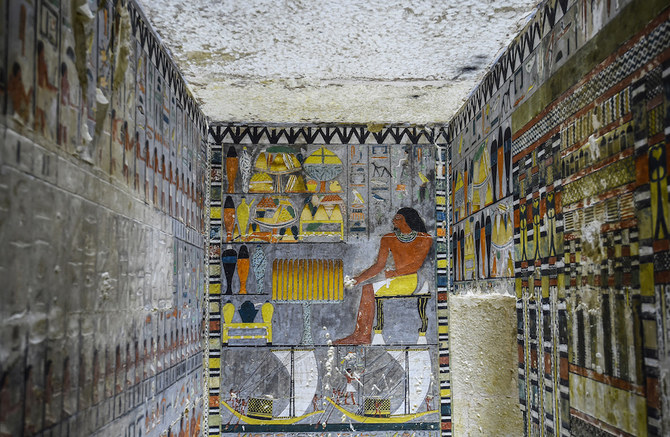
DUBAI: If you’ve ever wondered what messages the Ancient Egyptians were trying to convey with their hieroglyphics, Google’s new tool might just be able to help. In celebration of the anniversary of the discovery of the Rosetta Stone, Google Arts and Culture has released a new AI-powered tool, Fabricius, that allows you to decode and translate the ancient symbols and characters into both Arabic and English.
The aim is to raise awareness and preserve the history and traditions of Ancient Egyptian civilization.
“We are very excited to be launching this new tool that can make it easier to access and learn about the rich culture of Ancient Egypt,” said Chance Coughenour, head of preservation at Google Arts and Culture, in an official release.
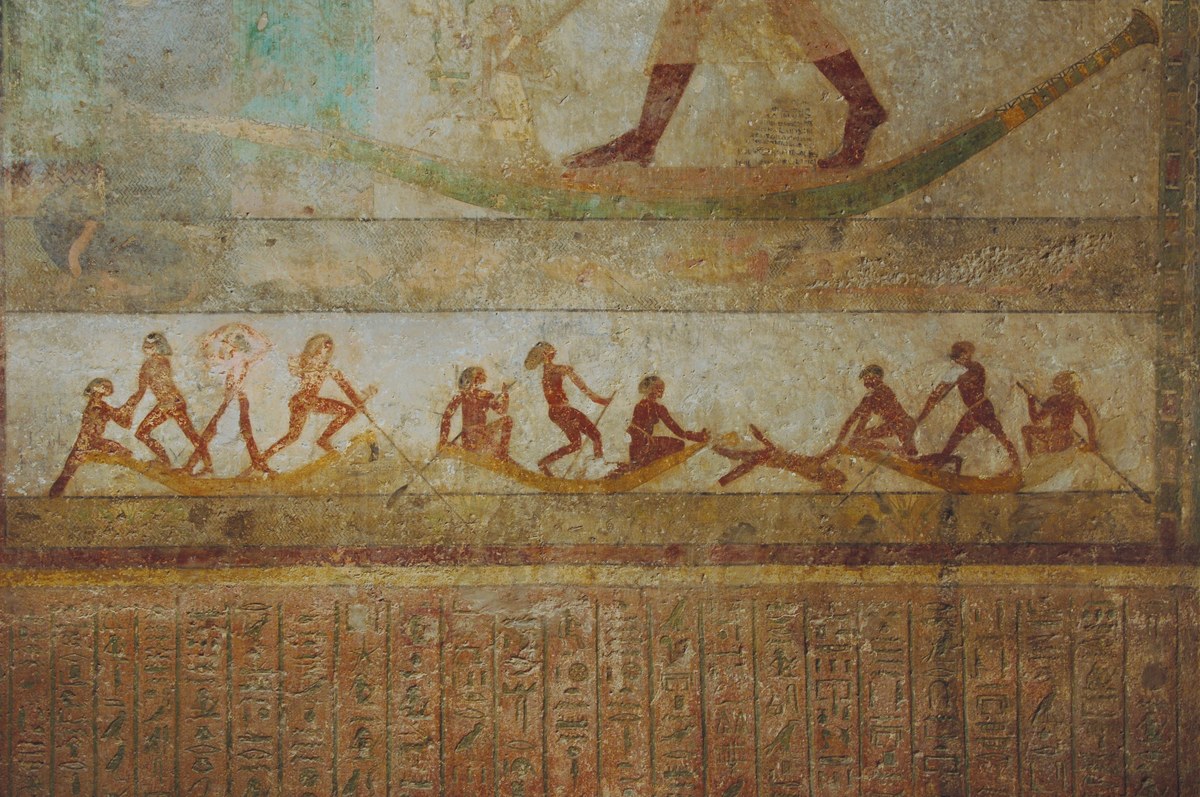
Tomb of Beni Hassan. (Supplied)
“For over a decade, Google has been capturing imagery of cultural and historical landmarks across the region, from Egypt, the UAE, Lebanon, Palestine, Tunisia and more, while making it available on Maps, Street View and Google Arts and Culture. Together with our partners, we remain committed to promoting the rich history and heritage of the region, and to make it accessible to everyone.” he added.
The software, which can be accessed for free via the Google Arts and Culture app has three distinct features: “Learn,” “Play” and “Work.”
“Learn” offers language-learning tools such as flash cards and drawing, “Play” lets users translate any message in English or Arabic to hieroglyphics and “Work” allows users to upload photos of real life hieroglyphs from temple walls or artefacts.
Why this year’s Golden Globes race feels so unpredictable
No dominant frontrunner and openness among voters
‘Hamnet,’ ‘Sinners,’ ‘Sentimental Value’ in contention
Updated 09 January 2026
Raffi Boghosian
LOS ANGELES: With the Golden Globes approaching, this awards season has taken on an unusually fluid shape. Instead of a single dominant frontrunner, the race is being defined by range, taste, and a noticeable openness among voters.
Prestige dramas are sharing space with ambitious studio films, while several contenders have built momentum quietly rather than through aggressive campaigns. The result is a season that feels unpredictable — in the best possible way.
Recently announced presenters include a wide cross section of film, television, and music figures. (Supplied)
That sense of openness is reflected not only in the awards race itself, but also in the broader tone surrounding this year’s ceremony. The 83rd Annual Golden Globes will air live on CBS on Sunday, Jan. 11, 2026, with comedian and actress Nikki Glaser returning as host.
Recently announced presenters include a wide cross section of film, television, and music figures.
Among them are Julia Roberts, George Clooney, Jennifer Garner, Kevin Hart, Miley Cyrus, Snoop Dogg, Amanda Seyfried, Ana de Armas, Ayo Edebiri, Colman Domingo, Dakota Fanning, Kathryn Hahn, Queen Latifah, Zoe Kravitz, and Pamela Anderson.
The 83rd Annual Golden Globes will air live on CBS on Sunday, Jan. 11, 2026, with comedian and actress Nikki Glaser returning as host. (Supplied)
The diversity and generational range of the presenter lineup mirrors the season itself, blending established icons with contemporary voices and signaling a ceremony that leans into variety rather than predictability.
In the drama categories, “Hamnet” has emerged as a serious presence, earning steady respect across critics’ groups and industry conversations. Its restrained approach and emotional weight have resonated with audiences and awards watchers who value craft over spectacle.
At the same time, “Sinners” and “Sentimental Value” remain firmly in contention, particularly if voters gravitate toward character-driven storytelling rather than formal experimentation.
Among them are Julia Roberts, George Clooney, Jennifer Garner, Kevin Hart, Miley Cyrus, Snoop Dogg, Amanda Seyfried, Ana de Armas, Ayo Edebiri, Colman Domingo, Dakota Fanning, Kathryn Hahn, Queen Latifah, Zoe Kravitz, and Pamela Anderson. (Supplied)
On the musical or comedy side, “One Battle After Another” appears especially well-positioned, carried by strong ensemble work and a level of sustained buzz that has followed it throughout the season.
The acting races are no less competitive. Wagner Moura has placed himself near the front of the Best Actor, Drama conversation for his performance in “The Secret Agent,” a role widely praised for its restraint and complexity.
Michael B. Jordan continues to generate strong support for “Sinners,” reinforcing his position as a consistent awards presence.
In the musical or comedy field, Timothee Chalamet has become a frequent prediction for “Marty Supreme,” a performance many see as both charismatic and strategically timed.
The actress races are equally open, with Jessie Buckley and Rose Byrne widely cited as leading figures, while the supporting categories continue to spotlight standout work from Stellan Skarsgard and Inga Ibsdotter Lilleaas.
In directing, momentum appears to favor Paul Thomas Anderson for “One Battle After Another,” reflecting both critical admiration and industry confidence.
Screenplay and score conversations have included “Sinners” and “KPop Demon Hunters,” underscoring a year that balances artistic ambition with broader appeal.
However the night ultimately unfolds, this year’s Golden Globes feels less about safe consensus choices and more about recognizing work that lingered long after the credits rolled.
From the nominees to the presenters taking the stage, the ceremony reflects a film year defined by confidence, creative risk, and a refreshing absence of certainty.