


KARACHI: It is said to be the largest cattle market in Asia.
Karachi’s Maweshi Mandi, which usually presents the picture of a carnival, is set up ahead of Eid Al-Adha, a Muslim festivity celebrated upon the completion of the annual Hajj pilgrimage, and brings together tens of thousands of buyer and sellers.
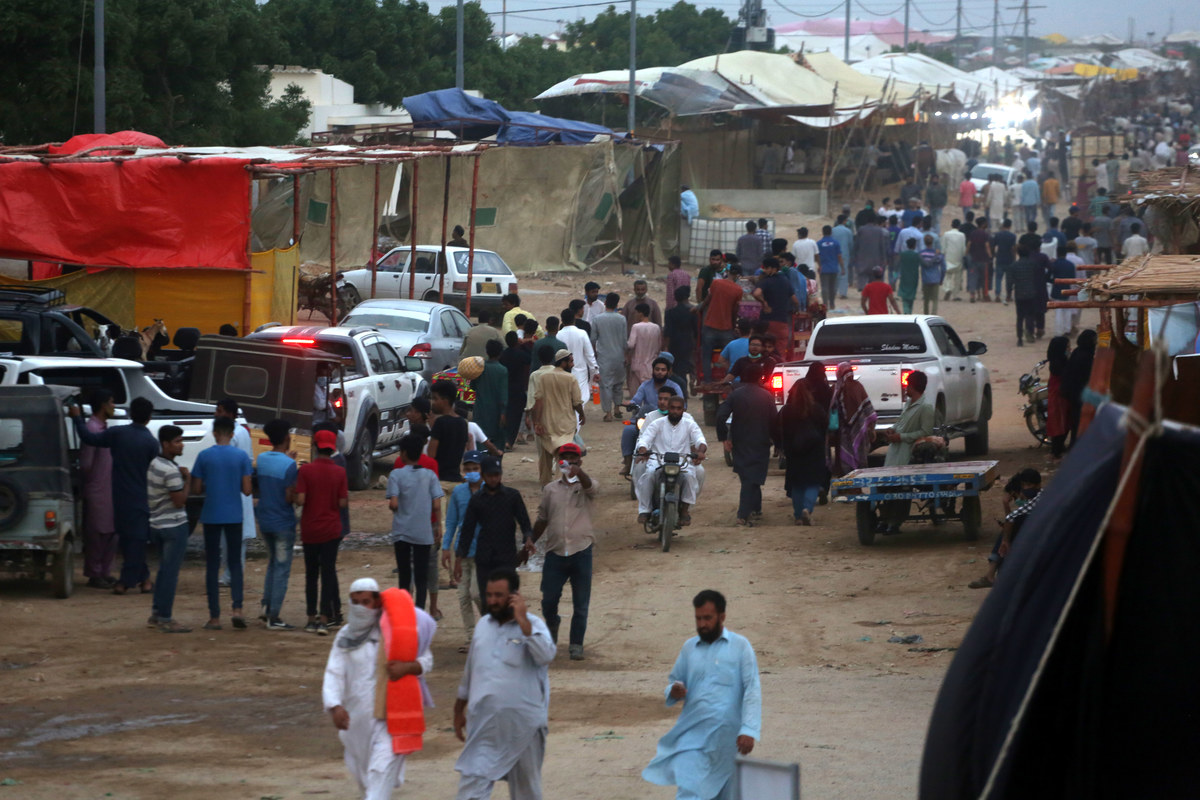
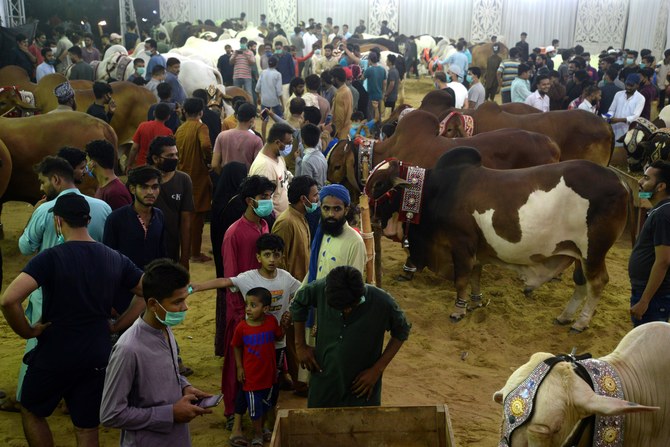
A large number of people, including children, visit a stall of sacrificial animals at Karachi’s Maweshi Mandi on Sunday, July 13, 2020. (AN Photo/S.A. Babar)
According to the management of the market, the Maweshi Mandi acquired its present shape in 2001. Prior to that, clusters of small livestock markets would emerge in different corners of the city in Dhu Al-Hijjah, the last month of the Islamic calendar when the Abrahamic ritual of sacrifice takes place. The one-stop-shop arrangement, adopted about two decades ago, was an instant success since it largely worked for everyone: It reduced the transaction cost for buyers and allowed individual traders to organize themselves better.
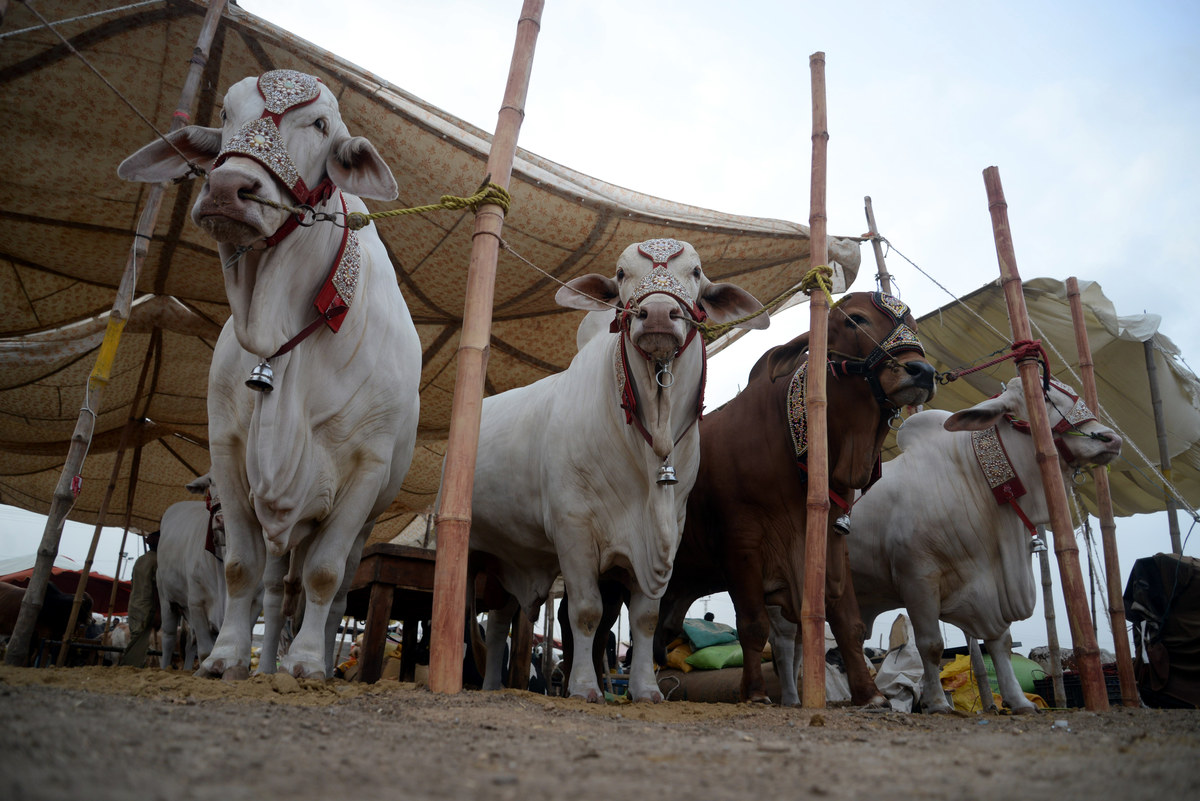
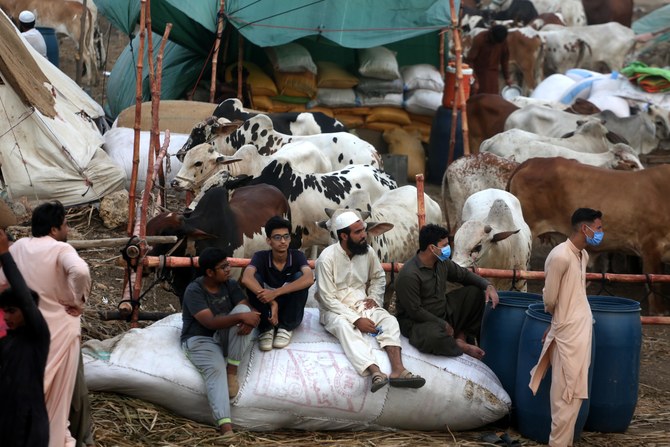
Expensive animals that are sometimes sold for millions of rupees are bought to Karachi’s Maweshi Mandi. In this photograph taken on Sunday, July 13, 2020, Sultan, Bahadur, Raja and Anmol Heera (from left to right) are waiting for affluent buyers. (AN Photo/S.A. Babar)
The rapid spread of the coronavirus pandemic this year should have proved detrimental to this business model, given how dangerous it is for everyone to visit crowded places these days. However, it seems that even the infectious – and potentially deadly – respiratory disease was not enough to deter people from visiting the marketplace to buy sacrificial animals.
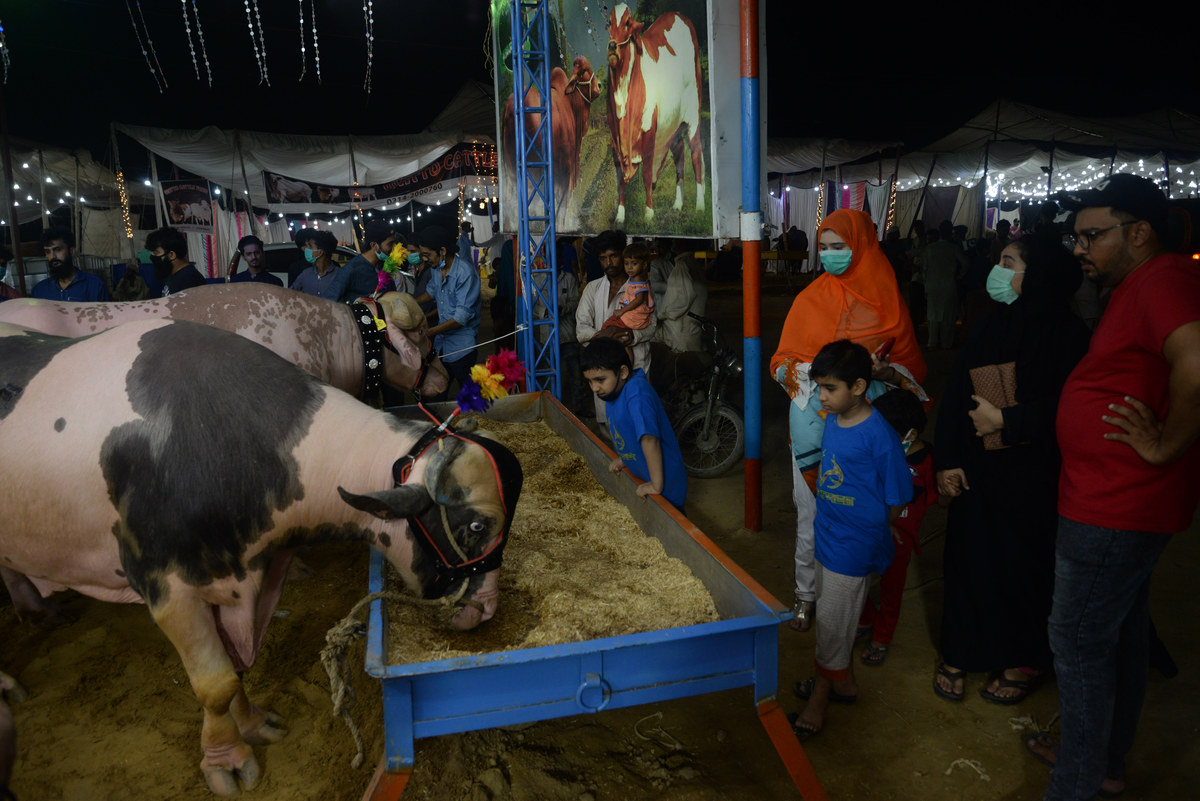
Children look at buffaloes with great fascination at Karachi’s livestock market on Sunday, July 13, 2020. A large number of children can be seen without wearing face masks at the Maweshi Mandi. (AN Photo/S.A. Babar))
With the virus-related lockdown restrictions all but gone, one can see security guards at the entrance of the Maweshi Mandi situated on the Karachi-Hyderabad Motorway, urging people to wear face masks as they walk through the disinfection gate. Inside the premises, there are thousands of stalls where buyers and sellers haggle over prices. One can also hear the faint echo of an announcement made by the administration in the background, advising people to take necessary precautions to prevent the spread of the virus.
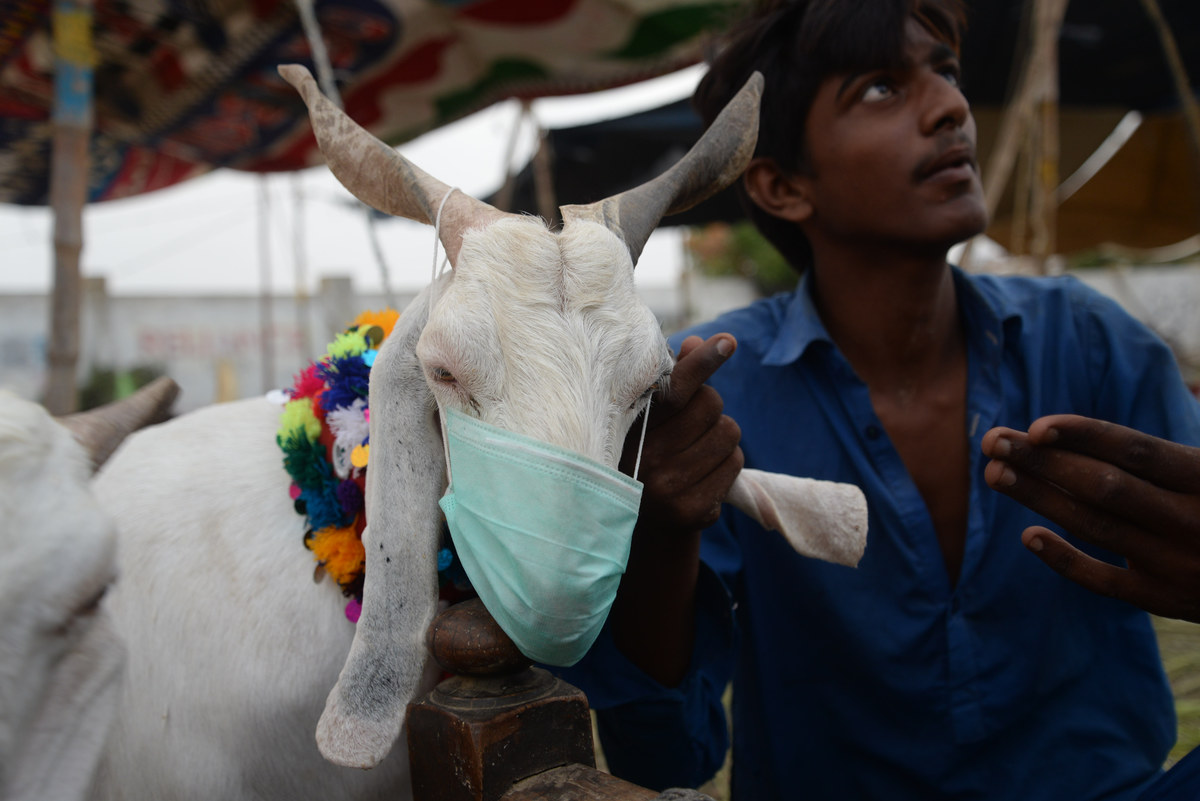
Muhammad Mansoor, a trader from Naushehro Feroz, negotiates the price of his goat who is wearing a mask. “This is due to the coronavirus," he explains. "The government says that all humans and animals should wear this.” Asked why he is not covering his face, he said, "There is God [to protect me]." Picture take on Sunday, July 13, 2020. (AN Photo/S.A. Babar)
“Guests are requested not to enter the market without face masks and gloves,” goes the warning that is issued intermittently. “People above 50 and children below 12 are not allowed inside. Those who have cough and flu should also stay out. Once inside, people are required to keep a distance of six feet from one another.”
Few people seem to be interested in these precautionary measures, however. Most visitors roam around the place without donning a face mask or maintaining the necessary physical distance. This is also true of the traders and their staff who complain of suffocation when someone asks them to cover their faces.
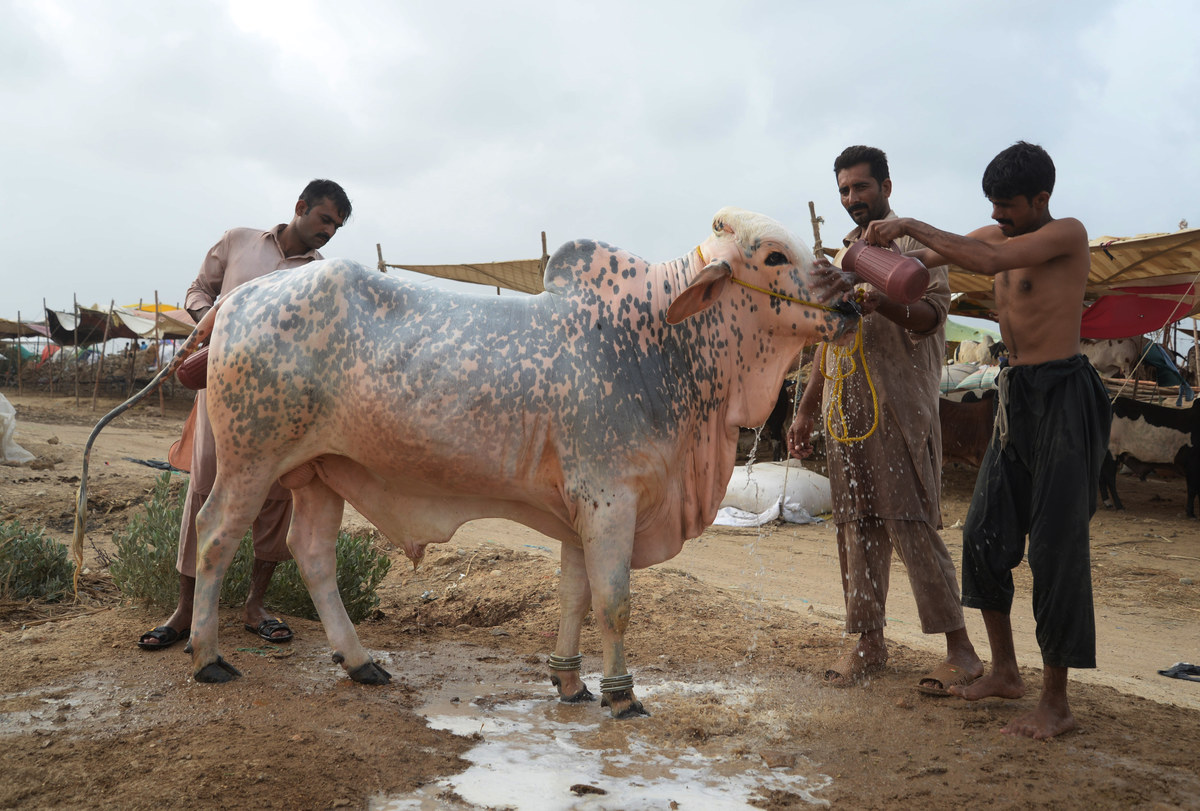
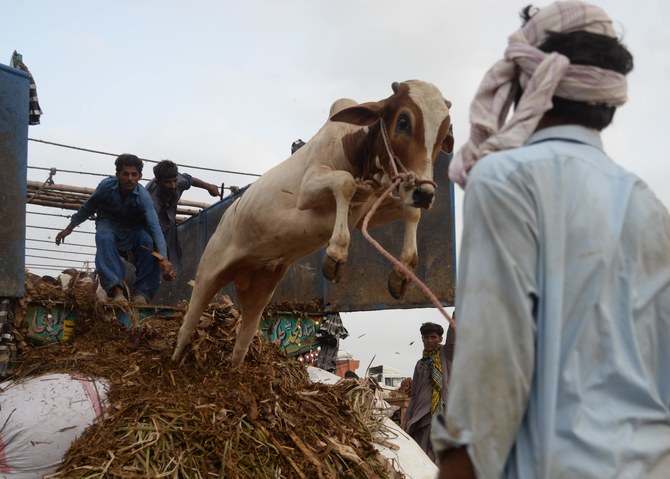
Traders are washing to a bull at Karachi’s Maweshi Mandi on Sunday, July 13, 2020. According to the organizers of the place, about one million animals are brought to Karachi’s cattle market from different parts of Pakistan. (AN Photo/S.A. Babar)
All this should be a major cause of concern for a country that has recorded more than 250,000 coronavirus infections since February 26. Pakistan’s southern Sindh province is among the worst affected federating units and its largest city, Karachi, where the cattle market is established, accounts for nearly 80,000 cases out of the total provincial tally of more than 100,000.
According to the administration of the market, the Maweshi Mandi, which is spread over an area of 1,000 acres, witnesses an influx of about a million sacrificial animals each year. Thousands of people visit the place on a daily basis which is run by almost 10,000 traders and staff members.
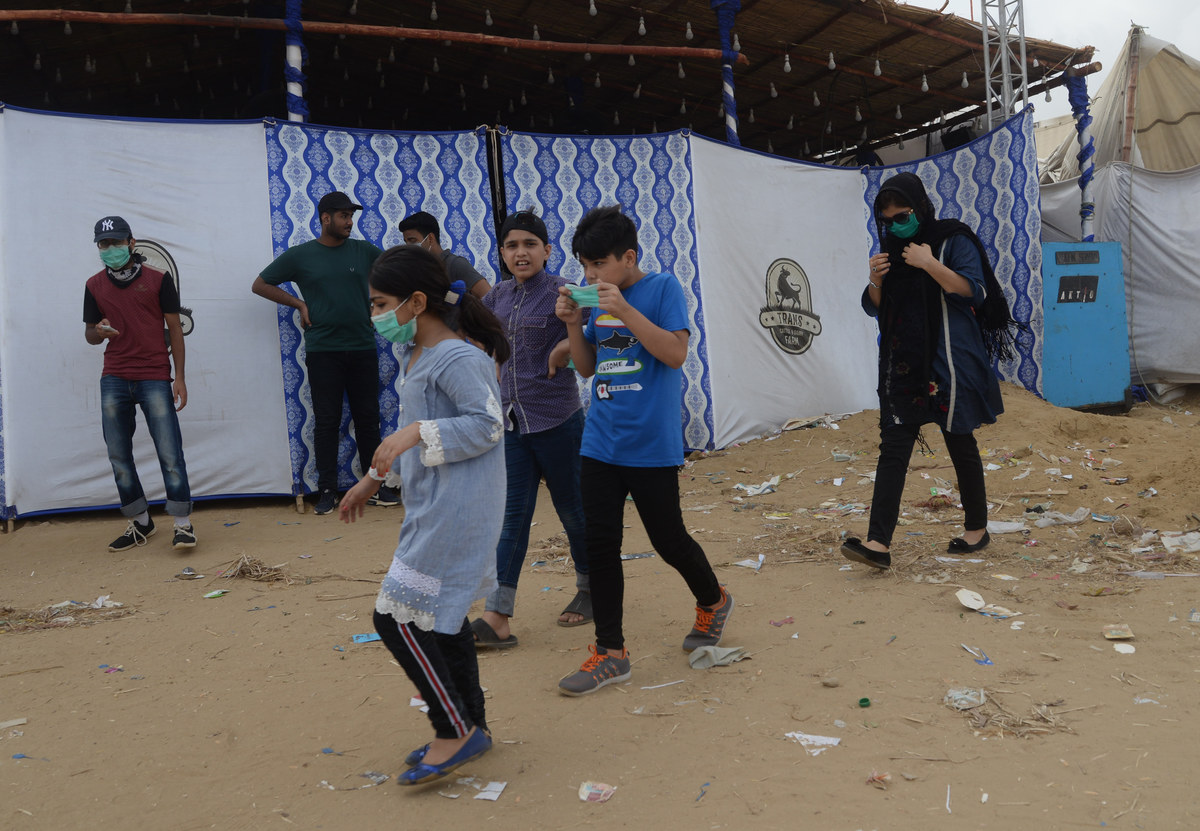
A large number of children can be seen without wearing face masks at the Maweshi Mandi. (AN Photo/S.A. Babar)
According to some estimates, the organizers of the market earn billions of rupees by managing the place. While they refused to share details of their earnings, Fayaz Ali, a trader from Naushahro Feroze district, said he paid Rs 200,000 for a small stall and Rs 1,000 tax on every goat.
“People bring animals from across the country to this place,” Muzaffar Hassan, administrator of the Maweshi Mandi, said, adding: “We try to ensure that virus-related precautions are strictly followed in the market. We even provide masks to visitors who don’t have them.”
“If individuals remove their masks while inside, we try to convince them to put them back on by through our announcements,” he continued. “If they refuse to heed our request, we ask them to leave the market. Since traders cannot be thrown out, we impose nominal fines on them and that usually works.”
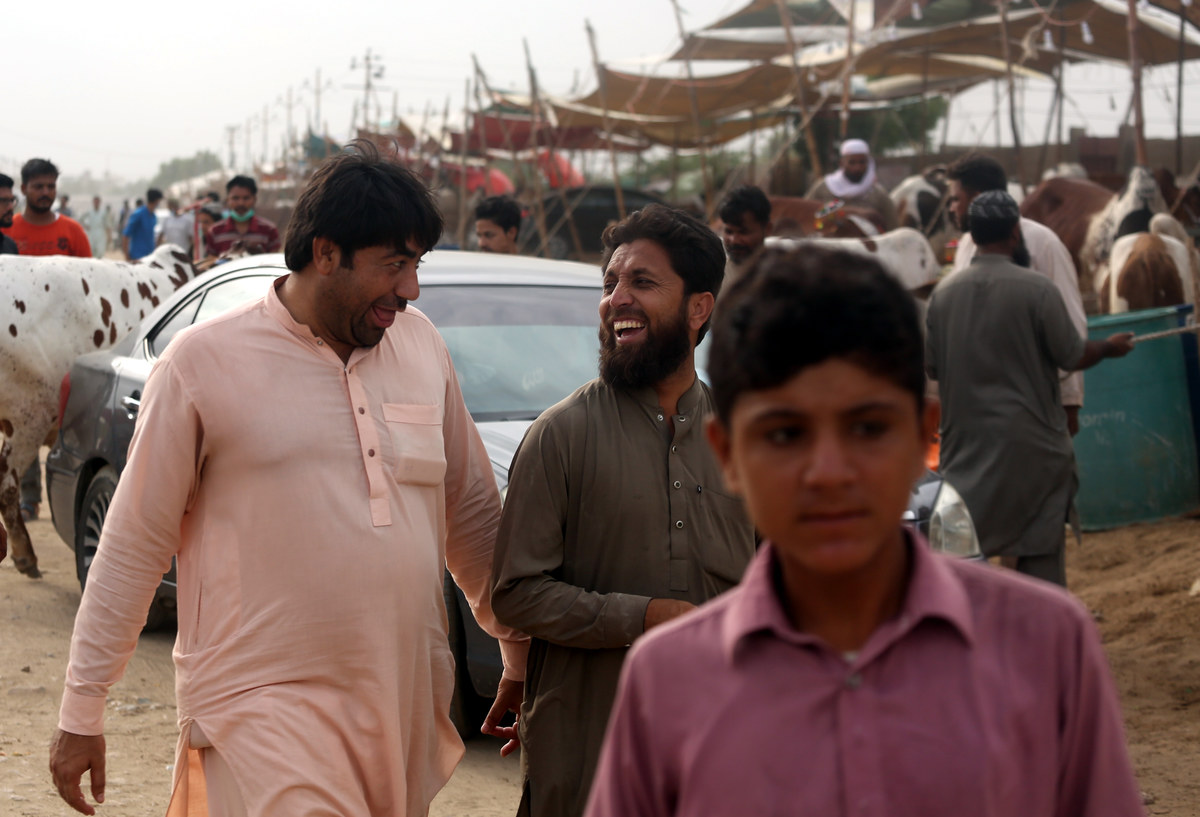
A large number of people, including children, visit a stall of sacrificial animals at Karachi’s Maweshi Mandi on Sunday, July 13, 2020. (AN Photo/S.A. Babar)
Despite these claims, the situation inside the market remains precarious.
Ahmed Saeed, a buyer from Orangi Town, said: “It’s extremely worrying that no more than 10 percent people here are wearing masks.”
Muhammad Yaqoob, another visitor from New Karachi, raised similar concerns.
“One can see elderly people and children here, though they are not allowed inside. Most people are not even wearing masks and interacting with each other without taking necessary precautionary measures,” he said before pausing for a brief moment and fishing into the side pocket of his shirt.
“I should also wear this,” he continued while pulling out a light blue mask.


