

BMG Economic Forum hosts virtual think-in

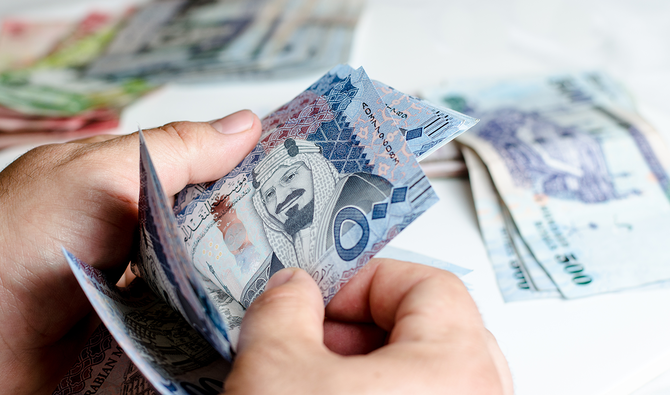
The BMG Economic Forum hosts its first-ever “virtual” summer event today to discuss investment opportunities in Saudi Arabia. (Shutterstock)
Short Url
Updated 15 July 2020
Follow

BMG Economic Forum hosts virtual think-in

  • The event offers first-hand insights from senior government officials and international corporate leaders into the post-COVID-19 economy

DUBAI: The BMG Economic Forum hosts its first-ever “virtual” summer event today as thought leaders from the worlds of business, finance and pubic policy come together to discuss investment opportunities in Saudi Arabia.

The annual event — organized by the BMG Foundation, part of the Kingdom’s investment banking and advisory BMG Financial Group — has been taking place for nearly a quarter of a century, but this year, due to coronavirus COVID-19 travel restrictions, it takes the form of a webinar involving more than 600 participants from around the world.

Under the theme of “Moving Forward: Investment Opportunities in Saudi Arabia and Beyond,” the forum will discuss the economic, financial and business scene in the Kingdom as it emerges from the pandemic-related lockdowns of earlier this year.

“The event offers first-hand insights from senior government officials and international corporate leaders into the post-COVID-19 economy, including expert economic forecasts and updates on key industries such as transportation and logistics,” BMG said.

The invitation-only event will discuss such key issues as the Kingdom’s management of the pandemic crisis, strategic investment opportunities driven by Vision 2030, and the rise of Tadawul, the Saudi stock exchange, to become one of the top 10 most important international markets.

It will also examine recent legislation in the Kingdom enabling foreign ownership, energy policy including renewable energy, and the global supply chain and food security.

The role of young Saudi entrepreneurs as they increasingly embrace the digital world, and the big changes underway in the Kingdom’s health-care system, will also figure high on the agenda of the one-day event.

Among the high-profile participants are Bandar Alkhorayef, Saudi Arabia’s minister of industry and minerals; Khalid Al-Hussan, CEO of the Tadawul; and Ali Alireza, managing director of the Hajji Husein Alireza conglomerate.

Among international business leaders are Frank Appel, CEO of Deutsche Post DHL Group of Germany; Richard Soundarjee, CEO of Societe Generale in the Middle East; and Toby Waterworth, CEO of Atlantic Healthcare of the UK.

Arab News is official media partner of the event.


Aramco rises nearly 3% as Gulf stocks fall on Middle East tensions

Updated 15 sec ago
Follow

Aramco rises nearly 3% as Gulf stocks fall on Middle East tensions

RIYADH: Saudi Arabian Oil Co. shares rose nearly 3 percent in intraday trading on March 1, outperforming regional markets as escalating tensions in the Middle East weighed on Gulf equities.

The stock climbed as much as 3.2 percent to SR25.76 ($6.87) before easing slightly to SR25.64, up 2.72 percent from the previous close of SR24.96, according to Tadawul data. More than 12 million shares were traded, with turnover exceeding SR306 million as of 12:20 p.m. Saudi time.

The gains came even as most Gulf markets declined after Israel and the US launched strikes on Iran, triggering retaliatory attacks and raising fears of a broader regional conflict.

The Kingdom’s benchmark Tadawul All Share Index dropped as much as 4.6 percent in early trading, putting it on track for its sharpest intraday fall since April, Reuters reported.

Elsewhere in the region, Boursa Kuwait suspended trading as a precautionary measure. Oman’s main index trimmed losses to 1.5 percent after falling more than 3 percent earlier, while Bahrain’s benchmark slipped 0.6 percent. Qatar’s market was closed for a bank holiday.

Investors are now closely watching oil markets, particularly the Strait of Hormuz, a key shipping route that carries about 15 million barrels of crude per day, nearly 30 percent of global seaborne oil trade.

“The most immediate and tangible development affecting oil markets is the effective halt of traffic through the Strait of Hormuz,” said Jorge Leon, senior vice president and head of geopolitical analysis at Rystad Energy.

“Unless de-escalation signals emerge swiftly, we expect a significant upward repricing of oil at the start of the week,” he added.

Leon said some supply could be rerouted through alternative pipelines, including Saudi Arabia’s East-West pipeline to the Red Sea, which has a capacity of about 5 million barrels per day, and the UAE’s Abu Dhabi pipeline, with a capacity of around 1.5 million barrels per day. Even so, he estimated the disruption could temporarily remove 8 million to 10 million barrels per day from global supply.

Barclays raised its Brent crude forecast to about $100 a barrel from $80 a day earlier, while analysts expect prices could jump by as much as $20 per barrel when trading resumes on March 2 if tensions escalate further, Reuters reported.

“Should the Strait remain effectively closed or energy infrastructure be confirmed as damaged, the upside risks to prices would increase further,” Leon said.

Even a short disruption in Hormuz traffic could lead to tanker delays, cargo rescheduling, and supply bottlenecks, keeping energy markets volatile in the near term.