Pakistani doctor gets medal for work as ‘captain’ of Saudi COVID-19 team 

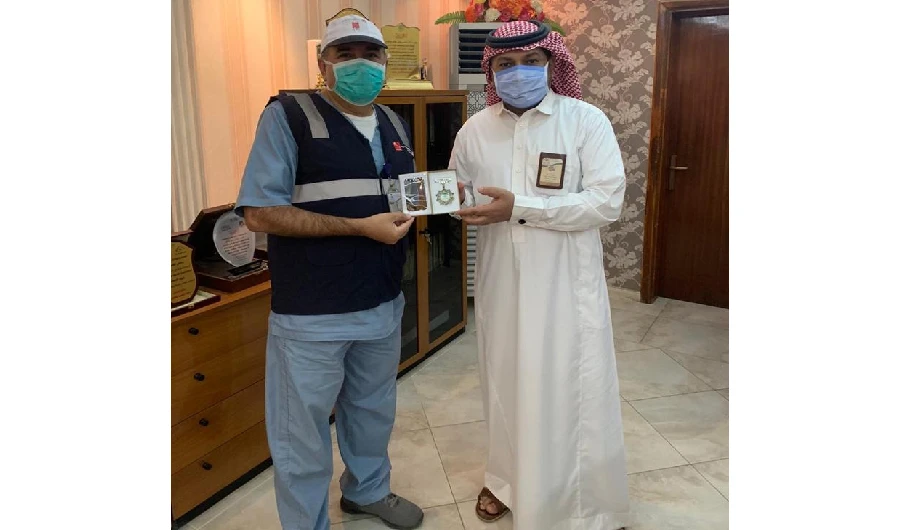
Pakistani doctor Zia Ullah Khan Dawar receives a medal of recognition in Jeddah, Saudi Arabia, on July 9, 2020. (Photo courtesy: Zia Ullah Khan Dawar)
Short Url
Updated 13 July 2020
Follow

Pakistani doctor gets medal for work as ‘captain’ of Saudi COVID-19 team 

  • A public health professional from North Waziristan, Dr. Dawar currently works with the Kingdom’s coronavirus surveillance and data analysis team
  • He has been living in Jeddah for four years, previously working on programs to stem tuberculosis, dengue fever and malaria 

ISLAMABAD: Saudi Arabia’s ministry of health last week awarded Pakistan doctor Zia Ullah Khan Dawar with a medal to recognize his work as one of the “captains” of the Kingdom’s COVID-19 team, Dawar said on Monday. 
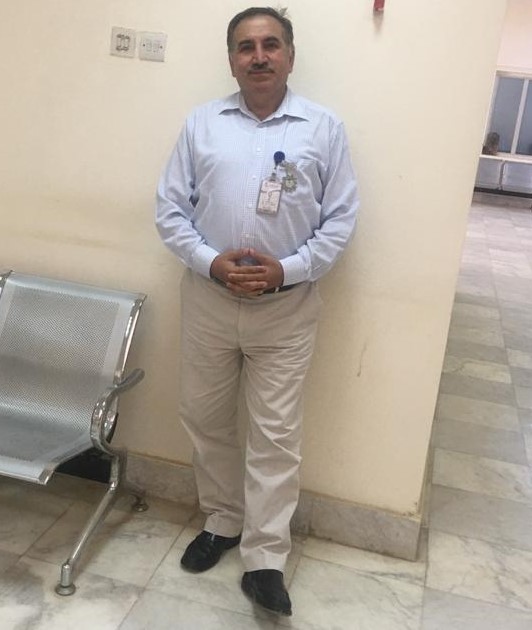


Pakistani doctor Zia Ullah Khan Dawar pictured at his office in Jeddah, Saudi Arabia, on July 12, 2020. (Photo courtesy: Zia Ullah Khan Dawar)

Dawar, a public health specialist, has been living in Saudi Arabia for the past four years, working on programs to stem tuberculosis, dengue fever and malaria. He is currently working with the kingdom’s health ministry in Jeddah as part of a COVID-19 surveillance and data analysis team.

“Saudi Ministry of health gave awards to doctors and health professionals in recognition of 100 days of their services in fighting against the virus and I am one of the foreign doctors [awarded],” Dawar told Arab News. “I am feeling so proud to get the recognition of my services. I come from North Waziristan [a northwestern region in Pakistan], so it is not only an honor for me but for my area and for Pakistan.” 

“We were working in a mobile team which is a challenging and risky job,” Dawar added. “Whenever any positive case was reported, we immediately had to go to the site and do the needful.”

Saudi Arabia has recorded over 232,000 COVID-19 cases since March while 2,223 have died of the virus. 


Pakistan marks Peshawar school attack anniversary with renewed vow against terrorism

Updated 6 sec ago
Follow

Pakistan marks Peshawar school attack anniversary with renewed vow against terrorism

  • President recalls children killed in 2014 school massacre in Peshawar
  • Attack remains one of the deadliest assaults on students globally

ISLAMABAD: Pakistan on Tuesday marked the 11th anniversary of the 2014 Army Public School (APS) terror attack in the northwestern city of Peshawar, with President Asif Ali Zardari reaffirming the country’s commitment to defeating terrorism and honoring the victims of one of the deadliest school massacres in modern history.

On December 16, 2014, gunmen affiliated with the Pakistani Taliban (TTP) stormed the APS campus in Peshawar, killing more than 150 people, including over 130 children, in an hours-long siege that shocked the country and drew international condemnation. The attack targeted students and staff and remains a defining moment in Pakistan’s fight against militancy.

The massacre prompted a nationwide crackdown on extremist groups, leading to the launch of major military operations and a series of counterterrorism measures, including the National Action Plan, aimed at dismantling militant networks and curbing violent extremism. While militant violence declined in subsequent years, Pakistan has seen a renewed surge in attacks since 2022, particularly in Khyber Pakhtunkhwa and Balochistan provinces.

“Today we remember the innocent children and staff of the Army Public School whose lives were taken in the brutal terrorist attack on 16 December 2014,” President Zardari said in a message issued on the anniversary. “Their sacrifice remains a solemn reminder of the heavy price our nation has paid in the fight against terrorism.”

He said Pakistan’s resolve against militancy remained unwavering, stressing that there could be “no soft corner for terrorists or those who support, finance, shelter or justify them,” and that there would be no negotiations with those who take up arms against the state or target civilians.

The president also condemned what he described as ongoing Indian-sponsored militancy in Pakistan, saying Islamabad would continue to expose hostile activities and defend its people, an allegation New Delhi has consistently denied.

Zardari paid tribute to the country’s security forces, law enforcement agencies and intelligence services, saying their efforts had prevented many attacks and would continue until all perpetrators and facilitators were brought to justice.

“The memory of the APS martyrs strengthens our resolve,” he said. “Pakistan will never allow the enemies of peace to succeed.”

The APS attack remains one of the world’s deadliest assaults on students and continues to shape Pakistan’s domestic security policies and public discourse on counterterrorism, education safety and extremism.