

United States bans Pakistan International Airlines flights over pilot concerns

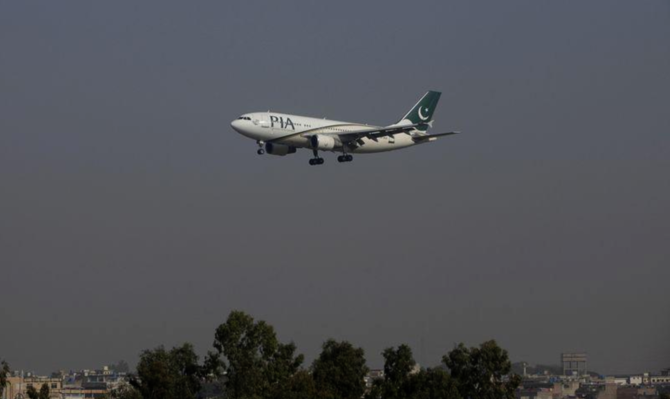
A Pakistan International Airlines (PIA) passenger plane arrives at the Benazir International airport in Islamabad, Pakistan, December 2, 2015. (REUTERS/ File photo)
Short Url
Updated 10 July 2020
Follow

United States bans Pakistan International Airlines flights over pilot concerns

  • Pakistan last month grounded a third of its pilots after discovering they may have falsified qualifications
  • Grounding of pilots followed the crash of a PIA jet in May that killed 97 people


SYDNEY: The US Department of Transportation said it has revoked permission for Pakistan International Airlines (PIA) to conduct charter flights to the United States, citing Federal Aviation Administration (FAA) concerns over Pakistani pilot certifications.

The information is contained in a revocation of special authorization dated July 1 provided by the department to Reuters on Friday.

Pakistan last month grounded almost a third of its pilots after discovering they may have falsified their qualifications.

The European Union Aviation Safety Agency suspended PIA’s authorization to fly to the bloc for six months in a blow to the carrier’s operations.

PIA was not available immediately for comment outside normal business hours.

Pakistan’s Geo News reported PIA had confirmed the US ban and said it would address the concerns through ongoing corrective measures within the airline.

Pakistan’s grounding of pilots with dubious credentials followed the crash of a PIA jet in May that killed 97 people.


IMF hails Pakistan privatization drive, calls PIA sale a ‘milestone’

Updated 10 January 2026
Follow

IMF hails Pakistan privatization drive, calls PIA sale a ‘milestone’

  • Fund backs sale of national airline as key step in divesting loss-making state firms
  • IMF has long urged Islamabad to reduce fiscal burden posed by state-owned entities

KARACHI: The International Monetary Fund (IMF) on Saturday welcomed Pakistan’s privatization efforts, describing the sale of the country’s national airline to a private consortium last month as a milestone that could help advance the divestment of loss-making state-owned enterprises (SOEs).

The comments follow the government’s sale of a 75 percent stake in Pakistan International Airlines (PIA) to a consortium led by the Arif Habib Group for Rs 135 billion ($486 million) after several rounds of bidding in a competitive process, marking Islamabad’s second attempt to privatize the carrier after a failed effort a year earlier.

Between the two privatization attempts, PIA resumed flight operations to several international destinations after aviation authorities in the European Union and Britain lifted restrictions nearly five years after the airline was grounded following a deadly Airbus A320 crash in Karachi in 2020 that killed 97 people.

“We welcome the authorities’ privatization efforts and the completion of the PIA privatization process, which was a commitment under the EFF,” Mahir Binici, the IMF’s resident representative in Pakistan, said in response to an Arab News query, referring to the $7 billion Extended Fund Facility.

“This privatization represents a milestone within the authorities’ reform agenda, aimed at decreasing governmental involvement in commercial sectors and attracting investments to promote economic growth in Pakistan,” he added.

The IMF has long urged Islamabad to reduce the fiscal burden posed by loss-making state firms, which have weighed public finances for years and required repeated government bailouts. Beyond PIA, the government has signaled plans to restructure or sell stakes in additional SOEs as part of broader reforms under the IMF program.

Privatization also remains politically sensitive in Pakistan, with critics warning of job losses and concerns over national assets, while supporters argue private sector management could improve efficiency and service delivery in chronically underperforming entities.

Pakistan’s Cabinet Committee on State-Owned Enterprises said on Friday that SOEs recorded a net loss of Rs 122.9 billion ($442 million) in the 2024–25 fiscal year, compared with a net loss of Rs 30.6 billion ($110 million) in the previous year.