

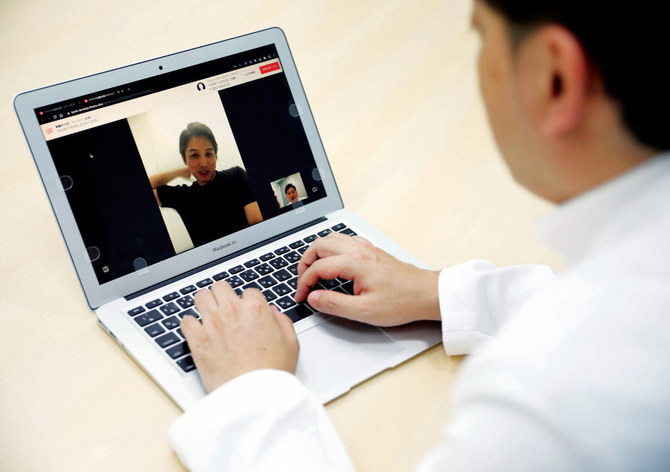

TOKYO: The coronavirus disease (COVID-19) crisis has prompted Japan to ease regulations on remote medical treatment, creating an opening for tech companies and offering a glimpse of the future of health care in the world’s most rapidly aging society.
As cases spiked in April, Japan temporarily eased restrictions on remote medical care, allowing doctors to conduct first-time visits online or by telephone and expanding the number of illnesses that can be treated remotely.
The changes mark a potential shake-up in one of the world’s biggest medical markets, which has lagged countries like Australia, China, and the US in telemedicine. The reforms could also help Japan grapple with both a skyrocketing health care burden and few doctors in rural areas.
Previously Japanese doctors were only allowed to treat recurring patients remotely, and for a limited number of diseases.
The rapid pace of change caught executives at Line Corp. off guard, forcing Japan’s most popular social networking service to accelerate plans for the roll-out of its Line Healthcare business in the coming months.
“The effect that COVID-19 brought was a huge innovation in the health care industry,” said Shinichiro Muroyama, representative director of Line Healthcare. “The situation has totally changed, much more rapidly than we thought.”
Line, which says it has 84 million users in Japan, aims to link doctors and patients by video.
Homegrown medical start-ups such as Medley Inc. and MICIN Inc. say they have also seen a surge in demand. Both companies offer application services for appointments, video consultations and payments.
FASTFACT
15%
About 16,100 Japanese medical institutions excluding dentists — nearly 15 percent of all such facilities — offered remote medical services, including by telephone, as of early July.
Telehealth, or telemedicine, refers to technology that includes online consultations, cloud-based medical records, remote monitoring of patients and use of artificial intelligence to screen for diseases.
Japan’s market for such technology is set to grow by 60 percent to nearly 20 billion yen ($185 million) in the five years to March 2024, according to the Yano Research Institute.
Japanese Prime Minister Shinzo Abe has made deregulating the medical industry part of his growth strategy.
So Ishii, a doctor who runs a clinic in Tokyo that started offering telehealth in 2017, has seen a jump in demand for online consultations since the start of the COVID-19 pandemic, with 600 patients using the service by mid-June compared to just 400 two months earlier.
Ishii said telehealth could lead to better treatment for patients with lifestyle-related diseases that require continuous attention because it gave them easier access to doctors. Such ailments typically include diabetes and high-blood pressure.
“Ideally, medical care should be designed to provide necessary support for patients regardless of whether it is online or on site,” he said.
About 16,100 Japanese medical institutions excluding dentists — nearly 15 percent of all such facilities — offered remote medical services, including by telephone, as of early July, according to the health ministry.
That marks substantial growth since July 2018, when only 970 medical institutions were registered to offer online care.
Still, the health ministry has not decided whether to make the changes permanent, while the national medical association is less than enthusiastic, citing concerns about misdiagnosis.
“We should be extremely cautious about using evidence drawn from telemedicine in the emergency situation for consideration of how it should be after the coronavirus infection wanes,” Japan Medical Association President Toshio Nakagawa told Reuters. He was vice president at the time of the interview.
Analysts say telehealth can also put smaller clinics at a financial disadvantage.
Goichiro Toyoda, representative director and a medical doctor at Medley, agrees doctors can better check first-time patients in person but says telehealth suits patients who want second opinions, have trouble visiting hospitals or need long-term treatments.
“Telemedicine will not replace face-to-face treatment,” said Toyoda. “But I’ve been stressing the importance of it becoming an option.”


