ISLAMABAD: The chairman of the China Pakistan Economic Corridor (CPEC) Authority said on Monday the construction of a new $1.5 billion hydropower project would create 3,000 jobs, reduce imported fuel costs, and broaden Pakistan’s clean energy portfolio.
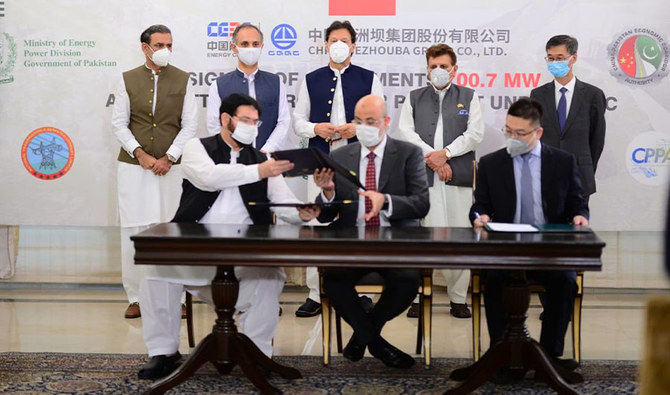
China’s Gezhouba Group and Pakistan on Monday signed an agreement for the 700.7 megawatt Azad Pattan Hydropower Project.
The plant, slated for completion in 2026, falls under the CPEC umbrella, a flagship of China’s Belt and Road Initiative that will connect the Chinese region of Kashgar with Pakistan’s Gwadar port on the Arabian Sea through a vast network of highways and rail lines. So far, the project has attracted around $60 billion in investments from China.
In a post on Twitter, CPEC Authority Chairman General (retired) Asim Saleem Bajwa said the hydropower project would shift Pakistan’s focus to “cheaper and greener” power.
Listing the benefits of the project he said: “No fuel import so no foreign exchange wasted. 3000 jobs, $1.5 Bn investment-no loan,” adding that it would generate an annual income of Rs1.38 billion from water use for the Punjab and Azad Jammu and Kashmir regions.
After the agreement for the project was signed, Prime Minister Imran Khan, who was present at the inauguration event, said increasing hydropower generation was part of his government’s ‘Clean and Green Pakistan’ policy.
“It will also diminish the impacts of global warming,” Khan said.


$1.5bn hydropower project will create 3,000 jobs — CPEC authority chairman

https://arab.news/jwy6n
$1.5bn hydropower project will create 3,000 jobs — CPEC authority chairman
- Says Azad Pattan project will reduce imported fuel cost and broaden Pakistan’s clean energy portfolio
- PM Khan says increasing hydropower generation part of his government’s ‘Clean and Green Pakistan’ policy
No tension with Pakistan, US says after sanctioning firms for ‘aiding’ ballistic missile program
- US announced sanctions against three Chinese companies, one Belarus-based firm
- Washington says the firms were supplying items to Pakistan’s ballistic missile program
ISLAMABAD: The US State Department said on Thursday there were no tensions with Pakistan following Washington’s move to impose sanctions on four international firms for supplying to the South Asian nation’s ballistic missile program.
In a press release issued last Friday, the US State Department announced sanctions against three Chinese companies and one Belarus-based firm on charges they supplied items to Pakistan’s ballistic missile program.
Pakistan has said it rejects the “political use of export controls.”
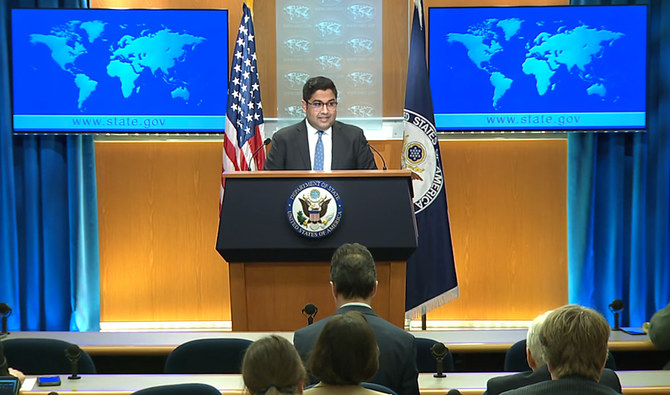
“Absolutely not … Pakistan continues to be one of our most important partners in the region,” State Department Deputy Spokesperson Vedant Patel told reporters in response to a question about tensions between Washington and Islamabad following the sanctions.
“There continues to be a lot of cooperation that we have with the Government of Pakistan, especially in the security space, especially in the trade sector … This is a robust relationship and we’ll look to continue strengthening it.”
The companies listed by the US for sanctions are the China-based Xi’an Longde Technology Development Company Limited, Tianjin Creative Source International Trade Co. Ltd, Granpect Company Limited and Belarus-based Minsk Wheel Tractor Plant.
The sanctions mean all property and interests in property of the companies in the US or in possession or control of American citizens are blocked and must be reported to the US Treasury Department’s Office of Foreign Assets Control (OFAC), according to the State Department.
They also mean that all transactions by American citizens, or those within (or transiting) the US that involve any property or interests in property of the companies, are prohibited unless authorized by a general or specific license issued by OFAC.
Officials from global container logistics company in Pakistan for talks on developing ports
- Maersk is integrated container logistics company operating in 130 countries
- Company delegation meets Pakistani finance and maritime affairs ministers
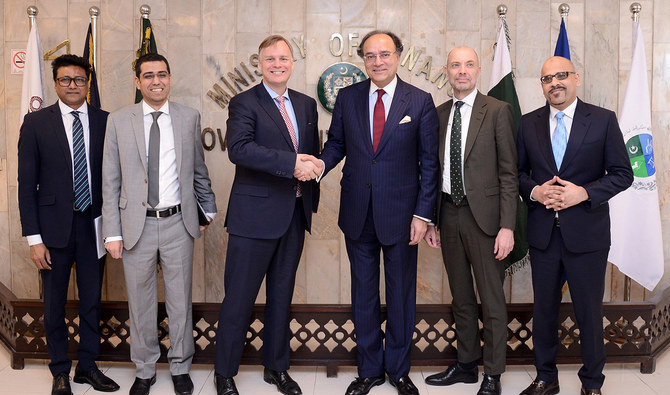
ISLAMABAD: A delegation from a leading logistics company, A.P. Moller-Maersk (APM) Terminals, met Pakistani officials in Islamabad this week for talks on developing and modernizing the South Asian nation’s ports, state-run Radio Pakistan reported on Friday.
Maersk is an integrated container logistics company operating in 130 countries. APM Terminals has been developing and operating advanced ports and container terminals for over half a century and has 60 strategically located ports and container terminals around the globe and several more in development.
On Thursday, a delegation from the company led by its CEO Keith Svendsen separately met Pakistani Finance Minister Muhammad Aurangzeb and Minister for Maritime Affairs Qaiser Ahmed Sheikh.
“Pakistan is keen to explore future projects and investments with APM especially in the maritime sector,” Aurangzeb was quoted as telling the APM delegation in a report by Radio Pakistan. “The government is fully committed to facilitate an environment conducive to business and investments.”
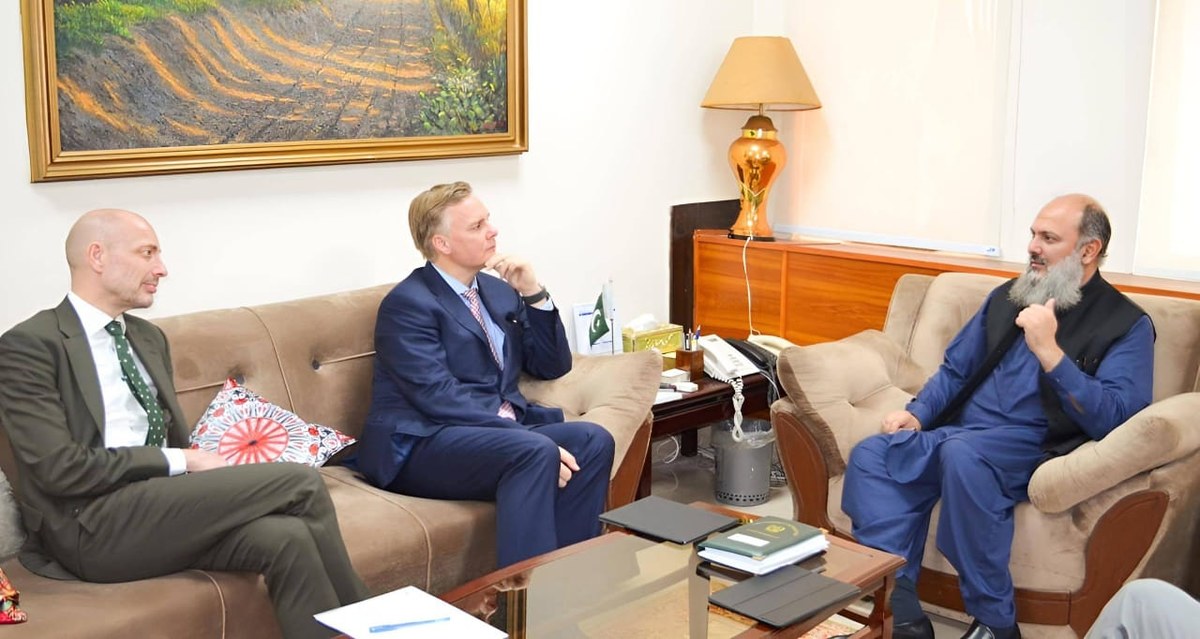
Radio Pakistan quoted Svendsen as telling Aurangzeb APM was “pleased” to engage with Pakistan and saw “great potential” in the Pakistani market.
“Affirming confidence in the country’s growth prospects and development agenda, he expressed commitment to enhance its investment and operations to support the country’s trade,” the report said.
Svendsen and his delegation also met the maritime affairs minister and discussed investment prospects in Pakistan’s ports and terminals sector.
“The delegation head highlighted Moller-Maersk’s prominent global position and its robust relationship with Pakistan, which reflects a market share of approximately 20 percent in containerized import-export activities,” Radio Pakistan said.
“Recognizing the immense growth potential, Keith Svendsen proposed investments to enhance integrated supply chain solutions, including the upgrading of ports and logistics infrastructure. The delegation pledged support for the advancement of maritime affairs in Pakistan and for nurturing a skilled workforce in this sector.”
On Monday, Pakistani and United Arab Emirates (UAE) officials performed the groundbreaking of a $175 million Bulk and General Cargo terminal as part of a new 25-year concession agreement signed between AD Ports Group and Karachi Port Trust (KPT) in Feb. 2024 to outsource operations of the terminal.
Under the terms of the agreement, Karachi Gateway Terminal Multipurpose Limited (KGTML), a joint venture between AD Ports Group, as a majority shareholder, and Kaheel Terminals, a UAE-based company, will develop, operate and manage the Bulk and General Cargo Terminal, berths 11 to 17 at Karachi Port’s East Wharf.
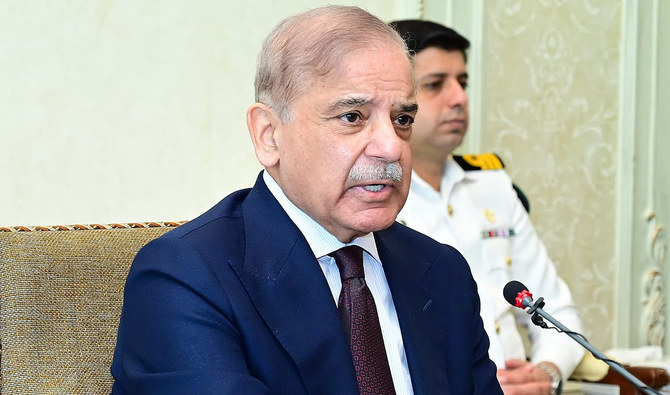
Pakistani PM to attend Islamic Summit Conference in Gambia on May 4
- Palestine, Islamophobia, climate change on agenda of meeting arranged by OIC
- Summit to be attended by concerned heads of state such as PMs, presidents, emirs
ISLAMABAD: Pakistani Prime Minister Shehbaz Sharif will attend the 15th session of the Islamic Summit Conference organized by the OIC on May 4-5 in the Gambian capital of Banjul to discuss a variety of regional and global issues, including Palestine, Islamophobia, climate change and the status of minorities, state-run APP reported.
The session will be held under the slogan “Enhancing Unity and Solidarity through Dialogue for Sustainable Development,” according to a press release issued by the OIC General Secretariat.
The Islamic Summit Conference attended by Sharif will be preceded by a preparatory meeting of senior officials on April 30 and May 1, who will discuss the documents of the session and submit a report to a preparatory meeting of the Council of Foreign Ministers (CFM).
“The preparatory CFM meeting will be held on May 1-2 to consider the results of the senior officials meeting and in turn, submit its report to the Summit,” the OIC said.
Pakistani foreign minister Ishaq Dar will attend the CFM meeting.
“Leaders of the member states will discuss the political issues of the Islamic world, most notably the Palestinian cause, and the economic, humanitarian, social and cultural issues, in addition to the issues of youth, women, family, science and technology, information, Muslim communities and minorities in non-OIC member states, and legal matters,” the OIC said.
The Summit will also tackle issues related to hate speech and Islamophobia, the promotion of dialogue, climate change and food security.
“The 15th session will issue a final communique that includes the OIC positions on the issues submitted to the Summit, a resolution on Palestine and Al-Quds Al-Sharif, and the Banjul Declaration,” the OIC added.
The Islamic Summit is a principal organ of the OIC focused on the formulation, development, and implementation of decisions made by 57 member states. The Summit is attended by concerned heads of state such as prime ministers, presidents, emirs and other equivalent heads.
Hit repeatedly by floods in northwest Pakistan, 70-year-old to rebuild house for 10th time
- Mian Awal Khan lives in Charsadda district, prone to floods after heavy rains
- 65 killed, 80 injured in heavy rains in Khyber Pakhtunkhwa province since Apr. 12
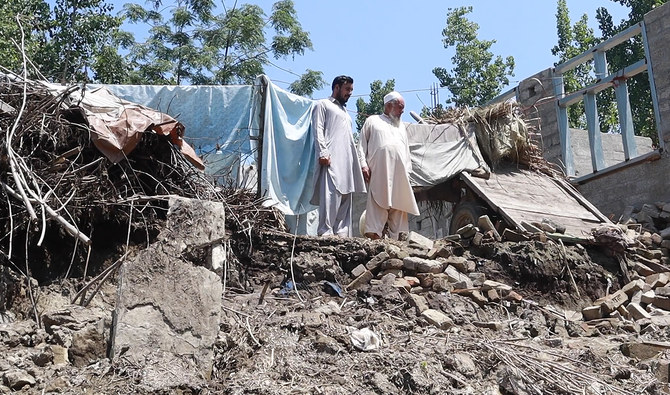
CHARSADDA, Pakistan: Mian Awal Khan stared at the remains of his house, destroyed by flooding in the River Khyali earlier this month, and cried quietly into his sleeve.
This is the 10th time the 70-year-old would have to rebuild his house in Charsadda, a district in Pakistan’s northwestern Khyber Pakhtunkhwa province prone to floods after heavy rains.
At least 65 people have been killed and 80 injured in downpours and subsequent flooding in KP since Apr. 12. Charsadda district is one of the worst hit, with three rivers, Jindi, Khyali and Kabul, meeting downstream at the Shahbara village.
Unfortunately for Khan, his house initially stood on the banks of the River Kyali and was first washed away by floods in 2010. He built a new house 500 meters away from that spot after the river carved out a path for itself on his land.
Flooding would destroy his house many times again.
“This will be the tenth time I will rebuild my house,” an emotional Khan told Arab News, seated on the concrete remains of his three-room house.
“My house was washed away by the floods six times when it was over there [initial spot] and four times when it was here.”
Khan’s 35-year-old son, Mian Fawadullah, said the family was unable to save any belongings on the day of the flooding.
“When we were busy rescuing our children and women, this [destruction] happened to our house,” he told Arab News. “We didn’t take any household items as our life was in danger. We left everything just as it was in its place.”
The flood had cost the family Rs1.5-1.6 million [$5,385-$5,744], Fawadullah said, and also destroyed 108,900 square feet of fields as well as washed away livestock and filled the fields with mud at a critical time for farming.
“Farming has also vanished now,” he lamented. “The wheat and the sugarcane have rotten in the water. This is a real mess. We do labor, prepare the field and the river washes it away [every single time].”
“EATEN MY YOUTH”
Flood survivors say they want the government to build protection walls and put in place preventative mechanisms in a country consistently ranked among the most affected by climate change impacts.
Unprecedented rains in 2022 triggered flash floods that killed over 1,700 people and caused damages worth $33 million.
Ihsan Dawar, a public relations officer at the KP Provincial Disaster Management Authority, said the government was carrying out relief works, particularly to rebuild around 3,500 houses partially or fully damaged in the recent floods.
“Up until this time, about Rs200 million [$718,096] have been distributed among the victims of the fresh spell of rain incidents,” Dawar told Arab News.
But Khan has little hope floods won’t wreak havoc on his life again.
“The river is not going to spare it [my house] here also,” he said, adding that it was cutting at the edges of the land like a “butcher cutting meat.”
When asked what he would do now, he broke down and cried quietly.
“This is too difficult,” he said about having to rebuild his house yet again. “It has eaten all my youth.”
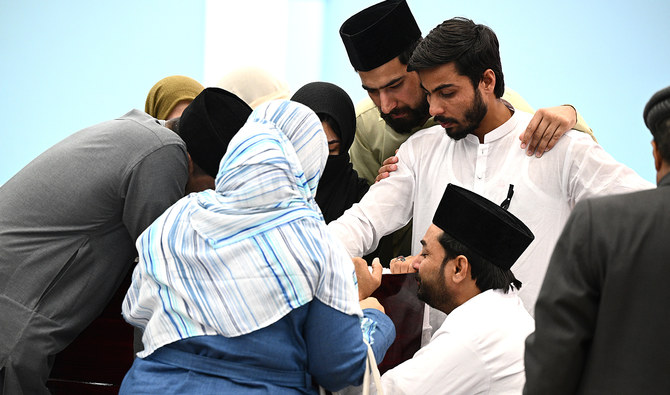
He was ‘joyous’ in Australia, says family of Pakistani guard killed in Sydney attack
- Faraz Tahir, 30, was the only male killed in fatal Sydney knife attack on April 13
- Tahir’s was working his first day shift when Bondi Junction stabbing took place
ISLAMABAD: The family of Faraz Tahir, a 30-year-old Pakistani security guard killed in a deadly shopping center knife attack in Sydney this month, said he had been “joyous” about making a new life for himself as a refugee in Australia.
Six people were killed and 12 hurt when 40-year-old Joel Cauchi stabbed citizens at the Westfield Bondi Junction on April 13 in one of the city’s worst violent crimes in recent years. Among the dead were five women and Tahir, a refugee from Pakistan who worked as a security guard at the ball.
Police have said the man who fatally stabbed the six people seemed to have targeted women, as the attacker’s family has opened up about Cauchi’s long history of mental illness and frustrations with women.
Mass killings are rare in the country of about 27 million people, which has some of the world’s toughest gun and knife laws.
Speaking to the media, Tahir’s brother Mudasar Bashir said the day he was killed was the first time he was working the day shift.
“We are very proud of him because Islam, our religion, says that if you save even one human, you save all of humanity,” Bashir said.
“So he saved, I don’t know how many people he saved in that time. I think there are lots of people.”
He said Tahir was happy to have moved to Australia from Pakistan.
“He was very happy, he was joyous,” Bashir said. “So, every time he was saying that ‘I am happy here, it’s a very good place. At least I can pray, I can go to my mosque’.”
Bashir last spoke to his brother the night before the attack.
“Night [before the attack] we spoke and he said that ‘I have a job, let me sleep, it’s nighttime’,” Tahir’s brother said. “I said, ‘Okay don’t worry, sleep. We’ll talk tomorrow.’ And it was the last time we spoke with him.”
With inputs from Reuters