

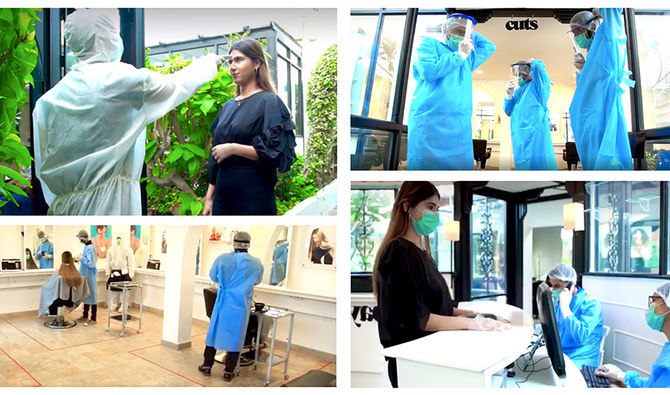

KARACHI: As hair roots grow longer, nail polish chips away, and nicely arched eyebrows lose their shape, many cannot wait to reconnect with their beauticians. At some popular Pakistani salons it is now possible, but with strict safety measures in place.
Shutdowns due to the coronavirus outbreak have upended many daily routines, including those around beauty. As in some parts of Pakistan, salons are starting to reopen, restrictions imposed by authorities and owners themselves are changing the enjoyable experience of personal grooming into a highly regulated affair.
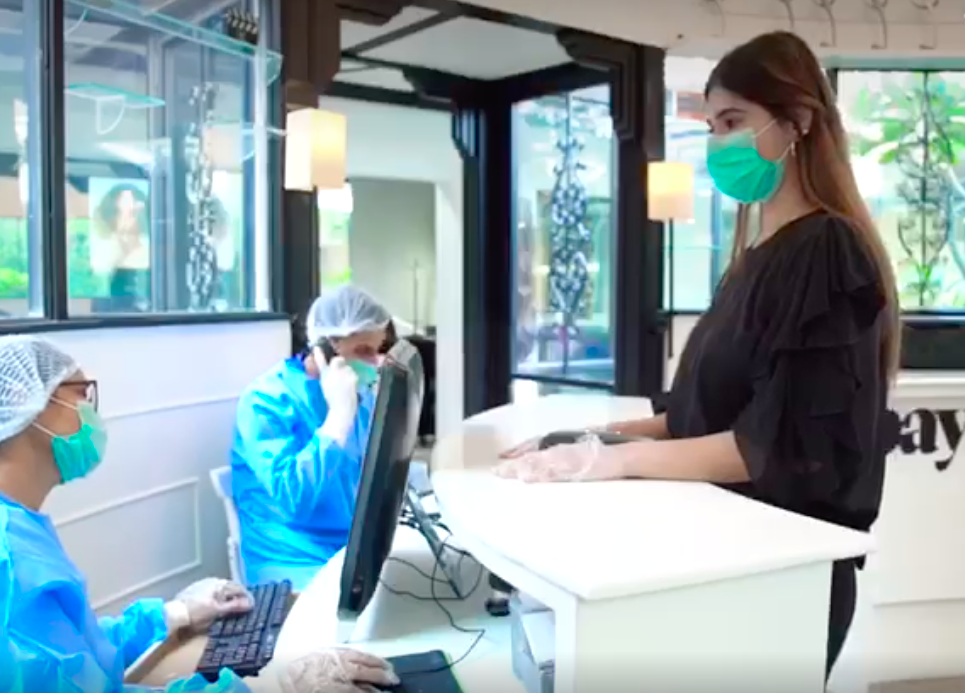
Workers at a NABILA salon wear protective gear as beauty parlors in several parts of Pakistan have been allowed to reopen if they follow necessary safety measures. (Photo courtesy: NABILA)
“Our primary concern is the safety of our clients and stylists. We have a process to take client history and reserve the right to refusal wherever we see a slight risk,” said Nabila Maqsood, owner of NABILA, the most prominent name in the country’s beauty business.
Her salons in Lahore and Islamabad have already reopened. Covering roots and getting trims are now in particular demand, while makeup “would take a backseat,” she said, until public events and weddings resume.
Prior to appointment, Maqsood said, her clients are interviewed about their travel history and general health condition. They are sprayed with disinfectant, their body temperature is checked before entering the salon and, like staff members, they are obliged to wear face masks and protective gloves.
She said that chairs are placed at least six feet apart, while all surfaces and tools at her salons are sterilized frequently and with surgical precision.
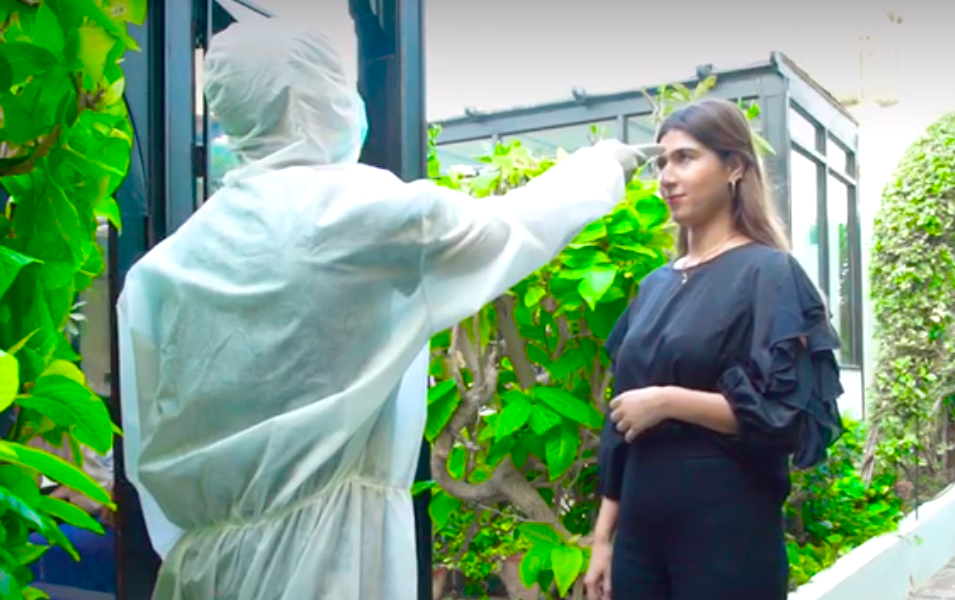
A worker at a NABILA salon wearing protective gear checks the temperature of a client. (Photo courtesy: NABILA)
Maqsood told Arab News that NABILA’s beauticians all undergo regular virus testing. “Because of our vigilance, our clients are very confident about our operations,” she said.
Her Karachi salons, however, remain closed as the Sindh government introduced a new set of restrictions in early June to contain the outbreak.
“The salons in Karachi have not reopened yet. However, whenever they do open, we are prepared for a much smaller footfall. It is partly because we have to practice social distancing and work with 50 percent and partly because a lot of individuals will be apprehensive to risk visiting salons during the pandemic.”
Another Pakistani beauty giant, DEPILEX, which has almost 40 years of experience and many branches all over the country, has also announced detailed safety measures, which it says are in accordance with World Health Organization antivirus guidelines.
“The government gave us 25 points to follow, however, we are following 165 points. At a service provider set up, a lot more goes into safety measures than just PPE (personal protective equipment) and safety distance markers,” DEPILEX director Redah Misbah told Arab News.
The company’s most wanted services are currently waxing, threading and roots retouching.
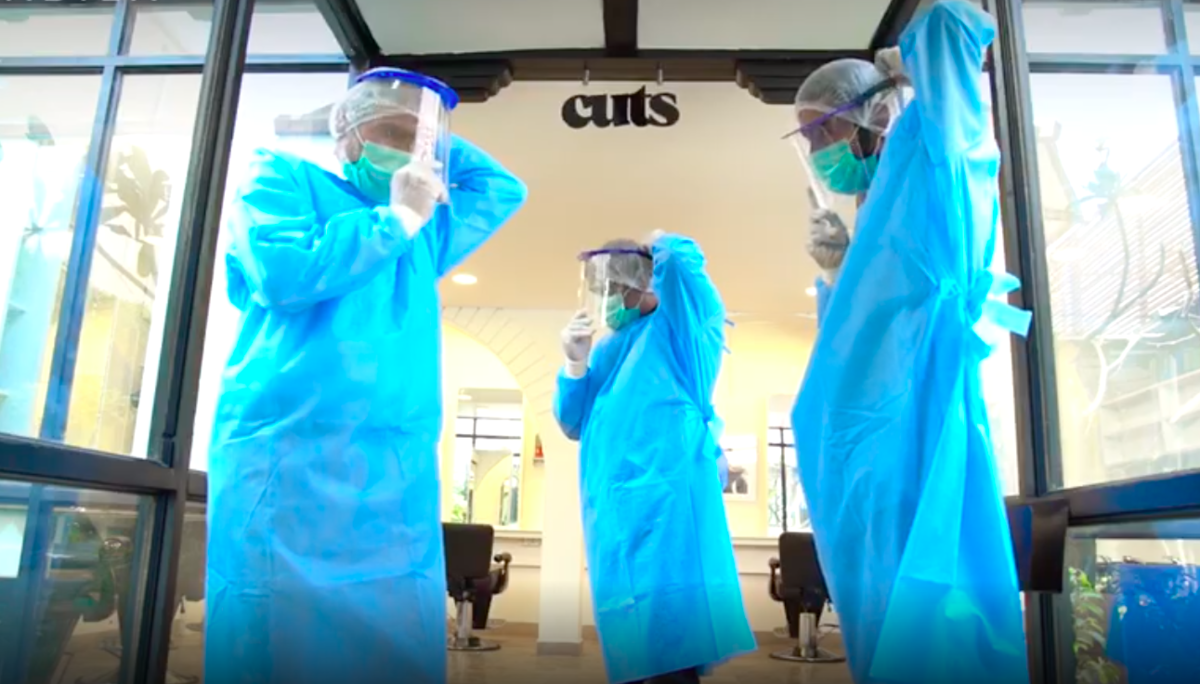
Beauticians at a NABILA salon wear protective gear as beauty parlors in several parts of Pakistan have been allowed to reopen if they follow necessary safety measures. (Photo courtesy: NABILA)
“Our SOPs and policies are very in-depth. We made our policies public so other peers from our industry can benefit from them in better preparing themselves for the new normal,” she said, referring a set of guidelines the brand shared on its official website and on social media pages.
But are customers themselves concerned about safety? Misbah said that 90 percent of them are and they openly ask what precautions does DEPILEX follow.
“However, 10 percent of clients coming in have actually made fun of us for being so strict about safety measures,” she added.
She complained that a lack of clarity from the government leaves many business owners unprepared for resuming their services.
“We are already operating on 50 percent capacity following the government’s directive and our SOPs. There has been a severe downward trend in the number of clients coming in after reopening. The government gives us a new directive on an average every two weeks which has really ill prepared business owners to make a plan or strategy as the directive is so unclear.”
As salons still cannot reopen in Sindh, beauticians say the ban is resulting in services shifting to clients’ homes, which may be riskier than allowing beauty parlors to operate.
According to Sadaf Arshad, a London-certified beauty trainer who runs Bellagio — a famous Karachi salon frequently visited by top celebrities — it would be much safer if parlors were allowed to reopen in the country’s largest city.
“I think coming to salons is safer than calling services at homes, as in the first situation the salon is responsible for the client’s safety, while in the second option you never know what precautionary measures the beautician has taken,” Arshad told Arab News.
She said it is possible to comply with all necessary safety measures, as when Bellagio was reopened for a week before Eid Al-Fitr when restrictions were relaxed in Karachi.
“We only offered hair services like cuts, dyes and treatments as it doesn’t need direct contact between the client and staff. I used to take four clients at a time — two upstairs and two downstairs — to maintain the required distance of six feet.”


