70 years on, one Pashtun town still safeguards its old Hindu-Muslim brotherhood

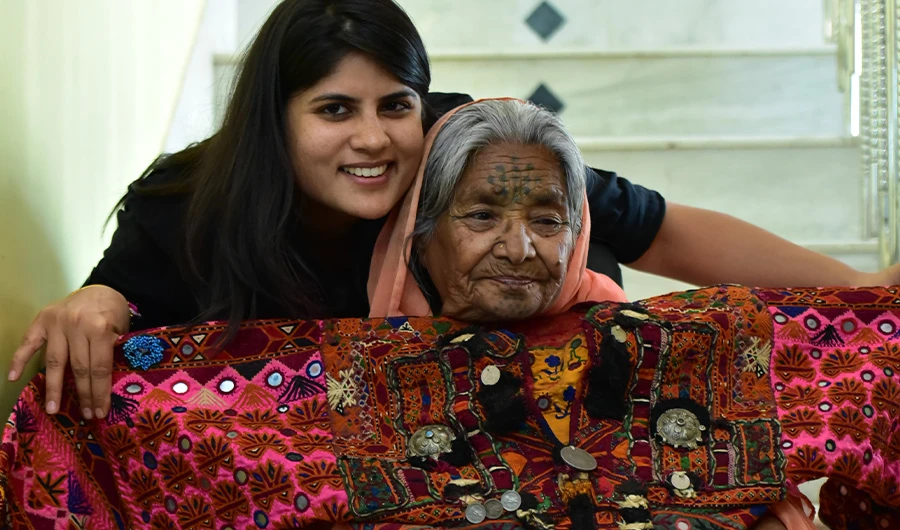
Indian filmmaker Shilpi Batra Adwani with a Hindu Pashtun migrant woman. They pose with traditional Pashtun clothes. (Photo Courtesy: Shilpi Shilpi Batra Adwani)
Short Url
Updated 01 July 2020
Follow

70 years on, one Pashtun town still safeguards its old Hindu-Muslim brotherhood

  • As token of love, Muslims of Mekhtar have never opened the abandoned properties of town’s migrated Hindu community 
  • Around 400 Pashtun Hindus migrated from Balochistan‘s Pashtun belt and moved to Jaipur

KARACHI: For more than 70 years, locked up mud shops lining a street in Pakistan’s southwest Balochistan province have stood the test of time as monuments to one small town’s extraordinary Hindu-Muslim brotherhood.
The Pashtun community of Mekhtar, where a little over a thousand families reside off a main national highway, was once a tight-knit small town where people of the two faiths lived side by side. 
During the violent partition of the Indian subcontinent in 1947, the Hindu families of Mekhtar were forced to migrate to Jaipur across the border, where they formed a tiny community of 400 Pashtun Hindus with a very distinct culture.
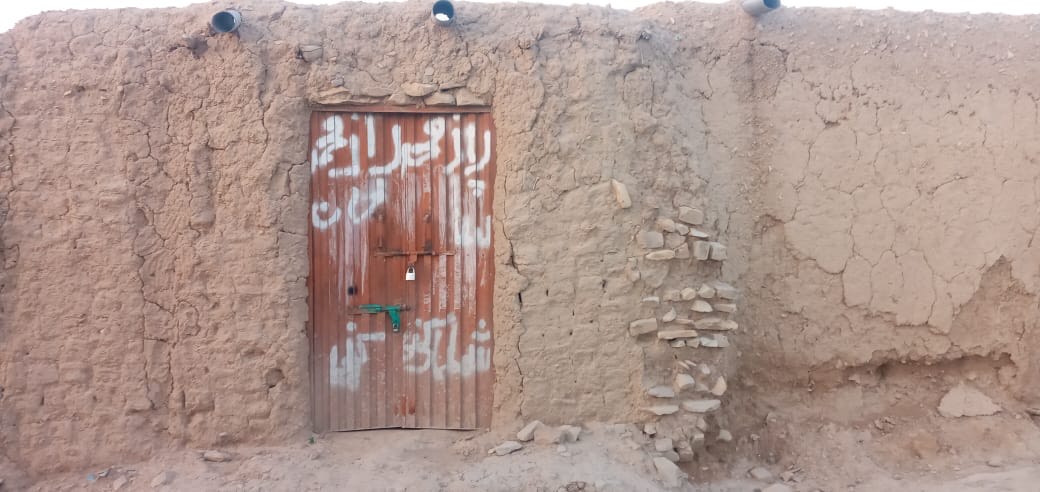


Old mud shops that belonged to Hindu Pashtuns in Mekhtar's Hindu Bazaar before 1947. The properties have remained preserved and unopened for over 70 years as a symbol of interfaith harmony. June 26, 2020 (AN Photo by Shadi Khan Kakar)  

But in all these years, the dozens of shops they left behind have never been opened again-- preserved exactly as they were left by their owners seven decades ago. 
“When our Hindu friends were leaving us [after partition] they handed the keys of their shops to us,” Malik Hajji Paio Khan Kakar, a 95 year old resident of Mekhtar told Arab News. 
The keys were never used, he said, and the properties sit as though lying in wait for their rightful owners to return.
The town’s integrity is an anomaly in the history of the partition, where land grabbings of abandoned property were common in the absence of formal registrars after the two new countries were carved out and millions were forced to hastily flee their homes.



In this undated photo, a Pashtun Hindu woman in Jaipur shows off the blue tattoos distinctive of the Hindu Pashtun community. (Photo Courtesy: Shilpi Shilpi Batra Adwani)

Just before the Hindus of Mekhtar migrated to Jaipur, Kakar said they stayed as guests in the homes of their Muslim friends for several nights before finding safe passage across.
“It was like one’s brother was leaving,” Kakar reminisced.
The meat-eating Hindu Pashtuns are a little known tribe in India even today, with a distinct culture carried forward from Afghanistan and Balochistan which includes blue tattoos on the faces of the women, traditional Pashtun dancing and clothes heavily adorned with coins and embroidery.
“It was lovely to hear that the people of Mekhtar still remember us and have taken care of the shops as a token of love,” Shilpi Batra Adwani, a documentary filmmaker from a Pashtun Hindu family in Jaipur, told Arab News. 
Her grandmother, who she calls Babai, migrated from the town during the partition.
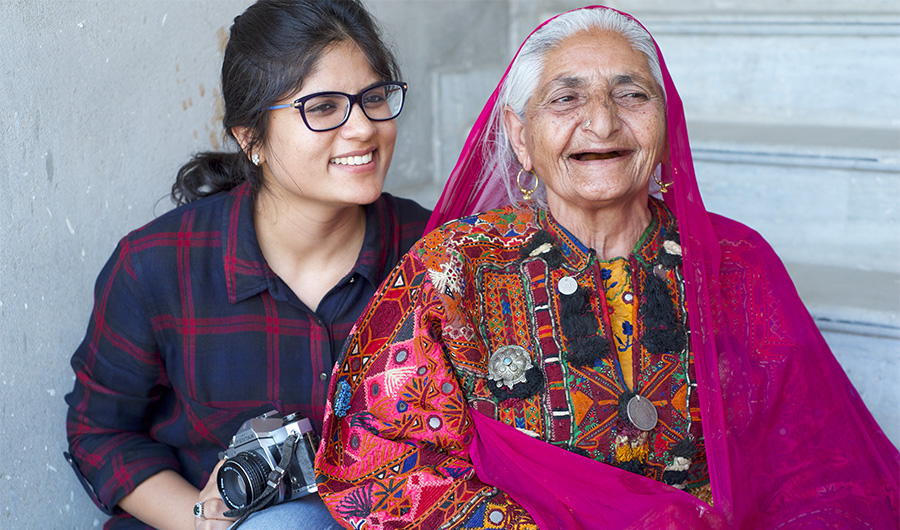


Indian filmmaker Shilpi Batra Adwani with a Hindu Pashtun migrant woman. They pose with traditional Pashtun clothes. (Photo Courtesy: Shilpi Shilpi Batra Adwani)

Shilpi told Arab News that elderly members of Jaipur’s Pashtun Hindu community still sat together and spoke about the ‘golden period’ of harmony and love they had left behind in Mekhtar.
They still speak Pashto, she said, and remained fiercely proud of the culture they had brought with them to Jaipur-- though acceptance had not always come easy.
“Because the women had tattoos, people in India used to be curious looking at them. Some found them exotic and some found them questionable,” Shilpi said.
“They would spend most of their time at their homes, remembering their lovely past times.” 
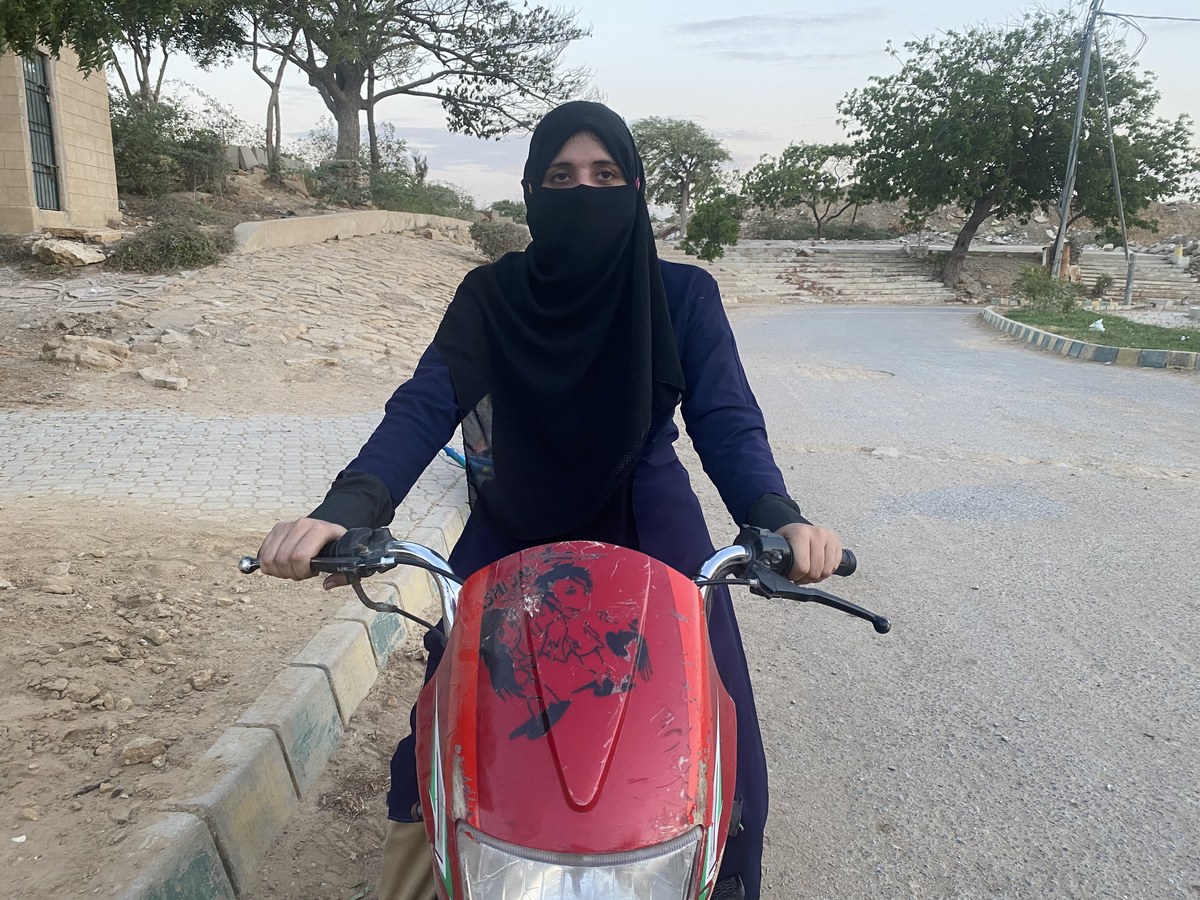


Malik Haji Paio Khan Kakar, a 95 year old resident of Mekhtar, Balochistan, is interviewed for Arab News. June 26, 2020 (AN Photo by Shadi Khan Kakar)  

Shilpi, who made a documentary about the roots of India’s Hindu Pashtuns last year, interviewed several women in her community about the days of the partition. 
From them she discovered that the Muslims of Mekhtar had come to the railway station to bid them farewell on the day they had left, with ghee and gifts of food for their long journey. 
“Together, they would do embroidery, together eat their meals and together do Attan [Pashtun folk dance]. No one would feel like they belonged to a different faith,” Shilpi said, recounting stories from her grandmother.
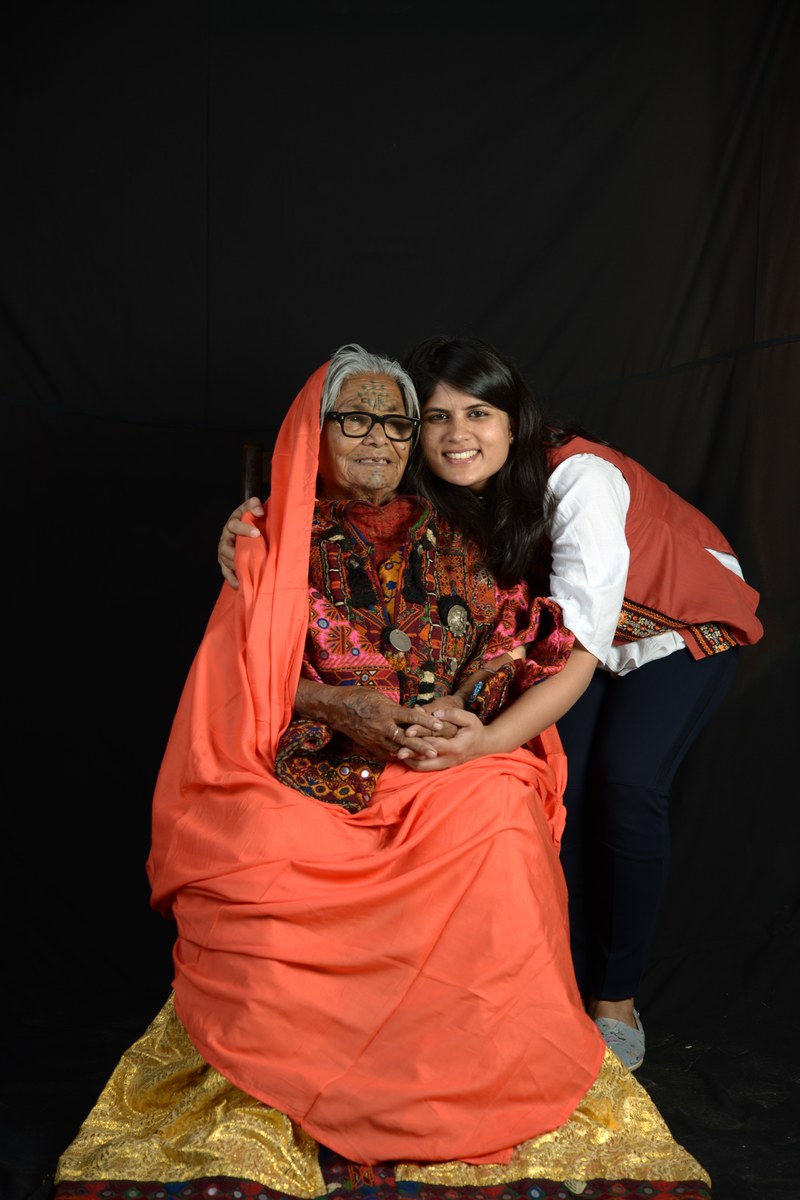


Indian filmmaker Shilpi Batra Adwani with a Hindu Pashtun migrant woman. They pose with traditional Pashtun clothes. (Photo Courtesy: Shilpi Shilpi Batra Adwani)

The film-maker told many other stories-- of one Hindu Pashtun who fell in love with a Muslim woman from Mekhtar and stayed behind, and of old trunks of Pashtun clothes lovingly restored and worn tearfully by the last remaining generation of the partition.
Even 73 years on, Shilpi said, Mekhtar still lived on in the memories of those who had left behind their ancestral homes and shops. 
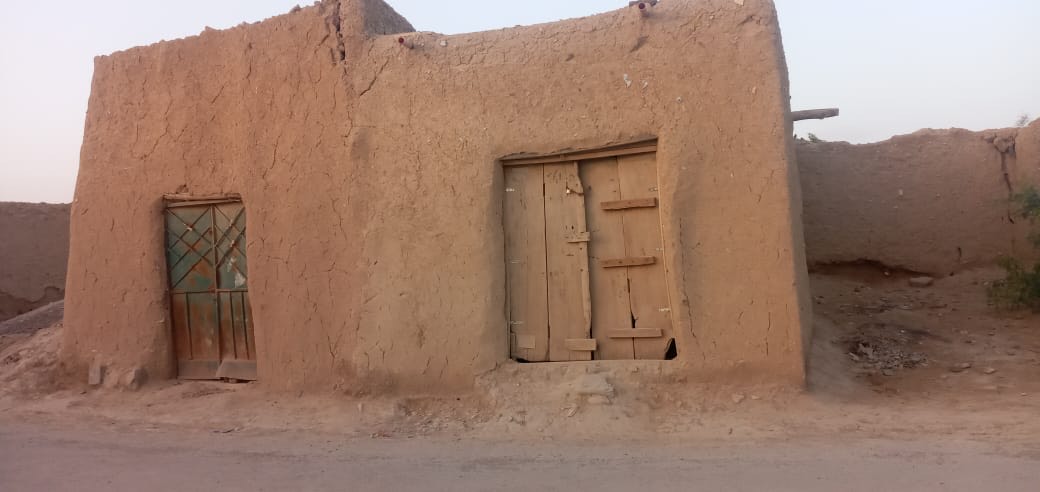


Old mud shops that belonged to Hindu Pashtuns in Mekhtar's Hindu Bazaar before 1947. The properties have remained preserved and unopened for over 70 years as a symbol of interfaith harmony. June 26, 2020 (AN Photo by Shadi Khan Kakar)  

Across the border in Mekhtar, Kakar too reminisced about meeting his old friends one more time.
“My health and finances don’t allow me to travel, but if they could come here... that would be great,” he smiled. 
“Then maybe once more, we could sit here. All together.”

Islamabad court sentences seven individuals to life imprisonment over ‘digital terrorism’

Updated 6 sec ago
Follow

Islamabad court sentences seven individuals to life imprisonment over ‘digital terrorism’

  • The convicts include Wajahat Saeed Khan, Shaheen Sahbahi, Haider Raza Mehdi, Adil Raja, Moeed Peerzada, Akbar Hussain and Sabir Shakir
  • The cases against them relate to May 9, 2023 riots over ex-PM Imran Khan’s arrest that saw vandalization of government, military installations

ISLAMABAD: An Islamabad anti-terrorism court (ATC) on Friday awarded two life sentences each to seven individuals, including journalists and YouTubers, over “digital terrorism,” in connection with May 9, 2023 riot cases.

The court sentenced Wajahat Saeed Khan, Shaheen Sahbahi, Haider Raza Mehdi, Adil Raja, Moeed Peerzada, Akbar Hussain and Sabir Shakir under various sections of the Anti-Terrorism Act and the Pakistan Penal Code.

The riots had erupted after former prime minister Imran Khan was briefly arrested in Islamabad on corruption charges on May 9, 2023, with his supporters attacking government buildings and military installations in several cities.

ATC judge Tahir Sipra announced the reserved verdict, following a trial in absentia of the above-mentioned individuals who were accused of “digital terrorism against the state on May 9.”

“The punishment awarded will be subject to the confirmation by Hon’ble Islamabad High Court,” the verdict read, referring to each count of punishment awarded to the convicts.

It also imposed multiple fined on the convicted journalists and YouTubers, who many see as being closed to Khan.

The prosecution presented 24 witnesses, while the court had appointed Gulfam Goraya as the counsel of the accused, most of whom happen to be outside Pakistan.

Pakistan’s anti-terrorism laws allow trials in absentia of the accused persons.

Thousands of supporters of Khan’s Pakistan Tehreek-e-Insaf (PTI) party were detained in the days that followed the May 2023 riots and hundreds were charged under anti-terrorism laws in a sweeping crackdown, with several cases transferred to military courts.

The government of PM Shehbaz Sharif accuses Khan’s party of staging violent protests in a bid to incite mutiny in the armed forces and to derail democracy in the country. The PTI denies inciting supporters to violence and says the government used the May 2023 protests as a pretext to victimize the party, a claim denied by the government.

The May 2023 riots took place a little over a year after Khan fell out with Pakistan’s powerful military, blaming the institution for colluding with his rivals to oust him from office in a parliamentary no-trust vote, a charge denied by the military.

Khan, who has been jailed since Aug. 2023 on a slew of charges, has led a campaign of unprecedented defiance against the country’s powerful military. He also accuses the then generals of rigging the Feb. 8, 2024 election in collusion with the election commission and his political rivals to keep him from returning to power. The military, election commission and Khan’s rivals deny the allegation.