

Jeddah bids fond farewell to iconic airport terminal

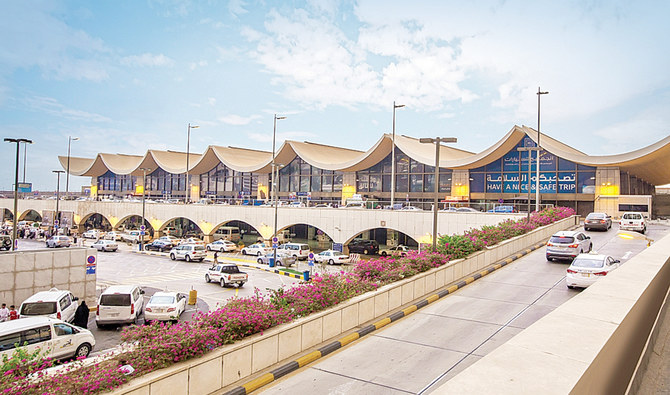
Named after the Kingdom’s founder, the south terminal is just shy of celebrating its 40th anniversary. (Supplied)
Short Url
Updated 28 June 2020
Follow

Jeddah bids fond farewell to iconic airport terminal

  • For many worshippers, south terminal has been their first stop on a journey of a lifetime to perform Hajj or Umrah

JEDDAH: Jeddah’s international airport is bidding a fond farewell to its distinctive south terminal, known for its unique triangular tent-shaped exterior and large glass facade, as flight operations move to a new base.

Inaugurated by King Khalid in April 1981 after transferring all operations from its previous location near Jeddah’s Al-Sulaimania district, King Abdul Aziz International Airport (KAIA) has become one of the main gateways into the Kingdom not only for travelers but for millions of pilgrims.
For many worshippers, the airport’s south terminal has been their first stop on a journey of a lifetime to perform Hajj or Umrah at the Grand Mosque in Makkah or visit the Prophet’s Mosque in Madinah.
Named after the Kingdom’s founder, the terminal is just shy of celebrating its 40th anniversary.

BACKGROUND

Inaugurated by King Khalid in April 1981 after transferring all operations from its previous location near Jeddah’s Al-Sulaimania district, King Abdul Aziz International Airport has become one of the main gateways into the Kingdom not only for travelers but for millions of pilgrims.

With its iconic high ceilings that resemble the inside of a tent, it has served millions of passengers and is one of the busiest air terminals in the Kingdom. It also serves as the headquarters for Saudi Arabia’s national airline Saudia.
The first direct flight to New York City took off from KAIA in June 1981 and other international destinations were added that year.
It was recently reported that KAIA accounts for 36 percent of the total number of passengers in the Kingdom.
The closure of the south terminal and the moving of all operations to the airport’s newly opened T1 terminal — inaugurated by King Salman last September and capable of handling 30 million passengers a year — is aimed at ensuring the airport remains a key link between the East and West and continues to serve the city’s residents and welcome pilgrims.


Saudi Cabinet welcomes ceasefire between Syrian government and SDF, condemns Gaza ceasefire violations

Updated 7 sec ago
Follow

Saudi Cabinet welcomes ceasefire between Syrian government and SDF, condemns Gaza ceasefire violations

  • Minister of Media Salman Al-Dossari said ministers welcomed cooperation between the Syrian government and the SDF, supported by Saudi Arabia and the US

RIYADH: Saudi Arabia’s Cabinet, chaired by Crown Prince Mohammed bin Salman, on Tuesday welcomed a ceasefire between the Syrian government and the Syrian Democratic Forces, reiterated the Kingdom’s support for resolving regional and international disputes through dialogue, and condemned Israeli violations of the Gaza ceasefire.

The Cabinet said the breaches in the Palestinian territory undermine efforts to stabilize the truce and advance the second phase of the peace plan, stressing the need for a just and lasting settlement that enables Palestinians to establish an independent state.

In a statement carried by the Saudi Press Agency, Minister of Media Salman Al-Dossari said ministers welcomed cooperation between the Syrian government and the SDF, supported by Saudi Arabia and the US, which led to a ceasefire agreement aimed at promoting peace, stability and national unity in Syria.

The Cabinet reviewed outcomes from several major international events hosted by the Kingdom, including the second Ministerial Council meeting of the Green Middle East Initiative, which expanded membership to 35 countries and reaffirmed commitments to plant more than 22 billion trees and rehabilitate 92 million hectares of land, SPA added.

Ministers also praised the International Conference on Building Capabilities in Data and AI in Riyadh, which saw the launch of multiple initiatives and the signing of 27 agreements to strengthen academic partnerships and advance the Kingdom’s national artificial intelligence strategy.

They commended the fifth Future Real Estate Forum, which resulted in 80 agreements and memoranda of understanding, as well as the Saudi Media Forum, highlighting Riyadh’s growing role as a global hub for innovation, digital transformation and content creation.

The Cabinet reviewed progress across government sectors, welcoming the launch of the National Privatization Strategy as a key step toward diversifying the economy, strengthening private sector participation, and improving infrastructure and public services. It also noted new development projects in the industrial cities of Makkah and Jeddah aimed at boosting local manufacturing and economic growth.

Among a series of decisions, the Cabinet approved cooperation agreements and MoUs with Cyprus, Finland, Brazil, Uzbekistan, South Korea and Mexico, alongside partnerships with Harvard University and the League of Arab States.

Ministers also approved Saudi Arabia’s National Policy for the Arabic Language, endorsed the Equestrian Authority’s membership in the International Federation of Thoroughbred Breeders, and adopted Gulf Cooperation Council framework legislation on combating narcotics and responding to hazardous materials incidents.

The Cabinet further approved the state’s final accounts for the previous fiscal year, renewed and appointed members to the General Authority for Real Estate board, and authorized several senior promotions across government departments, including ambassadorial and minister plenipotentiary roles at the Ministry of Foreign Affairs.