




LONDON: A London-based Syrian refugee is using food to spread awareness of the plight of people in her home country.
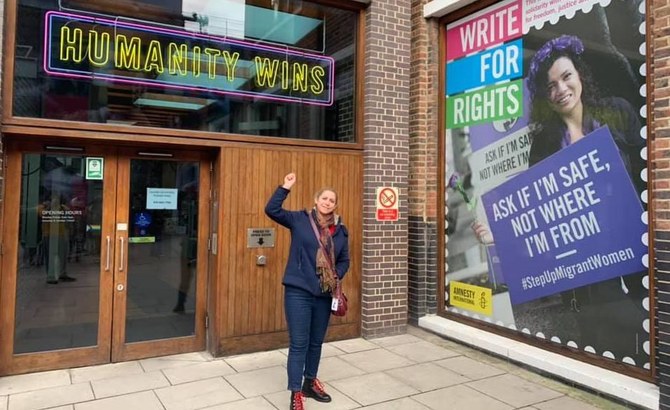
Majeda Khoury, 49, is originally from Damascus and arrived in the UK in 2017. Two years later, she set up her own company that enables her to combine her two passions: Food and human rights activism.
She launched The Syrian Sunflower in August 2019 with the support of The Entrepreneurial Refugee Network (TERN), a social enterprise that supports refugee entrepreneurs in the creation and development of their businesses.
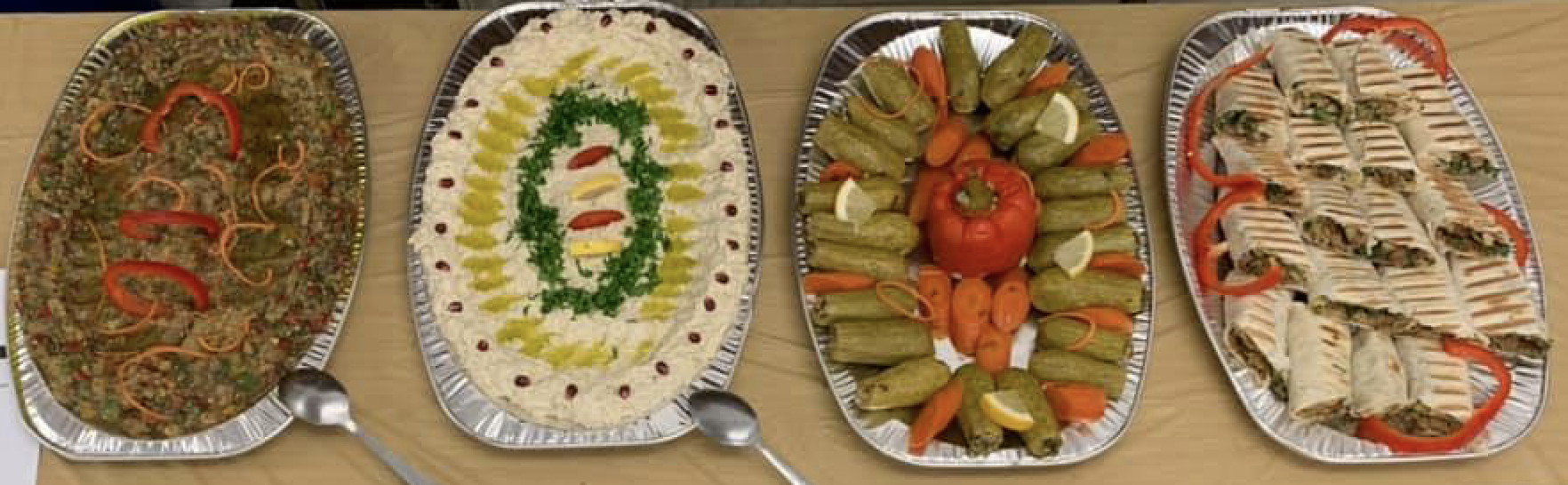
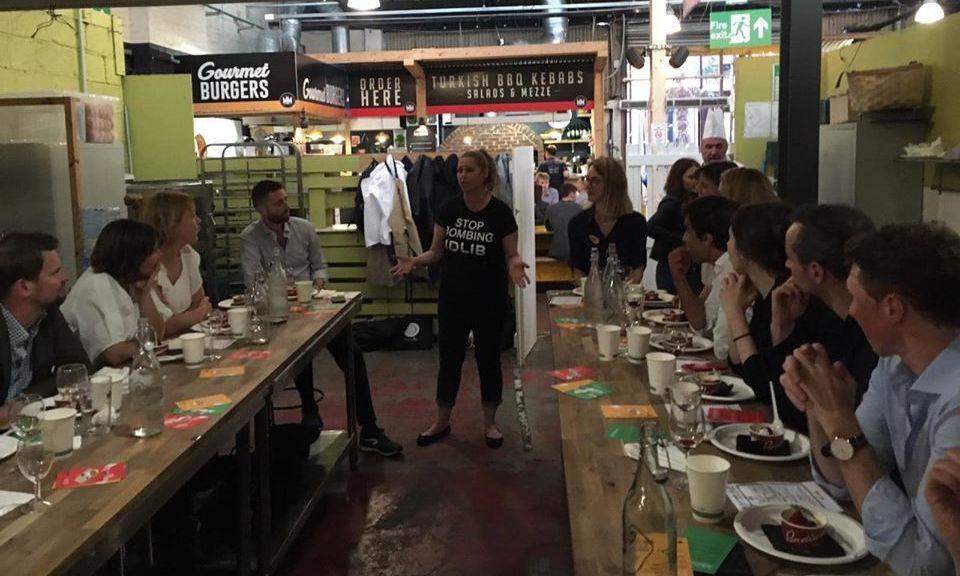
Khoury’s catering business supplies human rights organizations with food. She is keen to speak at events held by these organizations to highlight the suffering of the Syrian people.
“I run a catering business and teach cookery classes as part of it. I supply human rights organizations and companies that are interested in refugees and allow me to speak at events,” she told Arab News.
“My company is also a platform for other Syrian refugee women who want to start their own businesses in the food industry, and I train them.”
Khoury said showing the world the atrocities that the Assad regime has committed is a “very important job.”
She added: “I started participating in human rights activism in 2011 after the revolution and documented violence against women. I also worked with relief organizations that helped displaced people in Syria.
“From the first moment of the Syrian revolution, the situation was very scary but we were excited. Syrians had been waiting for that moment for the last 50 years, since Hafez Assad became president. He was a dictator and Syrians have always had this dream to find a way to go against the regime.”
Khoury was arrested and imprisoned in a detention center in Damascus for six months in 2013.
She said the center “wasn’t fit for animals,” and “is one of the most dangerous detention centers in the country. Many prisoners didn’t make it out alive.”
She added: “It was a horrible place, and as a human rights activist I highlight the rape and torture that takes place there to the whole world.”
Khoury said she started documenting the torture that she witnessed and experienced in the detention center with an organization called Urnammu after she was released.
Urnammu is a Syrian grassroots organization registered in Canada that documents violence against women and children in detention centers. It has members all over the world.
“This wasn’t just activism, it was a very important mission in my life to document these human rights abuses,” Khoury said.
“We need the whole world to highlight this and support both Syrians inside the country and abroad to get justice.”
Khoury was forced to leave Syria because of her advocacy against human rights violations, first to Lebanon and then the UK.
Far from home and everything familiar, she found herself using food and cooking as a way to continue her human rights activism in London.
“When I came to the UK in 2017, I found myself far from my community, friends, family and activism. I tried to find a platform that would help me continue advocacy work against the Syrian regime,” Khoury said.
“I’ve always had a passion for food. In Syria, I used food to indulge my family and friends. One of my friends in London introduced me to Migrateful, an organization that runs cookery classes led by refugees, asylum seekers and migrants.”
The organization’s mission is to empower and celebrate refugees and vulnerable migrants on their journey to integration, by supporting them to run their own cookery classes. It also promotes contact and cultural exchange with the wider community.
Khoury said she was keen to highlight the human rights violations committed by the Syrian regime and signed up to teach classes immediately.
“I started teaching two classes per week, and I met between 12 and 20 people per class. At the end, we’d share a meal and speak about what was happening in Syria. I became known as not just a Syrian chef but also an activist,” she added.
Khoury then did a six-month course with TERN. “They helped me to register my company, The Syrian Sunflower, in August 2019 when I launched my business,” she said.
Khoury has also been busy giving back to her new community in London during the coronavirus pandemic when her business experienced a quieter-than-usual period.
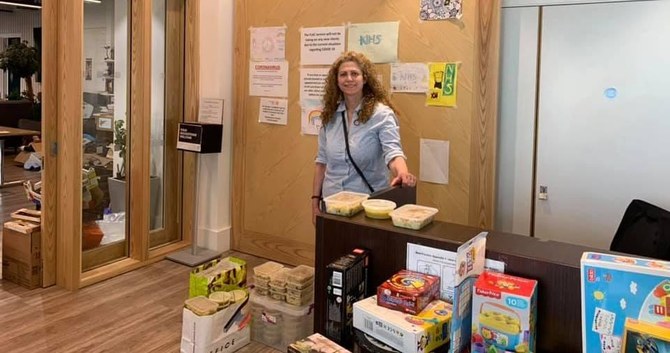
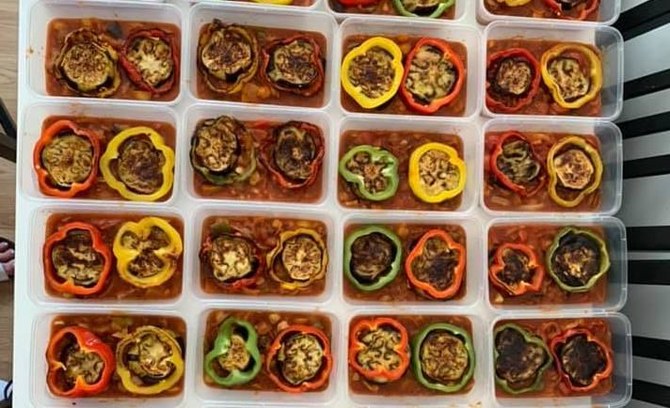
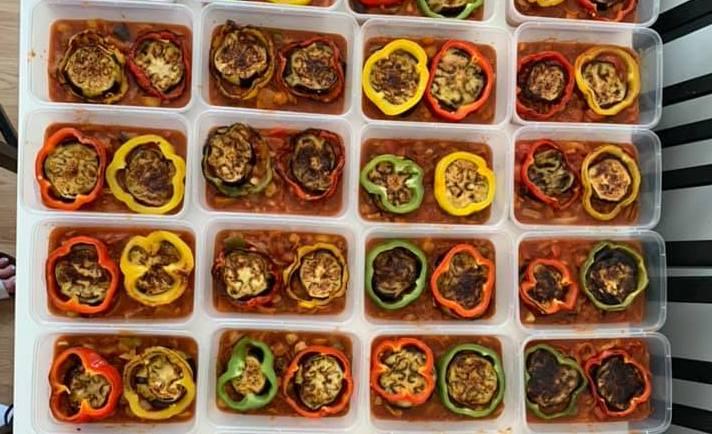
She helped self-isolating neighbors and friends with their shopping when the UK lockdown was announced, and distributed 200 free meals to homeless and needy people in her community.

“I also cooked 200 iftar meals for a discounted price, which were distributed to asylum seekers and people in need during Ramadan by a charity,” she said.
Although Khoury has integrated into British society and has successfully started her own business while continuing her activism, she said she still clings onto hope that she will one day be able to return to a democratic Syria.
“I want to go back to Syria, and I hope there will eventually be a political solution in the country. I want to see (President) Bashar Assad imprisoned,” she added.
“I’d like to return to my extended family and my home. I didn’t decide to be a refugee. For refugees, exile is the saddest period of their lives.”


