

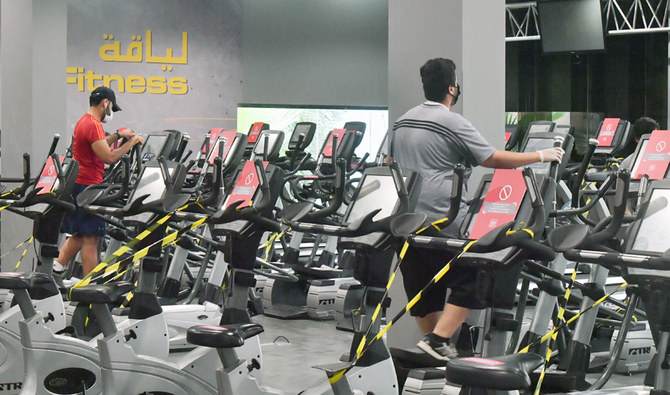

JEDDAH: Many businesses including gyms have resumed operations since the Kingdom lifted a nationwide coronavirus curfew on June 21, and are welcoming back those who felt their fitness fade due to months of lockdown and the difficulty of staying active at home.
The Ministry of Sports’ announcement about reopening gyms and sports centers has delighted coaches and gym-goers alike.
Waleed Al-Baloshi, a customer service operator, was concerned about the preventive protocols in place but believed it was “better to be safe than sorry.” He said he had missed every single thing about going to the gym — the community, the gym environment and pushing his limits.

“It is very difficult to keep fit at home, especially the last two to three weeks, I have really let my fitness go,” he told Arab News.
Coaches and gym owners are making efforts to ensure their safety and that of their clients.
“I am extremely excited, but I am a little anxious given that we stayed home for four months, and now everything is suddenly opening up,” Mai Kholeif, the founder and head coach of MFIT, told Arab News. “I think it is just going to take us sometime psychologically.” 
She has a small home gym to stay active regardless of what the situation is, even though she enjoys the studio’s environment. “For me, personally, I always work out alone. So it was more convenient for me to stay at home because I could work out anytime I wanted and we didn’t need to physically commute back and forth.”
Kholeif said that the gym’s online classes had gained popularity during the lockdown and that this success had given her food for thought. “The past four months have been very interesting. We had online classes and we are thinking of continuing this service because, in my opinion, COVID-19 has taught me to be adaptive and now a lot of people are preferring online training in the beginning of their journeys.”
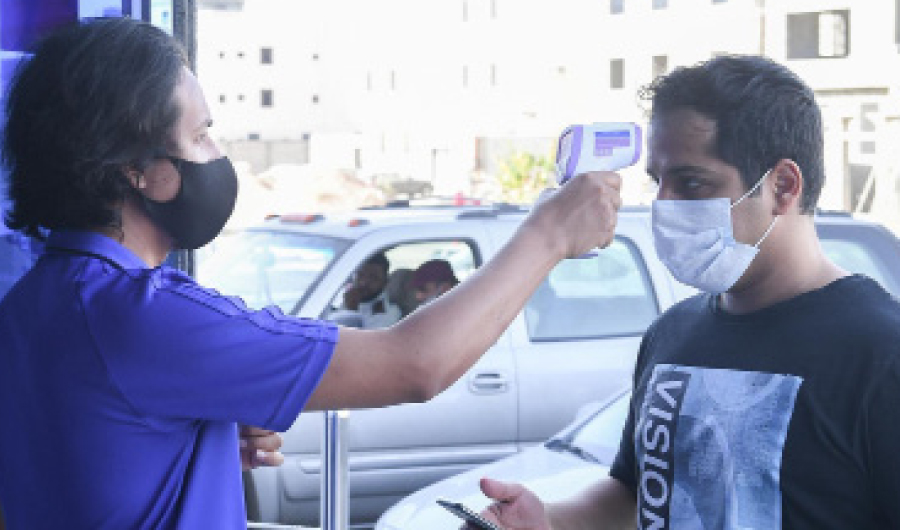
She said that the studio would implement the necessary precautionary measures as instructed by the ministry, including checking people’s temperatures and cutting class attendance by almost 50 percent. “We are working on putting markings on the floor to give people their personal space. We will disinfect the equipment after each session and preferably ask people to disinfect them, too. I can’t wait to go back, but carefully since my clients’ health and safety are my priority.”
Missing the ‘pump’
Najia Fadl, the head trainer of Jeddah’s SheFit, said that the only thing she felt upon hearing the news was a sense of relief as the lockdown had forced her to abandon her workout routine.
“I haven’t worked since the lockdown started,” she told Arab News. “It was the longest period of my professional life that I have gone without working out. Our field requires us to work and be in contact with clients. So having to go virtual (in) a very big market (was hard) and there is a lot of competition.”
Fadl, who specializes in CrossFit and calisthenics, said that going back to the gym would not be a hassle at all. “With the rules and precautions, we know what to do and what not to do. As a coach, I won’t even need to be in physical contact with people, there are verbal cues that people can follow.” 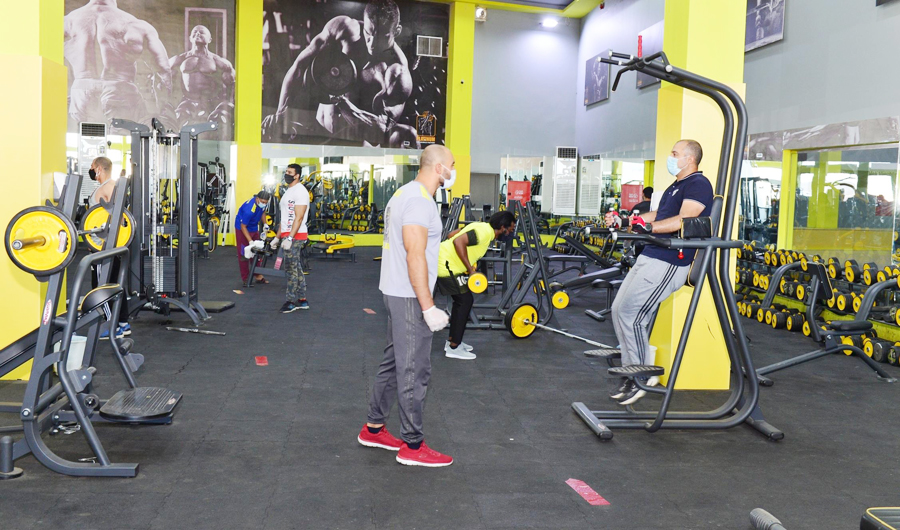
Fahd Naseem said that gyms had always been a big part of his life. While he had done his best to maintain his weight by walking four to five times a week, his muscle mass had been affected. “I can’t wait to go back to the gym and have back those few hours dedicated to my health again,” he told Arab News. “The thing I missed the most, and my fellow gym rats will agree, is ‘the pump’ after a good workout.”
He said that he would do his best to clean the gym equipment before using it and make sure to wear a mask if he was working out next to someone else.
Reham Kamal, the founder of Jeddah’s RKfit Studio, advised people who were rejoining gyms to be more cautious than ever. “This is not like we are going back,” she told Arab News. “I feel like we are moving forward to the next stage that requires us to be more conscious to (protect) ourselves and our loved ones.”


