Jeddah’s new King Abdul Aziz Airport launches APM service

1 / 5
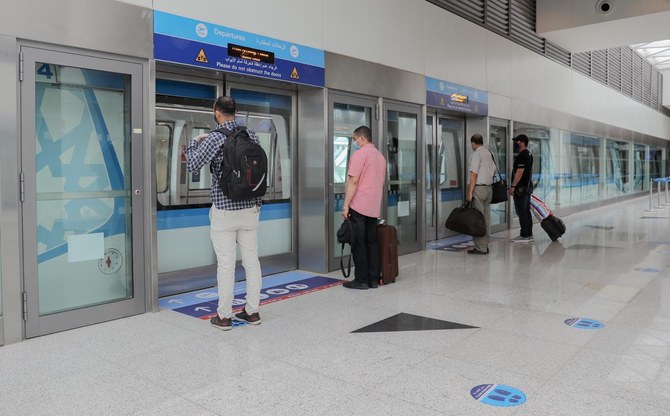
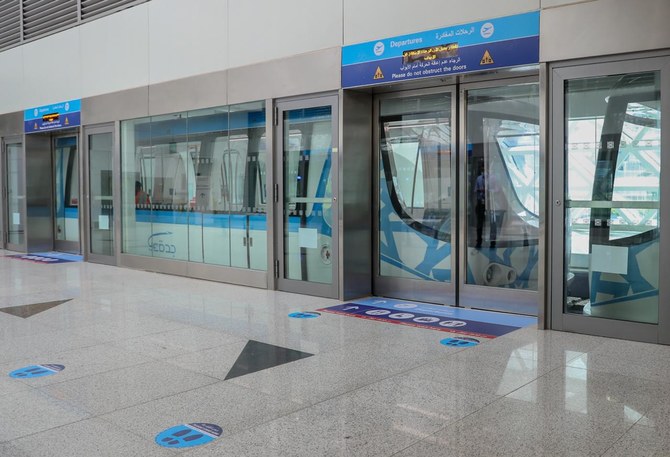
The service transports passengers from the check-in area to the boarding area at Terminal 1, and vice versa. (AN Photo)
2 / 5
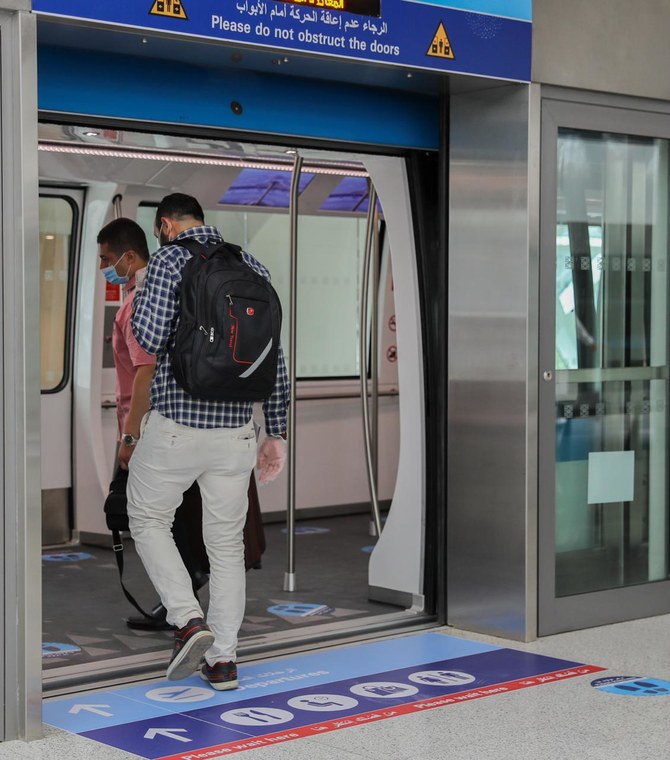
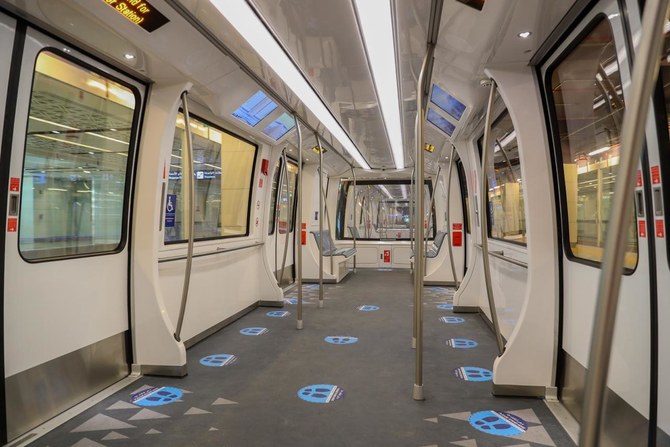
The service transports passengers from the check-in area to the boarding area at Terminal 1, and vice versa. (AN Photo)
3 / 5
4 / 5
The service transports passengers from the check-in area to the boarding area at Terminal 1, and vice versa. (AN Photo)
5 / 5
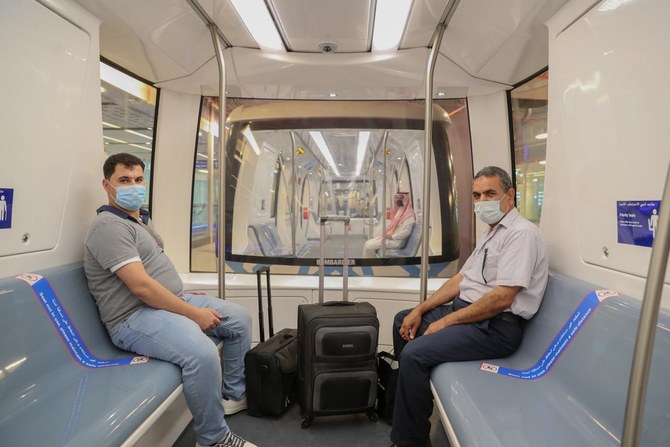
The service transports passengers from the check-in area to the boarding area at Terminal 1, and vice versa. (AN Photo)
Short Url
Updated 23 June 2020
Follow

Jeddah’s new King Abdul Aziz Airport launches APM service

  • The 1000-meter APM represents the first service of its kind at the Kingdom’s airports
  • Each vehicle can accommodate up to 65 passengers, who can travel between the two terminal stations in 85 seconds

JEDDAH: Jeddah’s new King Abdul Aziz International Airport (KAIA) inaugurated, on Monday, the free internal automated people mover (APM) for international arriving and departing passengers.

The service transports passengers from the check-in area to the boarding area at Terminal 1, and vice versa.

The 1000-meter APM represents the first service of its kind at the Kingdom’s airports, with a capacity of 4,000 passengers per hour, and includes two stations and two tracks with 10 cars.

Each vehicle can accommodate up to 65 passengers, who can travel between the two terminal stations in 85 seconds. The passenger’s waiting period is 170 seconds maximum.

“This type of automated train is only available in limited advanced international airports,” said KAIA’s General Manager Essam bin Fouad Nour.

The APM has been equipped with all systems provided in the terminals, such as air conditioning, radio and information systems.

All APM’s cars are also equipped with various fire alarm systems and emergency exits to ensure the safety of passengers.

The first phase of the new airport has a capacity of 30 million passengers per year and will increase to 80 million passengers by the end of the third stage.

The airport’s Terminal 1 has a total area of 810,000 square meters, 220 counters to serve passengers, 80 self-service counters, 46 gates —25 gates for international flights, 13 for domestic flights, and 8 dual-use gates — as well as 94 air bridges.


France, Saudi collaborate on space for artists in Riyadh

Updated 16 January 2026
Follow

France, Saudi collaborate on space for artists in Riyadh

  • L’Institut francais, Riyadh Art will open La Fabrique on Feb. 22
  • ‘New cultural chapter’ between the nations, says France envoy

RIYADH: L’Institut francais in Saudi Arabia and Riyadh Art, an initiative of the city’s royal commission, have announced the opening of La Fabrique, a space for artists, on Jan. 22.

The project is based in the Riyadh Art Hub in JAX District and will enable Saudi and French artists to create, experiment, and bring their visions to life, according to a press release from the organizers.

La Fabrique also offers the public a rare opportunity to witness creative production including movement performances, digital and immersive arts, photography, music, cinema, cuisine and poetry.

At its core, La Fabrique fosters artistic exchange between French and Saudi artists, fostering new encounters, shared practices, and co-creation.

The initiative is aligned with the vision shared by French President Emmanuel Macron and Crown Prince Mohammed bin Salman, who have placed cultural cooperation at the heart of the renewed Saudi-French strategic partnership.

Anchored in the ambitions of Vision 2030, La Fabrique is a part of Riyadh’s transformation into a major international cultural hub.

Developed in cooperation with Saudi Arabia’s Ministry of Culture, the project strengthens the long-standing cultural dialogue between the two nations, the press release stated.

Patrick Maisonnave, ambassador of France to Saudi Arabia, said: “La Fabrique embodies the spirit of a new cultural chapter between France and Saudi Arabia.

“By bringing our artists together, we are not only sharing techniques and traditions, we are opening a space where imaginations meet, new forms emerge, and creativity becomes a bridge between our two societies.

“This initiative reflects our belief that artistic dialogue is one of the most powerful ways to build understanding, trust, and a shared future. It stands as a concrete example of France’s contribution to the ambitions of Vision 2030.”