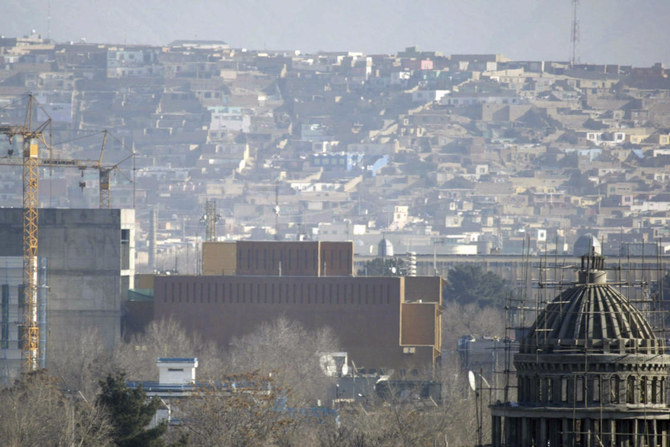
KABUL, Afghanistan: The US State Department says COVID-19 infections have been reported at its embassy in the Afghan capital and affected staff include diplomats, contractors and locals.
The State Department did not say how many were affected. An official at the embassy in Kabul, who spoke on condition of anonymity because they were not authorized to brief the media, said up to 20 people were infected, the majority of them Nepalese Gurkhas, who provide embassy security.
“The embassy is implementing all appropriate measures to mitigate the spread of COVID-19,” the State Department said in a statement late Friday.
The infected staff are in isolation in the embassy while the remainder on the compound are being tested, said the embassy official. That official added that embassy staff were told they can expect tighter isolation orders.
The State Department said a sanitization of the premises was being carried out to “prevent further outbreak.”
Afghanistan has 28,424 confirmed coronavirus cases. International aid organizations monitoring the pandemic’s spread in the country say the numbers are much higher because of a lack of testing capabilities as well as access to testing.
Observers also fear the highly contagious coronavirus has spread throughout the country with the return of nearly 300,000 Afghans from Iran, the hardest hit country in the region. Iran has recorded more than 200,000 cases and 9,392 deaths.
Few of the Afghans who returned from Iran were tested before they fanned out across the country to their homes.
Earlier this month, the International Rescue Committee warned Afghanistan was on the brink of a humanitarian disaster mostly because the government does not have the capacity to even test 80% of coronavirus cases.
A handful of NATO troops have also tested positive for the infection.


![]()

US embassy in Kabul battles coronavirus outbreak
Short Url
https://arab.news/2m883
US embassy in Kabul battles coronavirus outbreak
- The infected staff are in isolation in the embassy while the remainder on the compound are being tested
- Embassy staff were told they can expect tighter isolation orders


Latest updates


© 2026 SAUDI RESEARCH & PUBLISHING COMPANY, All Rights Reserved And subject to Terms of Use Agreement.