


DUBAI: Even as nations reopen after months of lockdown, the art world continues to be relegated to digital platforms for the foreseeable future.
But the silver lining is the myriad collaborations arising among members of the global art community.
In the Middle East, one such initiative is the “This Too Shall Pass” auction hosted by Sotheby’s in partnership with seven galleries from Dubai’s Al-Serkal Avenue.
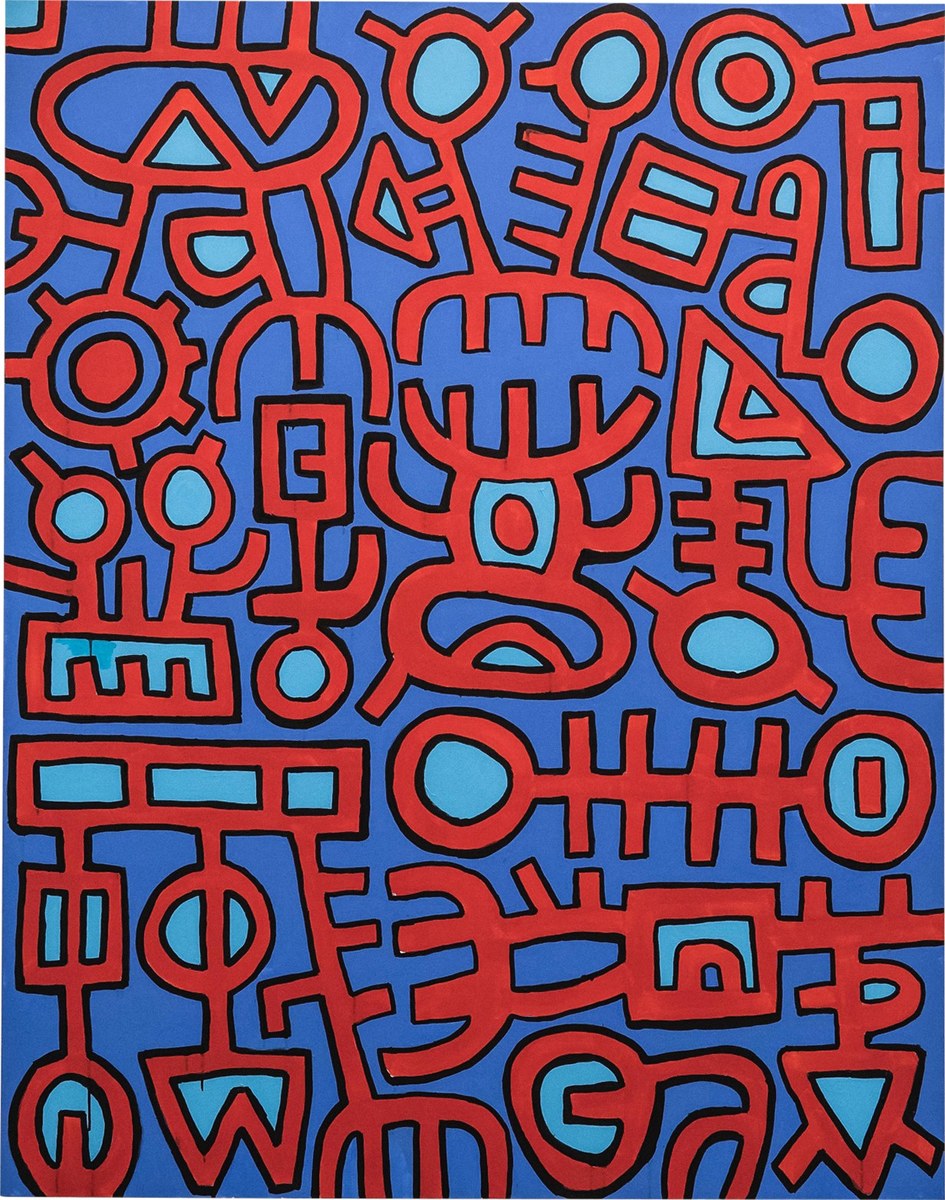
Mohamed Ahmed Ibrahim, "Untitled" (2019). Supplied
Marking the inaugural online sale by an international auction house in the Middle East, 10 percent of the sales from the online event, which opens for bidding from June 18-25, will go to the COVID-19 relief fund of the UN High Commissioner for Refugees (UNHCR).
“In the first few weeks of lockdown there were a lot of calls, discussions and surveys about how to support and preserve our arts community,” William Lawrie, founder of the Lawrie Shabibi art gallery in Dubai, told Arab News.
“In one of the Zoom calls, which included all of the galleries in Al-Serkal Avenue, the idea of an auction to support the galleries and their artists was mooted, with a charitable component to benefit vulnerable people made even more disadvantaged by COVID-19.”

Monir Farmanfarmaian, "Untitled (C5)" (1993-2009). Supplied
The auction house, the galleries decided, needed to be one with an international reach. “We wanted to showcase the best of the galleries’ works to an international audience, express solidarity within our community that we’ve spent 10 years building, and support a cause we all feel strongly about,” Lawrie said. “In the end, we settled on UNHCR programs in the Middle East.”
Participating galleries include The Third Line, Gallery Isabelle van den Eynde, Carbon 12, Lawrie Shabibi, Green Art Gallery, Leila Heller Gallery and 1 x 1 Art Gallery.
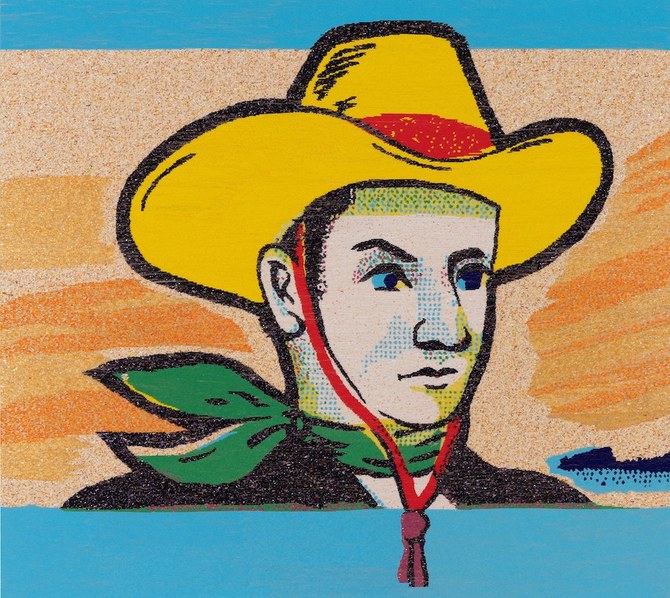
Highlights include Beirut-based Mona Saudi’s “Woman/River” (1998), made in Jordanian jade and going for an estimated $50,000-$70,000; Iranian artist Farhad Moshiri’s “Rodeo Cowboy” (2018), made in hand-embroidered beads on canvas on board, estimated at $80,000-$120,000; and an untitled work by Emirati artist Mohamed Ahmed Ibrahim dated to 2019 and made in acrylic on canvas, going for an estimated $10,000-$15,000.

Hassan Hajjaj, "Exchange" (2020). Supplied
There is also a work by the late pioneering Iranian artist Monir Farmanfarmaian, made between 1993 and 2009 in silk and wool and hand-woven in Tabriz, for an estimated $40,000-$60,000; and a vibrant work by revered Moroccan artist Hassan Hajjaj titled “Exchange,” dated to 2006 and made in metallic lambda print on dibond in wood frame with Big Zoshk tomato and Bled olives noire tins for $8,000-$12,000.
There is also an untitled work dated to 2020 by Emirati artist Mohammed Kazem, made in acrylic on scratched paper selling for $20,000-$30,000; and a work by Shaikha Al-Mazrou, also from the UAE, titled “Isometric” (2019), made in wet coated steel for an estimated $12,000-$18,000.

Mohamed Melehi, "Soleil Oblique" (1971). Supplied
“I am grateful to Sotheby’s for their incredible support and generosity, as well as to all the artists and colleagues,” said Isabelle van den Eynde.
“Together, we hope to generate funding and to donate to the heart-breaking cause of the refugees.”
The sale offers works by established artists already represented in institutions worldwide alongside rising Middle Eastern stars. Importantly, it also demonstrates the vital nature of community during turbulent times.
“We are witnessing a new cultural landscape,” said Ashkan Baghestani, director and head of contemporary curated sale at Sotheby’s London.
“As we all live through unprecedented times, we have shown, as humans, our resilience through the coming together of communities,” he added.

Shaikha Al-Mazrou, "Isometric" (2019). Supplied
“This project was born of close collaboration and indeed friendships. It has come into being in record time — something not many would have expected less than three months ago, when the world went into lockdown and a whole art calendar evaporated within a matter of days.”
It is likely that seasoned art buyers will raise their eyebrows at a collaboration between an auction house and art galleries, given the long and uneasy history between primary contemporary art galleries and auction houses.
Lawrie said: “Something incredible has come out of this situation — a true collaboration between the galleries and the Sotheby’s team, who immediately understood the brief and could grasp this opportunity for what it is: A chance to completely reboot and refresh the auction market in this region.”


