


WARSAW: A spike in reported coronavirus cases in Poland’s coal mines has put the country on edge but residents worried about jobs are playing down the health crisis.
The issue is particularly sensitive ahead of a hard-fought presidential election on June 28 in Poland, where miners are still a powerful voting bloc.
Dominik Kolorz, head of the Solidarity trade union for the Silesian coal basin, said he was concerned the increase in virus cases could serve as a pretext for the definitive closure of some mines.
“We hope the government will go on to restore the mining sector,” Kolorz said, speaking in Katowice in southern Poland, the regional capital of Silesia.
Miners and their families accounted for a high proportion of recent cases of coronavirus diagnosed in Poland, prompting the government to suspend work at 12 mines until the end of June.
All of them belong to the JSW mining group and the PGG conglomerate — Europe’s two biggest coal companies — and employ thousands of people.
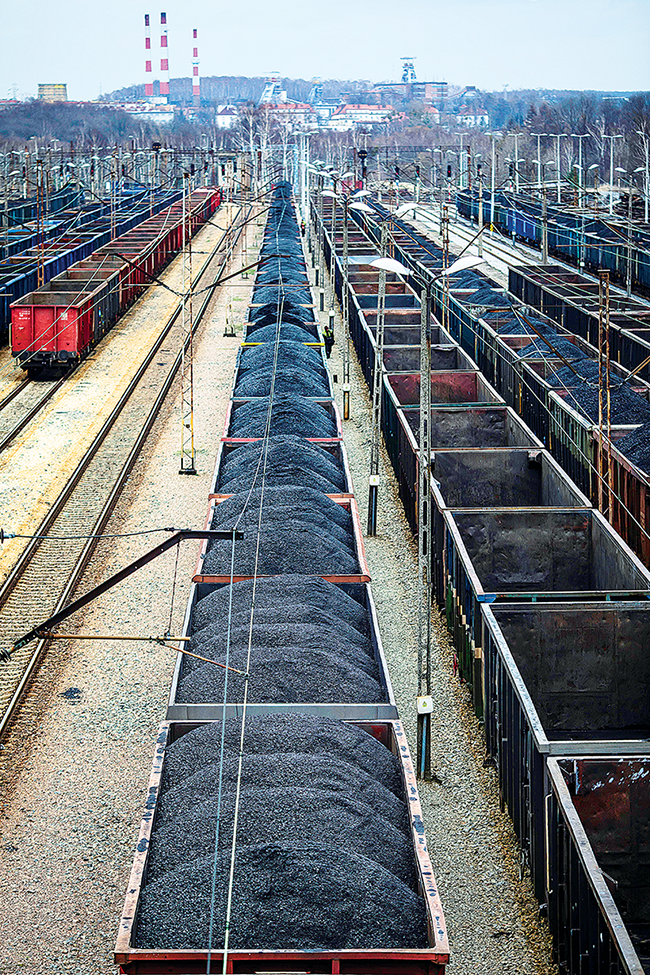
Poland depends on coal for 80 percent of its power needs but the closures are not expected to affect energy production as it has ample stockpiles.
Its reliance on the dirty fossil fuel is a thorny issue within the EU, with Warsaw refusing to implement the bloc’s target of going carbon neutral by 2050.
It has demanded more time to switch to green energy — perhaps up to 2070 according to some sources.
At JSW’s Knurow-Szczyglowice mine, workers arriving for their shifts just before the suspension could be seen undergoing temperature checks and using hand sanitiser.
A large orange emergency tent stood nearby and signs instructed employees to wear masks at all times in a region that has become the epicenter of the coronavirus crisis in Poland.
The virus is “attacking in the mines” where cramped working conditions mean it can spread quickly, Prime Minister Mateusz Morawiecki said on Tuesday.
But Slawomir Starzynski, a spokesman for the JSW mining group, emphasised that the cases detected at his company have mostly been mild or asymptomatic.
“Of the 3,000-some employees from our mines who tested positive for coronavirus, only three or four had to be hospitalized,” he said.
Poland introduced anti-virus lockdown measures relatively early in March, which could account for its lower death toll from the disease than those of some western European countries.
It recorded 28,577 confirmed coronavirus cases, including 1,222 deaths as of Friday.
The government began easing restrictions last month, reopening restaurants, upping the public gathering limit to 150 people and scrapping the face mask requirement for those abiding by social distancing rules.
Campaigning ahead of the rescheduled presidential election is also in full swing.
The ballot was originally scheduled for May 10 but was postponed at the last minute because of the pandemic.
But Health Minister Lukasz Szumowski has warned that the sharp rise in cases could mean restrictions being re-introduced nationwide to stop the spread.
But in Silesia, the prevailing concern among miners was the future of their jobs.
As he arrived for his shift at the Knurow mine, Krzysztof, 40, said: “I don’t know what to think.
“The mine is working fine. I don’t know why they’re closing it.”


